Most ad copy rejections come down to one of three causes: the text exceeds a field's character limit, the claim is too vague or unverifiable, or the ad is missing a disclosure required for its category. None of these require a policy review team to catch — they're checkable before you ever hit submit, which is exactly why a rejected ad after a full review cycle is usually the most avoidable kind of delay in a campaign launch.
Cause 1: Character overflow
Google Ads headlines are capped at 30 characters each, descriptions at 90. Meta doesn't hard-reject over-length primary text the way Google does, but text past roughly the first 125 characters gets truncated behind "see more" on most placements — which isn't a rejection, but it quietly kills performance the same way a rejection would. LinkedIn Ads sits in between: a 70-character headline limit that Google-style tools sometimes miss because it doesn't match the more commonly referenced 30-character search ad standard.
The fastest way to catch this before submitting is checking every field against every platform's actual limit at once, rather than remembering four different numbers. Our free Ad Copy Character Limit Checker does exactly that — paste your headlines, descriptions, and primary text, and see instantly which fields are over which platform's limit.
Cause 2: Vague or unverifiable claims
"The best solution on the market" or "guaranteed results" trigger review flags on both Google and Meta because neither platform can verify a superlative or a guarantee — and both explicitly prohibit unsubstantiated claims in ad policy. This is the rejection cause with no character-count fix: it requires rewriting the claim into something specific and defensible, like a stated percentage backed by real data, or dropping the superlative language entirely.
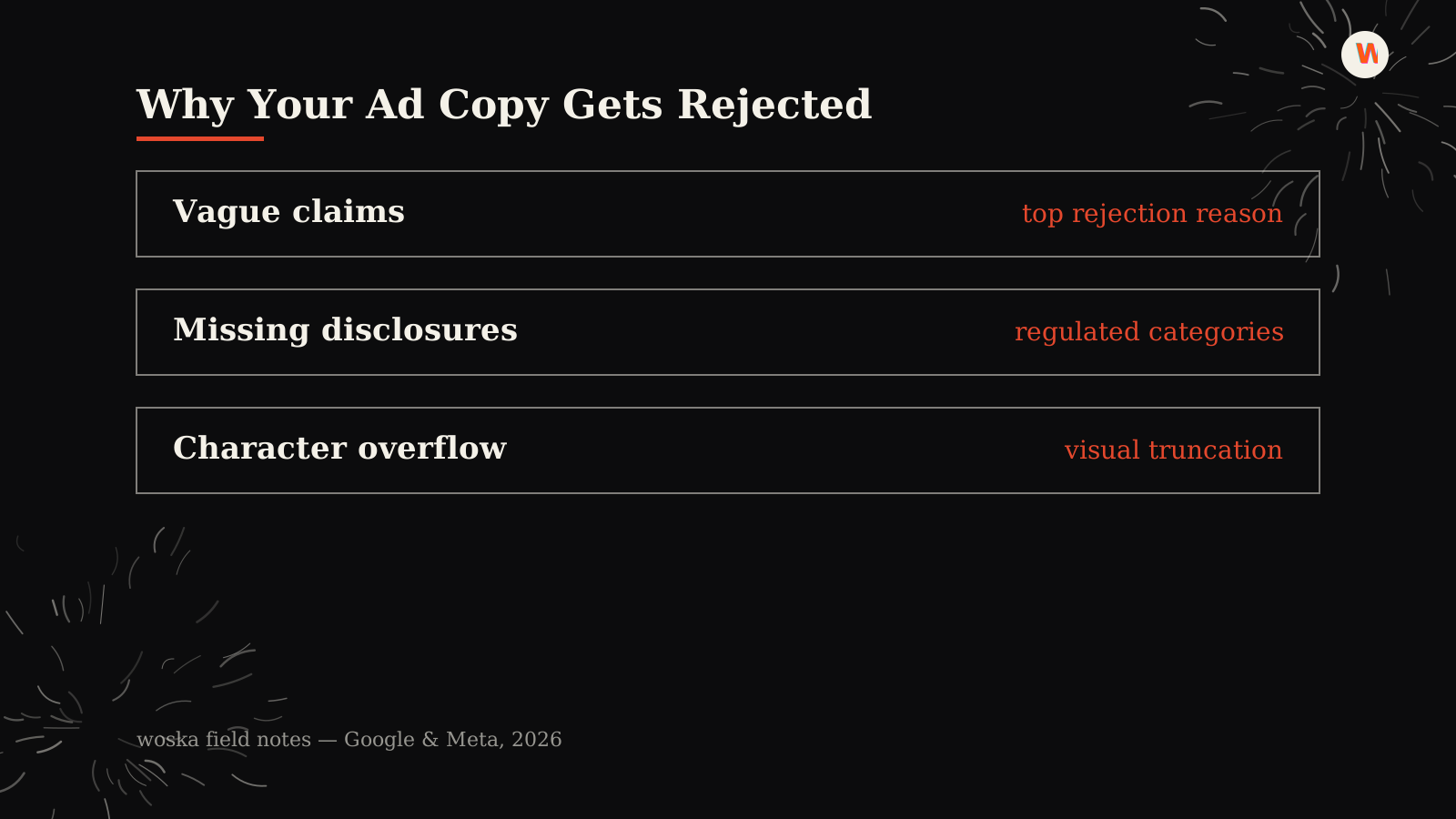
Cause 3: Missing disclosures for regulated categories
Financial services, healthcare, housing, employment, and credit-related ads all carry extra disclosure requirements on both platforms — often a specific disclaimer line, a licensing statement, or restricted targeting options. An ad that would be perfectly fine in most categories gets flagged the moment it touches one of these regulated areas without the required language attached.
Step 1: Draft your copy without worrying about limits first
Write the strongest version of your message before trimming — starting with character limits in mind tends to produce weaker, more compressed copy than writing freely and then editing down to fit.
Step 2: Check every field against every platform at once
Before uploading anything, run your full set of headlines, descriptions, and primary text through a single checker rather than manually counting characters or waiting for the platform's own rejection notice, which can take hours to arrive.
Step 3: Read the claim back as a stranger would
If a claim couldn't survive someone asking "compared to what?" or "says who?", it's a rejection risk on both platforms. Swap superlatives for specific, sourced numbers wherever possible.
Quick reference: platform limits
| Platform | Field | Limit |
|---|---|---|
| Google Ads | Headline | 30 characters |
| Google Ads | Description | 90 characters |
| Meta | Primary text (visible) | ~125 characters before truncation |
| Meta | Headline | 40 characters |
| LinkedIn Ads | Headline | 70 characters |
Which rejection cause should you check for first?
Character overflow is the easiest to catch and the most common cause overall, so check that first with a dedicated tool before uploading anything. Then read your claims for anything unverifiable, and finally confirm whether your ad category needs a specific disclosure — regulated categories are the least common cause but the slowest to resolve once flagged, since they often require a follow-up review cycle.
FAQ
Does a rejected ad hurt my account's standing with the platform? A single rejection is normal and doesn't damage your account — but repeated policy violations, especially unresolved ones, can lead to stricter review on future ads or account-level restrictions.
How long does an ad review usually take? Most reviews complete within 24 hours on both Google and Meta, though ads in regulated categories or ones flagged for manual review can take longer.
Can I appeal a rejection instead of rewriting the ad? Yes, both platforms allow appeals, and a genuinely compliant ad that was flagged incorrectly often gets reinstated — but appeals take longer than simply fixing an obvious character overflow or vague claim upfront.
Why did my ad get rejected on Meta but the same message worked fine on Google? The two platforms don't share a review system or exact policy wording — a claim or format that passes on one can still get flagged on the other, which is why checking against each platform's specific rules matters more than assuming approval on one means approval everywhere.
Do disclaimers count against my character limit? Yes — required disclosure text counts toward the same field limit as the rest of your copy, so factor it in before you finalize your headline or description length.
Related guides
- How Many Hashtags Should You Actually Use in 2026?
- ROAS vs CAC vs LTV: The 3 Marketing Metrics That Actually Matter
- Social Media Character Limits for Every Platform
- Explore Marketing tools
*Last updated September 2026.*
Bogdex · Founder & editor, woska
Bogdex builds and curates woska, testing AI tools against real workflows to judge which ones actually save time rather than which have the longest feature list.