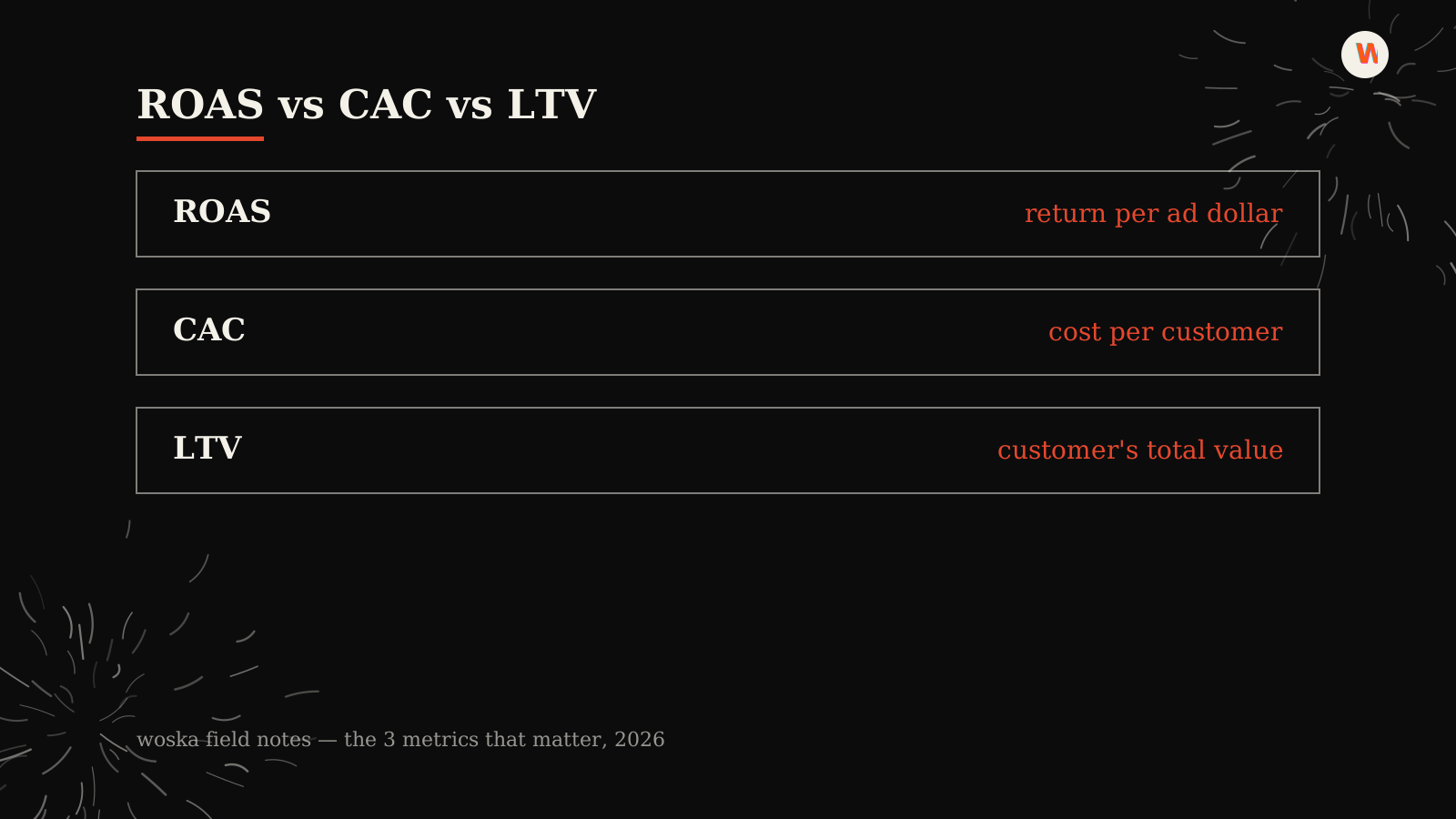
ROAS tells you how much revenue a specific campaign generated per dollar spent, CAC tells you what it actually cost to acquire one customer, and LTV tells you what that customer is worth over their entire relationship with you. Used alone, each metric can be misleading — a high ROAS campaign can still be unprofitable if CAC is too high relative to LTV. Used together, they answer the one question that actually matters: is this spend making money, not just generating activity.

ROAS: how efficient was this specific campaign?
Return on ad spend is revenue generated divided by ad spend, usually expressed as a ratio like 4:1 or a percentage like 400%. A 4:1 ROAS campaign generated $4 in revenue for every $1 spent on ads. ROAS is a campaign-level efficiency metric — it tells you whether a specific channel or campaign is pulling its weight, but it says nothing about your actual profit margin or what happens after that first sale.
CAC: what did it actually cost to win one customer?
Customer acquisition cost is your total acquisition spend divided by the number of new customers it produced. A simple version uses just media spend; a "fully loaded" version adds salaries, tools, and overhead tied to acquisition. CAC answers a different question than ROAS: not "how efficient was this campaign" but "what is my real cost to grow."
LTV: what is a customer actually worth?
Lifetime value estimates the total revenue a customer generates over their entire relationship with you — not just their first purchase. LTV is what makes CAC meaningful: a $200 CAC is a disaster for a product with a $150 LTV, and a complete non-issue for a product with a $3,000 LTV.
Calculate all three from your own numbers →
Step 1: Calculate each metric on the same time window
Mixing a 30-day ROAS calculation with a 90-day CAC calculation produces numbers that look connected but aren't actually comparable. Pick a consistent window — monthly is common — and calculate all three metrics against it together.
Step 2: Check your LTV:CAC ratio, not just each number alone
3:1 is the most commonly cited healthy benchmark for LTV:CAC — meaning a customer is worth at least three times what it cost to acquire them. Below that suggests you're spending too much relative to what customers actually return; well above 5:1 for a long stretch can actually mean you're under-investing in growth relative to what your unit economics could support.
Step 3: Use ROAS to optimize spend, CAC and LTV to judge the business
ROAS is the metric to watch week-to-week for adjusting a live campaign's budget. CAC and LTV are the metrics that tell you whether the underlying business model is sound — they move more slowly and matter more for a fundraising conversation or a long-term budget decision than for a daily spend adjustment.
Quick reference
| Metric | Formula | Answers |
|---|---|---|
| ROAS | Revenue ÷ ad spend | Is this campaign efficient? |
| CAC | Acquisition spend ÷ new customers | What does one customer actually cost? |
| LTV | Total customer revenue over time | What is one customer actually worth? |
| LTV:CAC | LTV ÷ CAC | Is the business model sustainable? |
Which metric should you check first?
If you're optimizing a live ad campaign, start with ROAS — it's the fastest signal and updates in near real time. If you're deciding whether a channel or the business model itself is working, start with LTV:CAC — a strong ROAS with a weak LTV:CAC ratio usually means you're winning short-term attention at an unsustainable long-term cost.
FAQ
What's a good ROAS? It depends heavily on margins — a 4:1 return is a commonly cited healthy benchmark for many ecommerce businesses, but a high-margin business can be profitable well below that, and a thin-margin business may need more.
Is CAC the same as cost per lead or cost per click? No — CAC specifically measures cost per new customer, which is further down the funnel than a lead or a click. A campaign can have a low cost per click and still a high CAC if conversion rates from click to paying customer are weak.
Why is my LTV:CAC ratio unrealistically high? An inflated customer lifespan estimate is the most common cause — without enough historical retention data, use a conservative lifespan estimate rather than an optimistic best case.
Should fully loaded CAC include salaries, or just media spend? Fully loaded CAC includes salaries, tools, and overhead tied to acquisition; a simpler media-only version is easier to calculate but understates your real cost — treat a media-only CAC as a floor, not the complete picture.
Can a one-time-purchase business use LTV the same way as a subscription business? Yes, with an adjustment — model LTV around realistic repeat-purchase behavior and average order value over time instead of a recurring subscription fee, since the underlying question (total value over the relationship) is the same either way.
Related guides
- Why Google and Meta Keep Rejecting Your Ad Copy
- How to Calculate Your Break-Even Point
- AI Subscription Cost Calculator
- Explore Marketing tools
*Last updated September 2026.*
Bogdex · Founder & editor, woska
Bogdex builds and curates woska, testing AI tools against real workflows to judge which ones actually save time rather than which have the longest feature list.