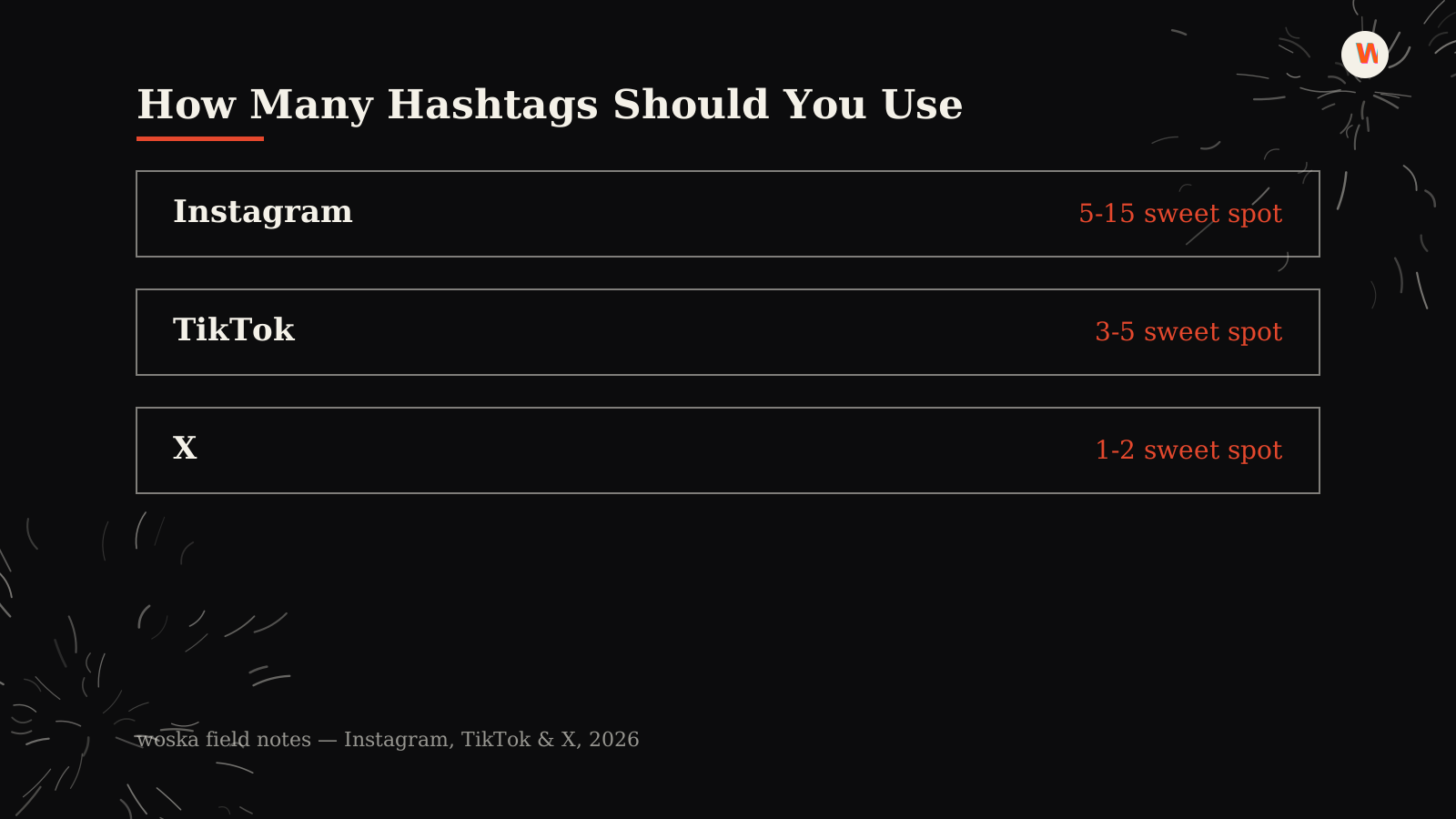
Instagram's sweet spot is 5-15 relevant hashtags, TikTok performs best with 3-5 highly specific ones, and X rarely benefits from more than 1-2. The old advice to "use the maximum allowed" has aged badly — platforms have gotten better at distinguishing genuinely relevant tags from a stuffed list, and an oversized, unfocused hashtag block increasingly reads as a weaker signal than a small, precise one.
Instagram: 5-15, mixing broad and specific
Instagram technically allows up to 30 hashtags per post, but most creators and brands see better results in the 5-15 range. The reason isn't a hidden penalty for using more — it's that a smaller, more targeted set is easier to make genuinely relevant, and relevance is what the algorithm and real users both respond to. A useful mix is 2-3 broad tags (`#fitness`) for reach, and the rest specific and niche (`#morningworkoutroutine`) for a more targeted, less competitive audience.
TikTok: 3-5, closely tied to your actual content
TikTok's own creators frequently report that piling on tags does less than picking 3-5 that precisely match what the video is actually about, often including one or two tags tied to a current trend or sound. TikTok's discovery algorithm leans heavily on watch behavior and completion rate — hashtags help with initial categorization, but they don't substitute for content that holds attention.
X: 1-2, if you use any at all
X's fast-scrolling, text-dense feed means multiple hashtags crowded into a short post often reduce readability more than they add discoverability. Many high-performing X accounts use zero or one hashtag per post, reserving them for a specific trending topic or event rather than as a standard habit.
Generate a relevant hashtag set for your topic →
Step 1: Match your hashtag count to the platform, not a universal rule
There's no single "right number" across platforms — the differences above come from how each platform's discovery system actually works, not an arbitrary style preference.
Step 2: Mix broad and specific tags instead of choosing one extreme
Broad tags have more total search volume but far more competition; specific tags have less volume but a much better chance of actually surfacing your post to people who care about that exact topic. A post using only broad tags competes with millions of others; a post using only ultra-specific tags may not get discovered at all.
Step 3: Rotate your hashtag sets instead of reusing the same ones
Reusing an identical hashtag block on every single post can read as a spam signal to some platforms' algorithms, and it stops you from testing what actually drives engagement for different types of content. Generate a fresh, relevant set for each new topic rather than defaulting to one saved list.
Quick reference
| Platform | Sweet spot | Why |
|---|---|---|
| 5-15 | Balances reach and relevance | |
| TikTok | 3-5 | Algorithm favors precision over volume |
| X | 1-2 | Crowds out readability past that |
| 3-5 | Works best tied to a professional topic, not a trend |
Should you ever use the maximum allowed?
Rarely. The cases where a larger hashtag count still makes sense are niche communities (art, collector, and hobbyist spaces) where dense tagging is a genuine platform norm that audiences expect and use to browse — outside of those specific communities, a smaller, sharper set consistently outperforms a maxed-out list.
FAQ
Do hashtags still matter in 2026, or has algorithmic discovery replaced them? They still matter, but less as a discovery mechanism on their own and more as a categorization and context signal that supports an algorithm already leaning heavily on engagement and watch time.
Should hashtags go in the caption or the first comment on Instagram? Either works technically, but putting them in the caption is now generally treated the same as the first comment by Instagram's system — the bigger factor is relevance and count, not placement.
Can using too many hashtags actually hurt my reach? Not through a direct penalty, but a long, unfocused hashtag block dilutes relevance signals and can look spammy to both the algorithm and real viewers, which indirectly reduces engagement.
Should every post use different hashtags, or is a core set okay? A small core set tied to your niche is fine as a foundation, but supplement it with a few post-specific tags each time rather than posting the exact same full set every time.
Do hashtags work the same way on Threads as they do on X? Not exactly — Threads has leaned more toward topic tags for browsing rather than the search-driven hashtag culture of X, so treat it more like Instagram's approach than X's minimal-hashtag norm.
Related guides
- The Real Character Limits for X, LinkedIn, Instagram & TikTok
- Why Google and Meta Keep Rejecting Your Ad Copy
- Social Media Character Counter
- Explore Marketing tools
*Last updated September 2026.*
Bogdex · Founder & editor, woska
Bogdex builds and curates woska, testing AI tools against real workflows to judge which ones actually save time rather than which have the longest feature list.