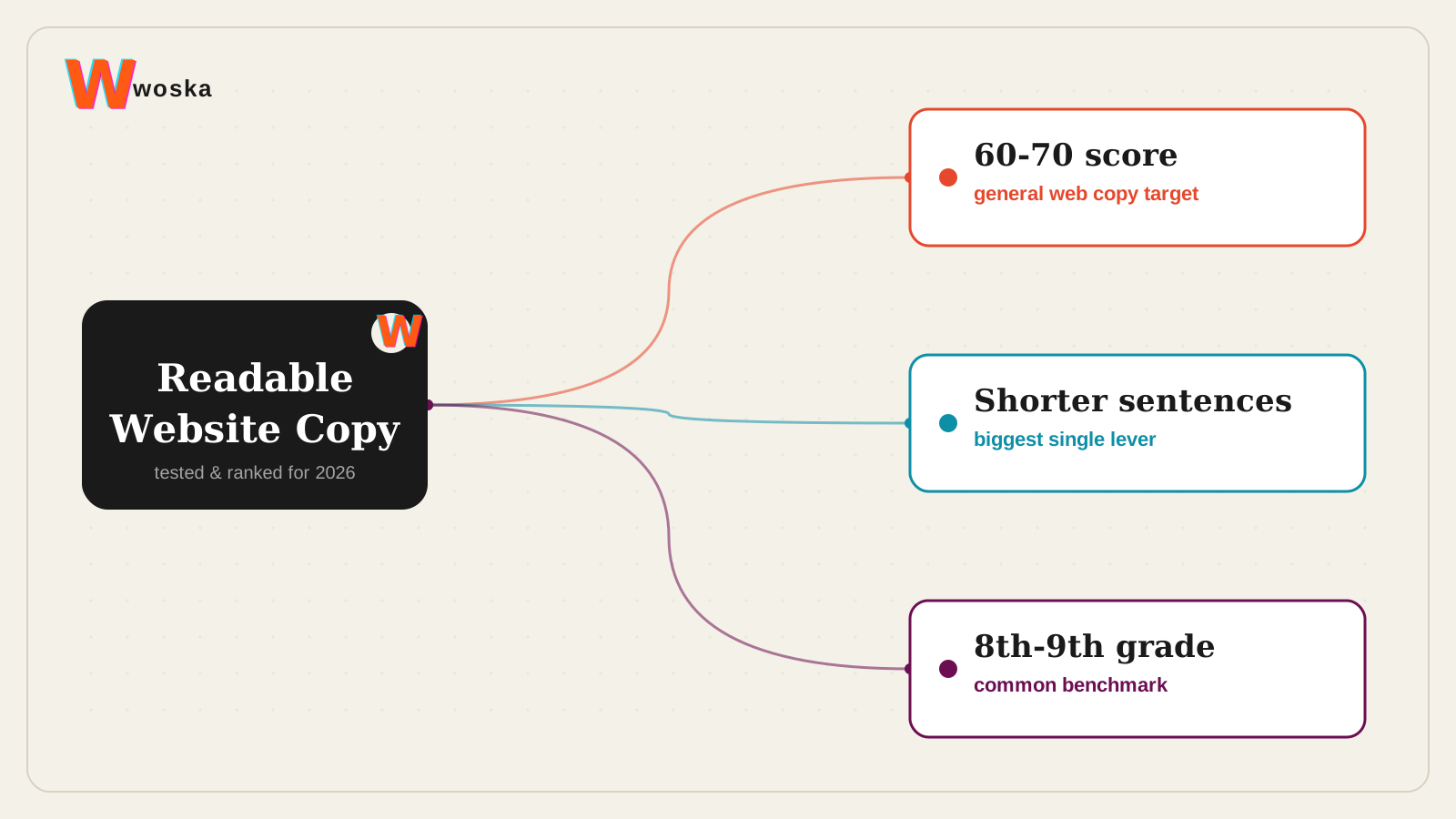
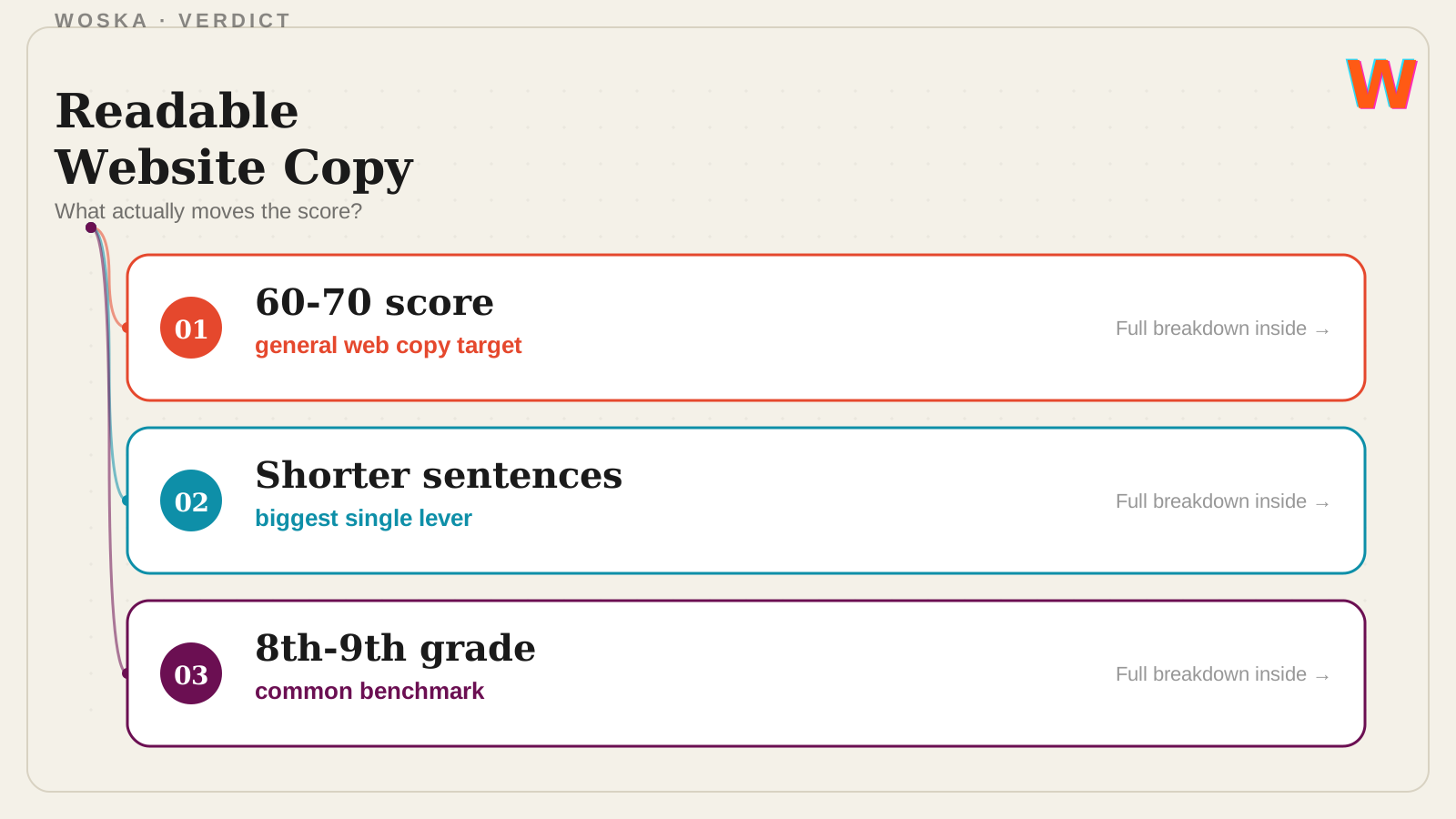
For general-audience web content and marketing copy, aim for a Flesch Reading Ease score of 60-70, which roughly corresponds to an 8th-9th grade reading level. That's not a dumbing-down target — it's the level most adults, regardless of education, read most comfortably and quickly, which matters more on a web page someone is scanning than in a document they've committed to reading closely.
What the score actually measures
The Flesch Reading Ease score is calculated from two inputs: average sentence length and average syllables per word. It doesn't know or care about your vocabulary's sophistication in any subjective sense — it's a mechanical measure of how much working memory a sentence demands. A 40-word sentence with simple words can still score poorly; a shorter sentence with a few technical terms can still score reasonably well.
Why sentence length matters more than word choice
The most common mistake in trying to "simplify" writing is swapping in shorter words while keeping long, complex sentence structures — which barely moves the score. Sentence length has a bigger effect on readability than vocabulary does. If your score is too high (meaning too hard to read), split long sentences before you go word-hunting for simpler synonyms.
Check your own draft's score instantly →
Step 1: Know your actual audience before you pick a target
General consumer marketing copy benefits from the 60-70 range. Technical documentation, legal content, and academic writing can reasonably score lower — forcing simplicity where precision genuinely matters more can make content less accurate, not more useful.
Step 2: Edit the final draft, not the outline
Readability scores shift meaningfully during editing — an early outline or first draft often reads very differently from a polished final version. Check the score after your last substantive edit, not before, or you'll be optimizing a version of the text that won't ship.
Step 3: Treat the score as a diagnostic, not a target to game
A high readability score achieved by chopping every sentence into a fragment doesn't actually read better — it reads choppy. Use the score to catch genuinely dense, hard-to-follow passages, not as a number to minimize at the expense of natural writing.
Quick reference: what the score means
| Flesch score | Reading level | Good for |
|---|---|---|
| 90-100 | 5th grade | Very simple, broad consumer content |
| 60-70 | 8th-9th grade | General web copy, marketing |
| 30-50 | College level | Technical or industry-specific content |
| 0-30 | Graduate level | Academic and legal writing |
Should every page on your site hit the same score?
No. A homepage and a pricing page benefit from the easiest, most scannable writing since they're read quickly by a broad audience; a detailed technical documentation page or an in-depth guide for an expert audience can reasonably sit at a lower score, since accuracy and completeness matter more there than speed of comprehension.
FAQ
Does a low readability score mean the writing is bad? Not necessarily — it means the text takes more effort to read quickly, which is appropriate for legal documents or academic papers and a liability in marketing copy or instructions. Match the target to the actual context, not a single universal standard.
Is the syllable-counting behind this formula perfectly accurate? It uses a standard approximation (counting vowel-sound groups) that's accurate for the vast majority of English words but can occasionally miscount unusual ones — this affects the final score only marginally.
Do these formulas work for languages other than English? No — the Flesch formulas were calibrated specifically against English syllable and sentence patterns, so applying the same formula to another language won't produce a meaningful score.
Why didn't my score change much after I simplified my vocabulary? Because sentence length usually drives the score more than word choice does — if you swapped in simpler words but kept long, complex sentences, the score often barely moves.
What score should a short email subject line or headline aim for? The formula needs at least a full sentence to produce a meaningful result — a very short fragment can return a number, but it's much less reliable than checking full paragraphs of real body copy.
Related guides
- ROAS vs CAC vs LTV: The 3 Marketing Metrics That Actually Matter
- How to Estimate Your AI API Costs Before You Build a Feature
- Best AI Grammar Checker in 2026
- Explore Writing & Content tools
*Last updated September 2026.*
Bogdex · Founder & editor, woska
Bogdex builds and curates woska, testing AI tools against real workflows to judge which ones actually save time rather than which have the longest feature list.