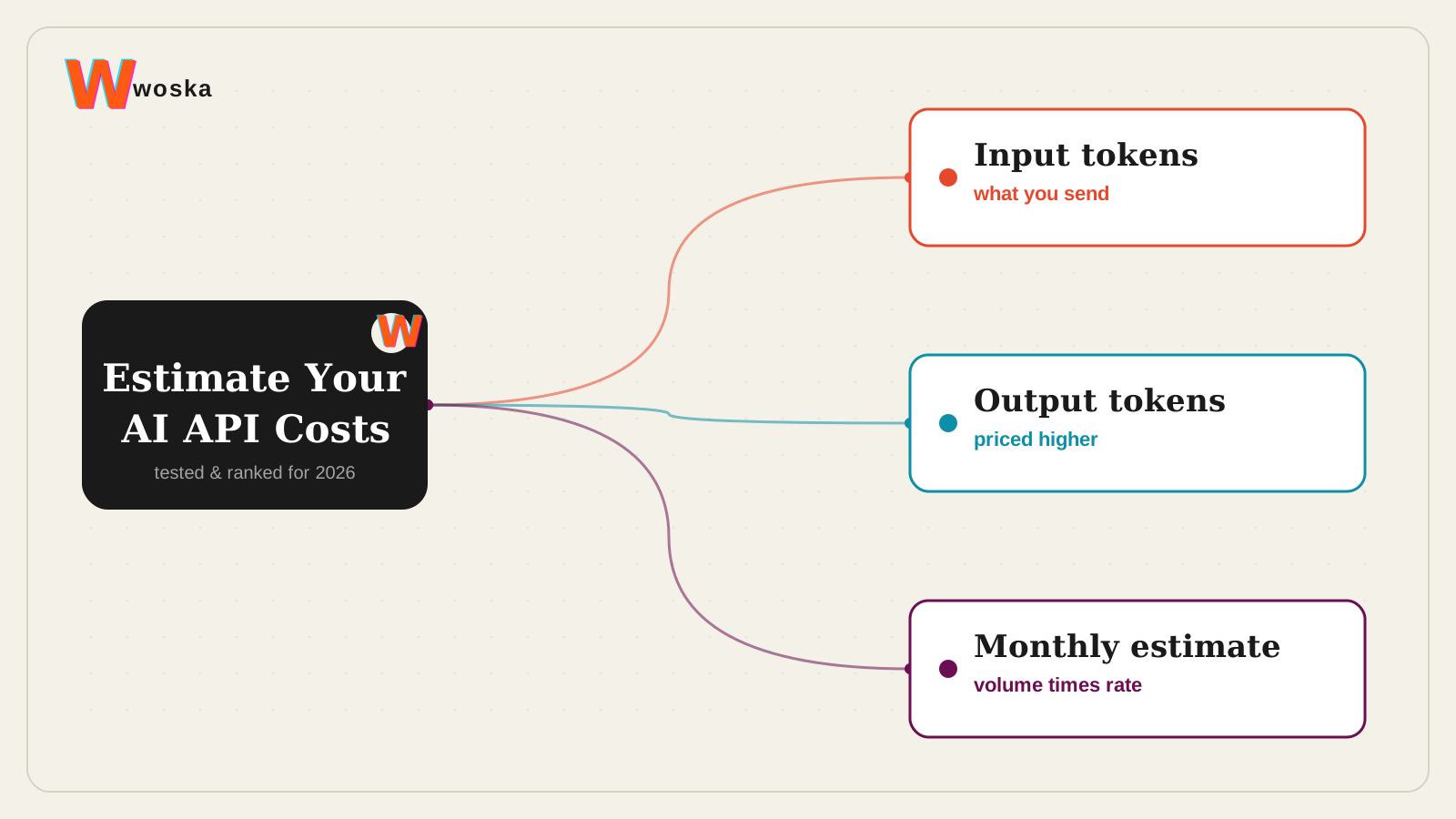
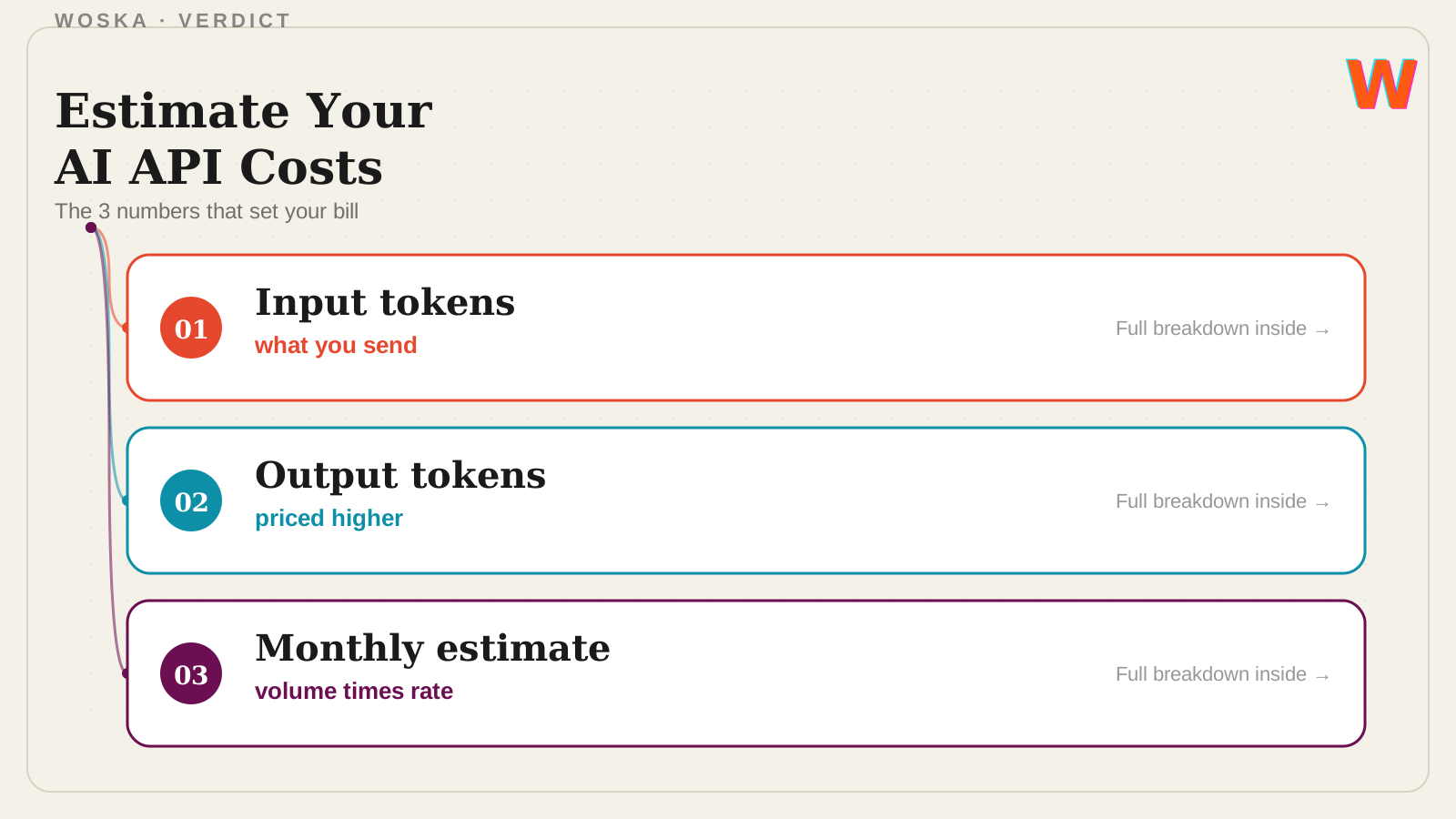
AI API costs come down to three numbers you can estimate before writing a single line of code: how many tokens your typical input uses, how many tokens the typical output generates, and how many requests you expect per day or month. Multiply those together against your model's per-token rate, and you have a realistic budget — no need to build the feature first and find out the cost from a surprise bill.
Step 1: Understand how token pricing actually works
Most providers charge separately for input tokens (what you send) and output tokens (what the model generates), with output almost always priced several times higher than input — generating text costs more compute per token than reading it. A model that looks cheap on input pricing alone can still be expensive if your use case produces long responses.
Step 2: Estimate your token count with a sample, not a guess
A token is roughly a word or part of a word — a useful rule of thumb is about 4 characters or 0.75 words per token for English text. Take a realistic sample prompt and expected response for your actual feature, run it through a token counter, and use that as your per-request baseline instead of guessing.
Estimate tokens from real sample text →
Step 3: Multiply by realistic volume, not average volume
Budget against your expected peak day, not your typical average day. A feature that costs very little at average usage can look very different during a launch spike or a viral moment — and that's exactly the scenario where an unbudgeted cost surprise actually hurts.
Project cost per request, day, and month →
Step 4: Compare models on your actual workload, not published benchmarks
The cheapest model per token isn't always the cheapest per task, if it requires more retries or produces lower-quality output that needs a second pass. Run the same realistic prompt through a couple of candidate models and compare total cost per successful outcome, not just the sticker price per million tokens.
Step 5: Re-check pricing periodically
AI model pricing changes more often than most other software costs — new model versions ship with new rates, and tokenizer changes can shift real cost even when the per-token price stays the same. Build a habit of re-checking your assumptions quarterly rather than budgeting once and forgetting about it.
Quick reference
| Factor | What to do |
|---|---|
| Input tokens | Estimate from a real sample prompt, not a guess |
| Output tokens | Estimate from a real sample response — usually priced higher than input |
| Request volume | Budget against peak day, not average day |
| Model choice | Compare cost per successful outcome, not just per-token price |
| Pricing changes | Re-check quarterly — rates and tokenizers both shift |
Should you estimate cost before or after building a prototype?
Before, if the feature's viability actually depends on the cost being reasonable at scale — there's no point building something that only works financially at a fraction of the volume you'd actually need. A rough token-based estimate using a realistic sample takes minutes and can save you from building something that turns out to be economically unworkable at real usage levels.
FAQ
How accurate is a token-based cost estimate compared to my actual bill? Reasonably close for planning purposes — token counting estimates are typically within a few percent of a model's exact tokenizer, though real bills can vary more for non-English text or unusually structured prompts.
Does a bigger context window cost more even if I don't use all of it? No — you're only charged for the tokens you actually send and receive, not the model's maximum context window size. A larger context window just raises the ceiling on how much you could send in a single request.
Should I budget for the cheapest model or the most capable one? It depends on the task — a cheaper model that needs more retries or produces lower-quality output can end up costing more overall than a pricier model that succeeds on the first attempt.
Do cached or batch requests change this estimate? Yes, if your provider offers a discount for cached input or batch processing — check whether your use case qualifies, since a standard per-token estimate can meaningfully overstate cost for high-volume, repeatable requests.
How often do AI API prices actually change? More frequently than most SaaS pricing — new model releases, tokenizer updates, and occasional price cuts or increases happen multiple times a year, which is why a one-time estimate needs periodic re-checking rather than being treated as permanent.
Related guides
- What Reading Level Should Your Website Copy Actually Be?
- Claude Sonnet 5 Pricing Explained
- AI Token Counter
- Explore Productivity tools
*Last updated September 2026.*
Bogdex · Founder & editor, woska
Bogdex builds and curates woska, testing AI tools against real workflows to judge which ones actually save time rather than which have the longest feature list.