Your break-even point is the number of units you need to sell for total revenue to exactly equal total costs — and it only requires three numbers to calculate: your fixed costs, your price per unit, and your variable cost per unit. Past that point, every additional sale contributes to profit instead of just covering costs. It's one of the few genuinely useful pieces of "finance math" that a non-finance founder can do by hand in under a minute.
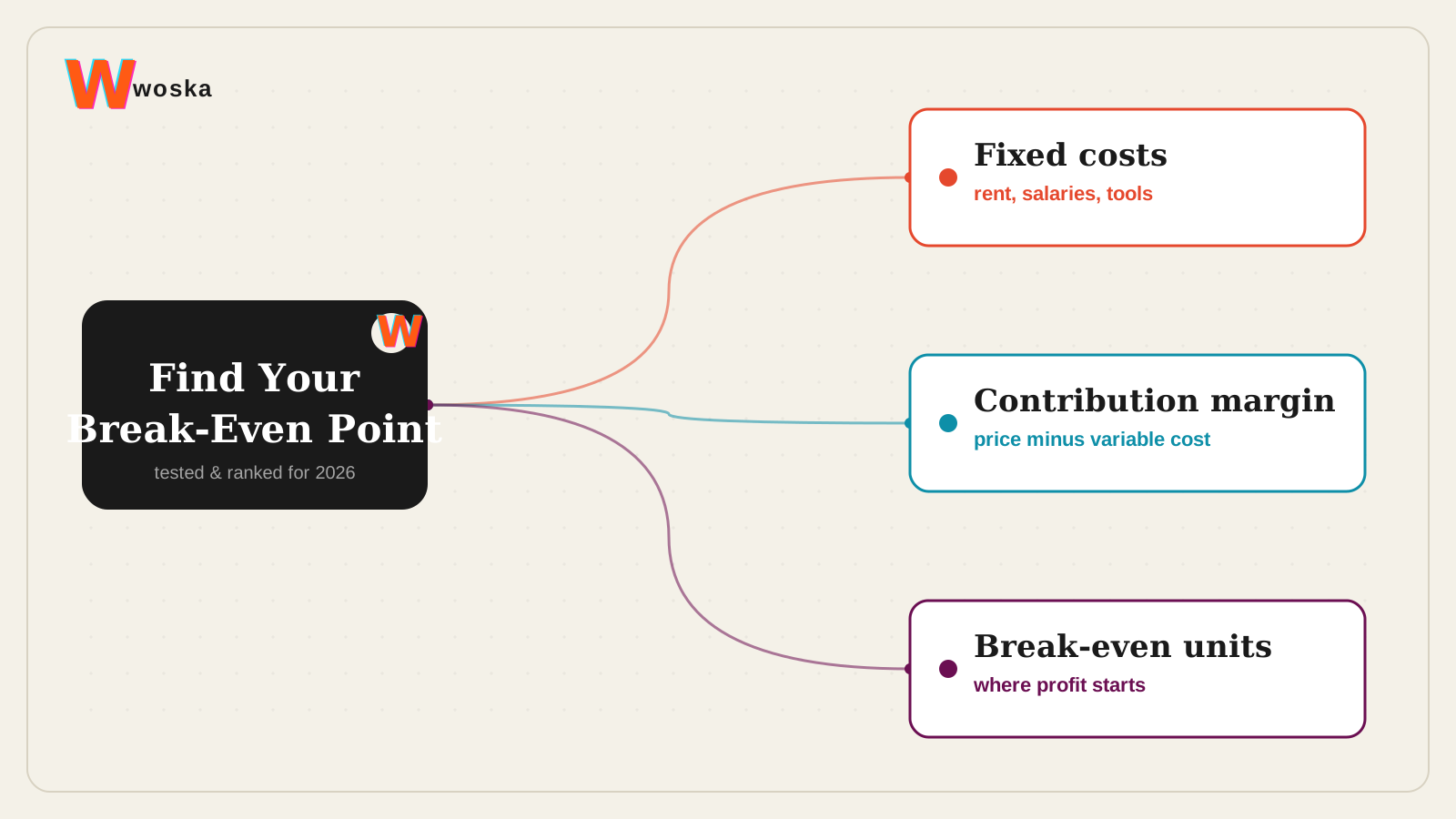
The three numbers you need
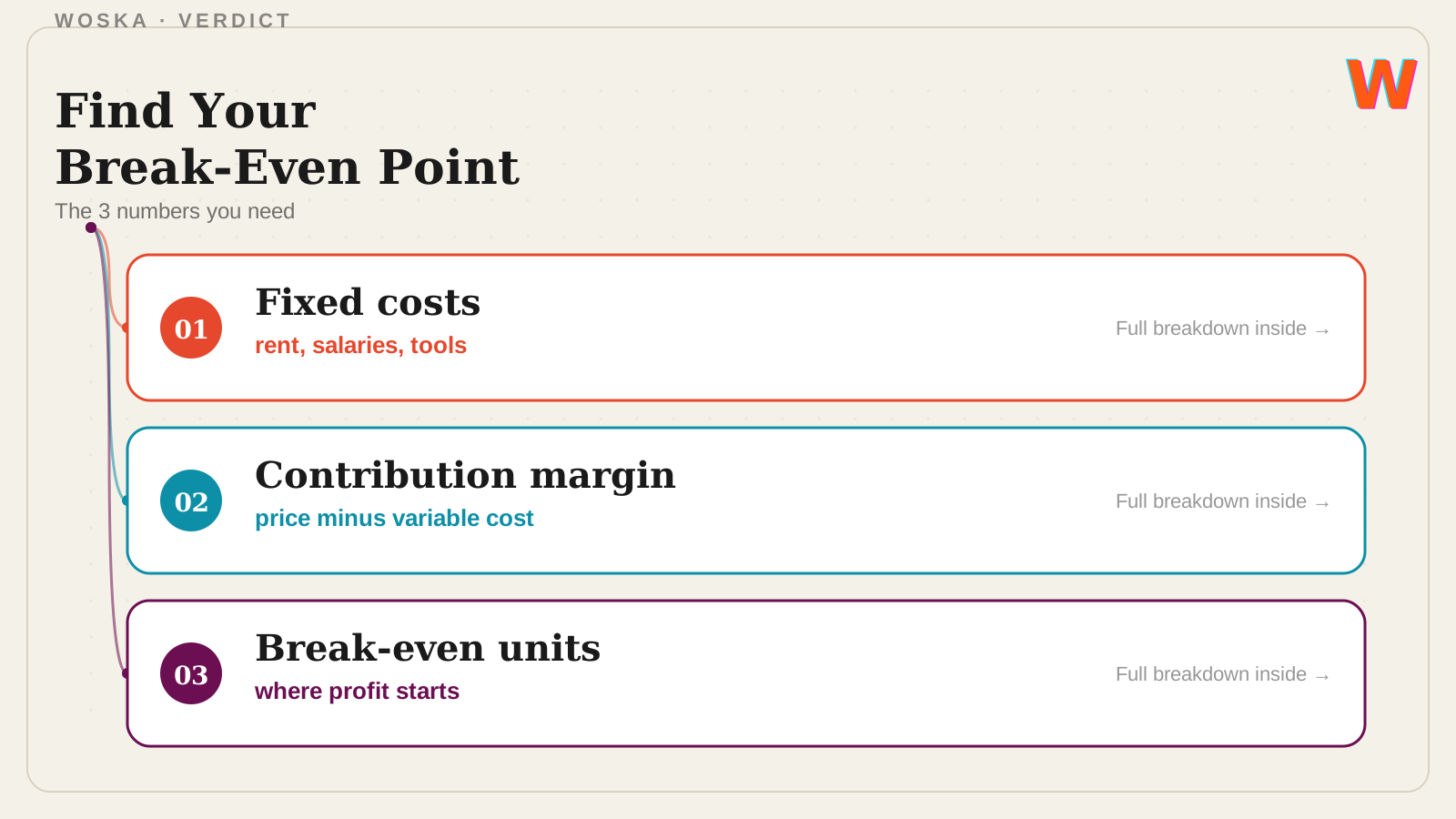
Fixed costs are expenses that stay the same no matter how much you sell — rent, salaries, software subscriptions. Price per unit is what you charge for one sale. Variable cost per unit is what it actually costs you to produce or deliver one unit — materials, per-unit shipping, payment processing fees.
The formula
Break-even point (in units) = Fixed costs ÷ (Price per unit − Variable cost per unit)
The denominator here — price minus variable cost — is your contribution margin: the amount each sale contributes toward covering fixed costs, and eventually, profit. A $50 product costing $20 in variable costs has a $30 contribution margin. With $6,000 in monthly fixed costs, you'd need 200 units a month ($6,000 ÷ $30) just to break even.
Run your own numbers instantly →
Step 1: Separate fixed costs from variable costs honestly
The most common mistake here is misclassifying a cost that actually scales with sales volume — like payment processing fees — as fixed. If a cost changes based on how much you sell, it belongs in variable cost per unit, not fixed costs, even if it feels like a routine, "fixed-feeling" expense.
Step 2: Calculate contribution margin before anything else
Contribution margin (price minus variable cost) is the number that makes every other break-even calculation possible. If your contribution margin is small relative to your price, you'll need very high volume to break even — which is worth knowing before you commit to a price point, not after.
Step 3: Convert units to revenue if that's more useful
Break-even revenue = Break-even units × Price per unit. In the example above, 200 units at $50 each means $10,000 in monthly revenue is your break-even point — often a more intuitive number to plan around than a raw unit count, especially for a service business without a literal "unit."
Quick reference
| Term | What it means |
|---|---|
| Fixed costs | Expenses unaffected by sales volume |
| Variable cost per unit | Direct cost to produce or deliver one sale |
| Contribution margin | Price minus variable cost per unit |
| Break-even units | Fixed costs ÷ contribution margin |
| Break-even revenue | Break-even units × price |
When should you actually recalculate this?
Recalculate whenever your pricing, costs, or fixed overhead change meaningfully — not just once at launch. A new hire, a new tool subscription, or a supplier price increase all shift your fixed or variable costs, which shifts your break-even point along with them. Treat it as a living number for a growing business, not a one-time exercise.
FAQ
What counts as a fixed cost versus a variable cost? Fixed costs (rent, salaries, software subscriptions) stay the same regardless of sales volume; variable costs (materials, per-unit shipping, payment processing) scale directly with each unit sold.
Does break-even analysis account for taxes? No — this calculates a pre-tax break-even point based on operating costs and pricing. Taxes are a separate consideration on top of whatever profit is generated beyond break-even.
What if my break-even point looks impossibly high? That usually means fixed costs are too high relative to contribution margin — consider whether the price can go up, variable costs can come down, or some fixed costs can be cut or delayed.
Can a service business use this the same way as a product business? Yes — treat a billable hour or client engagement as the "unit," with your rate as price and any direct delivery costs (subcontractors, tools tied to that specific engagement) as variable cost per unit.
Is a low contribution margin always a bad sign? Not necessarily, but it means you need very high volume to be profitable — worth checking whether that volume is realistic for your market before committing to that price point.
Related guides
- TAM, SAM, SOM Explained: How to Size a Market Investors Will Believe
- What to Include on an Invoice So You Actually Get Paid on Time
- TAM SAM SOM Calculator
- Explore Business & Sales tools
*Last updated September 2026.*
Bogdex · Founder & editor, woska
Bogdex builds and curates woska, testing AI tools against real workflows to judge which ones actually save time rather than which have the longest feature list.