A missing due date, an unclear payment method, or a vague line-item description are the three most common reasons a client's payment gets delayed — not because they're avoiding payment, but because the invoice itself leaves a decision or a lookup for them to do before they can pay. Every field on a well-built invoice exists to remove a reason for the payment to stall.
The fields that actually matter
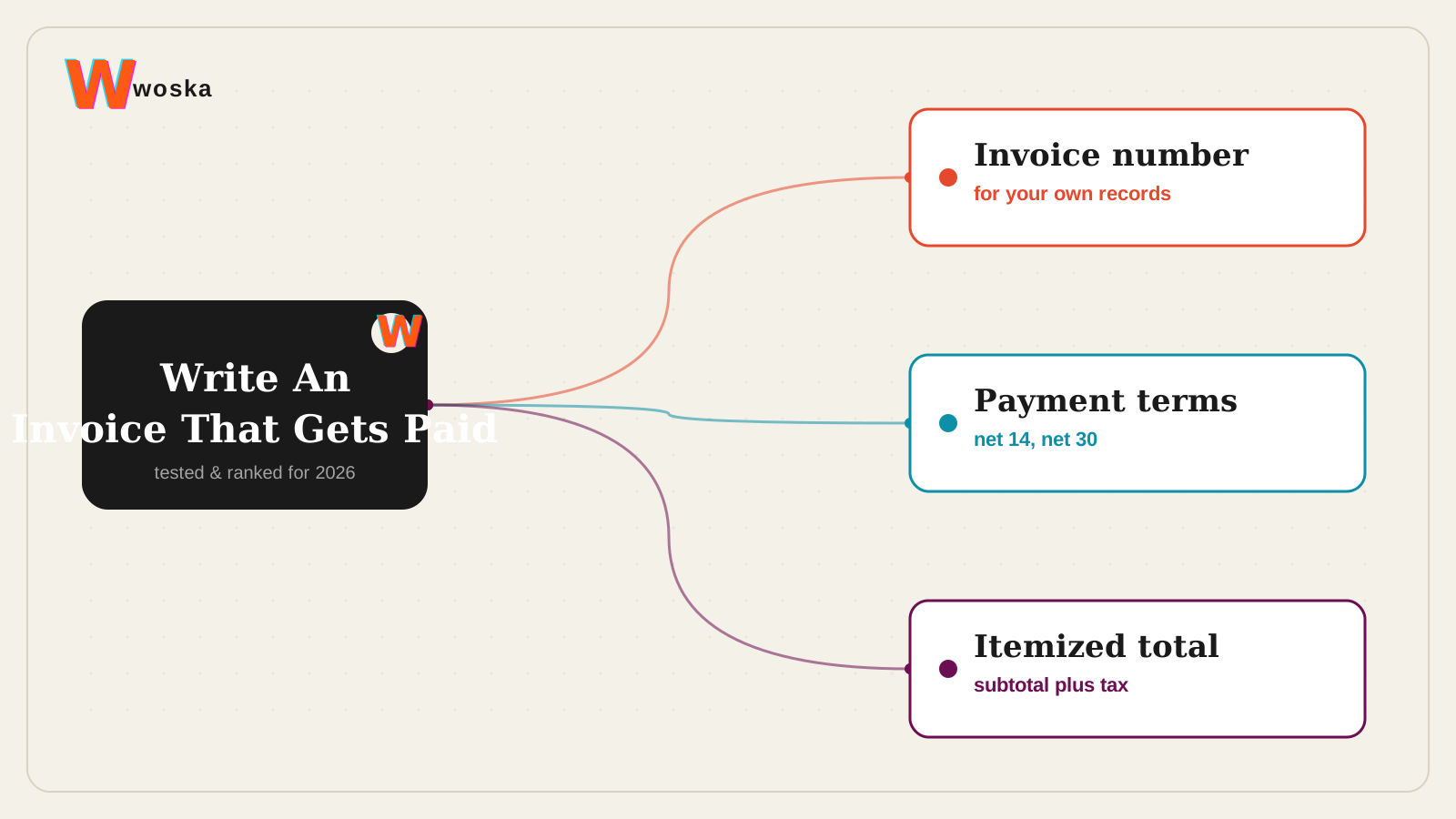
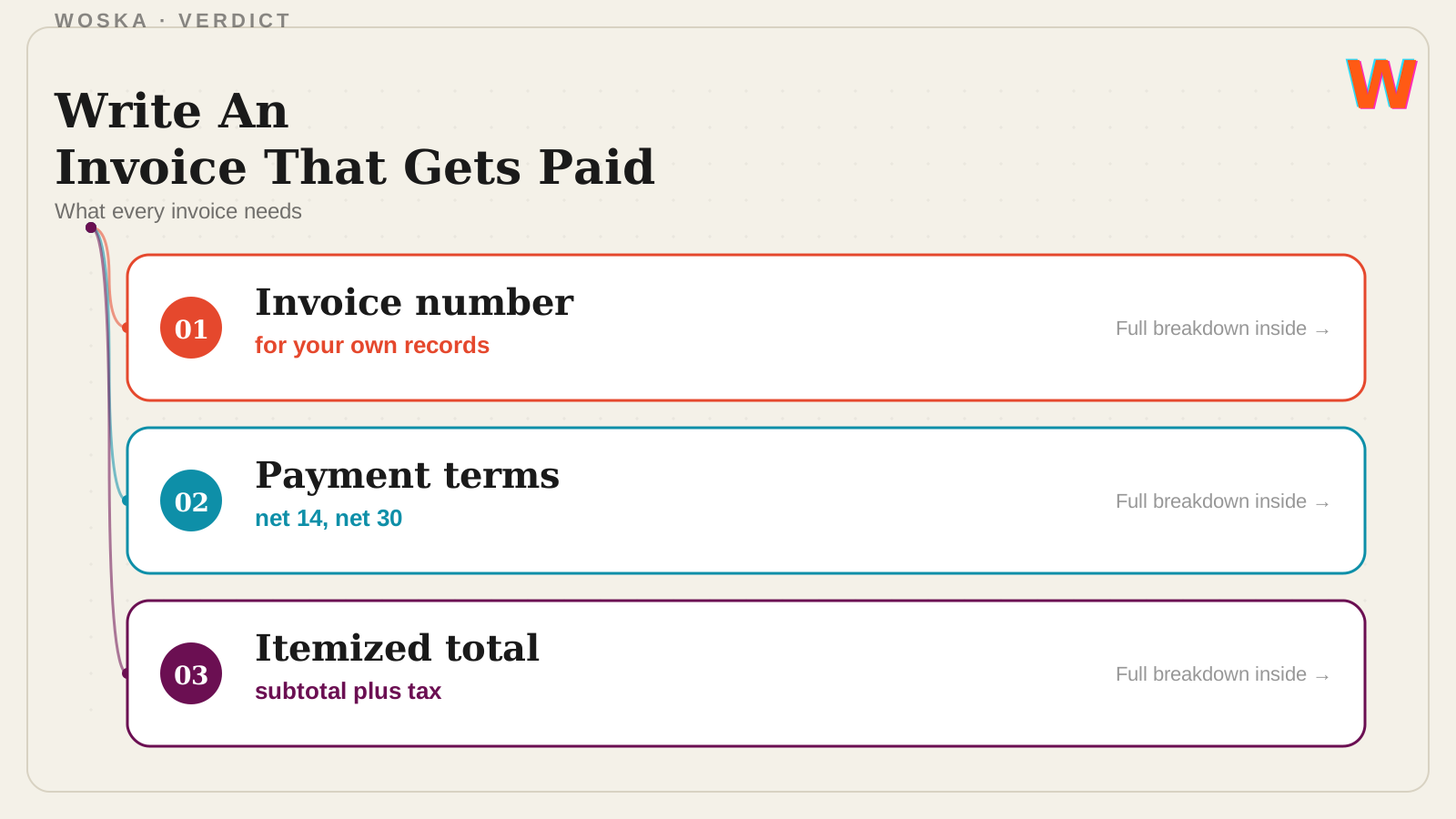
Your business details and the client's details, clearly labeled "from" and "bill to" — this sounds obvious, but a surprising number of invoices bury this in a header logo instead of plain text a bookkeeping system can read. An invoice number, so both sides have a shared reference for the exact transaction. An invoice date and a due date — a due date is not optional; "please pay promptly" is not a deadline. Itemized line items with a clear description, quantity, and rate — not just a single lump total. A subtotal, tax, and total, calculated and shown separately. Payment terms and accepted methods, stated explicitly rather than assumed.
Build one in a few minutes, free →
Step 1: Set a specific due date, not a vague timeframe
"Due upon receipt" or "please pay promptly" gives a client room to interpret when payment is actually expected. A specific date, or a clear term like "Net 14" (14 days from invoice date) or "Net 30," removes the ambiguity and gives you a concrete point to follow up from if payment is late.
Step 2: Itemize instead of sending a single lump sum
A single "Services rendered: $2,400" line invites a client to ask what exactly that covers before approving payment — an extra back-and-forth that delays everything. Breaking it into itemized lines (description, quantity, rate) lets a client's approver sign off without needing to ask a clarifying question first.
Step 3: State your payment method up front
Don't make a client email you to ask how to pay. State it directly on the invoice — bank transfer details, a payment link, or whichever method you actually accept — so the invoice itself is a complete, actionable document rather than the first step in a longer conversation.
Step 4: Use a consistent invoice numbering system
A simple sequential system (INV-001, INV-002) keeps your own records organized and gives you and the client a fast way to reference a specific invoice in any follow-up conversation, instead of describing it by date or project name.
Quick reference: the invoice checklist
| Field | Why it matters |
|---|---|
| Invoice number | Shared reference for both sides |
| Invoice date + due date | Removes ambiguity about when payment is expected |
| Itemized line items | Prevents a clarifying question before approval |
| Subtotal, tax, total | Shows the math instead of asking the client to trust a lump sum |
| Payment method | Makes the invoice actionable without a follow-up email |
| Notes / payment terms | States late-fee or discount policy upfront, if you have one |
Should every invoice include the same payment terms?
Not necessarily — Net 30 is common for larger clients and enterprise accounts, while Net 14 or Net 7 is reasonable for smaller, faster-moving engagements. What matters more than which specific term you choose is stating it clearly and consistently, so clients aren't guessing at your expectations invoice to invoice.
FAQ
Is an invoice missing a due date legally valid? It's still a valid billing document in most cases, but omitting a due date makes it much harder to justify following up on a late payment — there was never a stated deadline to be late against.
Should I add a late fee to my invoice terms? It can help, but only if you actually intend to enforce it — a stated late fee that's never applied trains clients to ignore it. If you include one, keep it modest and clearly stated in the notes section.
Can I send an invoice before the work is finished? Yes, for milestone-based or retainer work — just be clear in the description that it's a partial or upfront invoice rather than a final one, so there's no confusion when the next invoice arrives.
What's the difference between an invoice and a quote or estimate? A quote or estimate is a proposed price before work begins and isn't a request for payment; an invoice is issued after (or during, for milestone billing) the work and is a formal request for payment by a specific date.
Do I need to include tax on every invoice? It depends on your business type, location, and the client's location — confirm your specific tax obligations with a professional, since requirements vary meaningfully by jurisdiction and aren't something a generic template can guarantee correctly.
Related guides
- How to Calculate Your Break-Even Point
- TAM, SAM, SOM Explained: How to Size a Market Investors Will Believe
- AI Subscription Cost Calculator
- Explore Business & Sales tools
*Last updated September 2026.*
Bogdex · Founder & editor, woska
Bogdex builds and curates woska, testing AI tools against real workflows to judge which ones actually save time rather than which have the longest feature list.