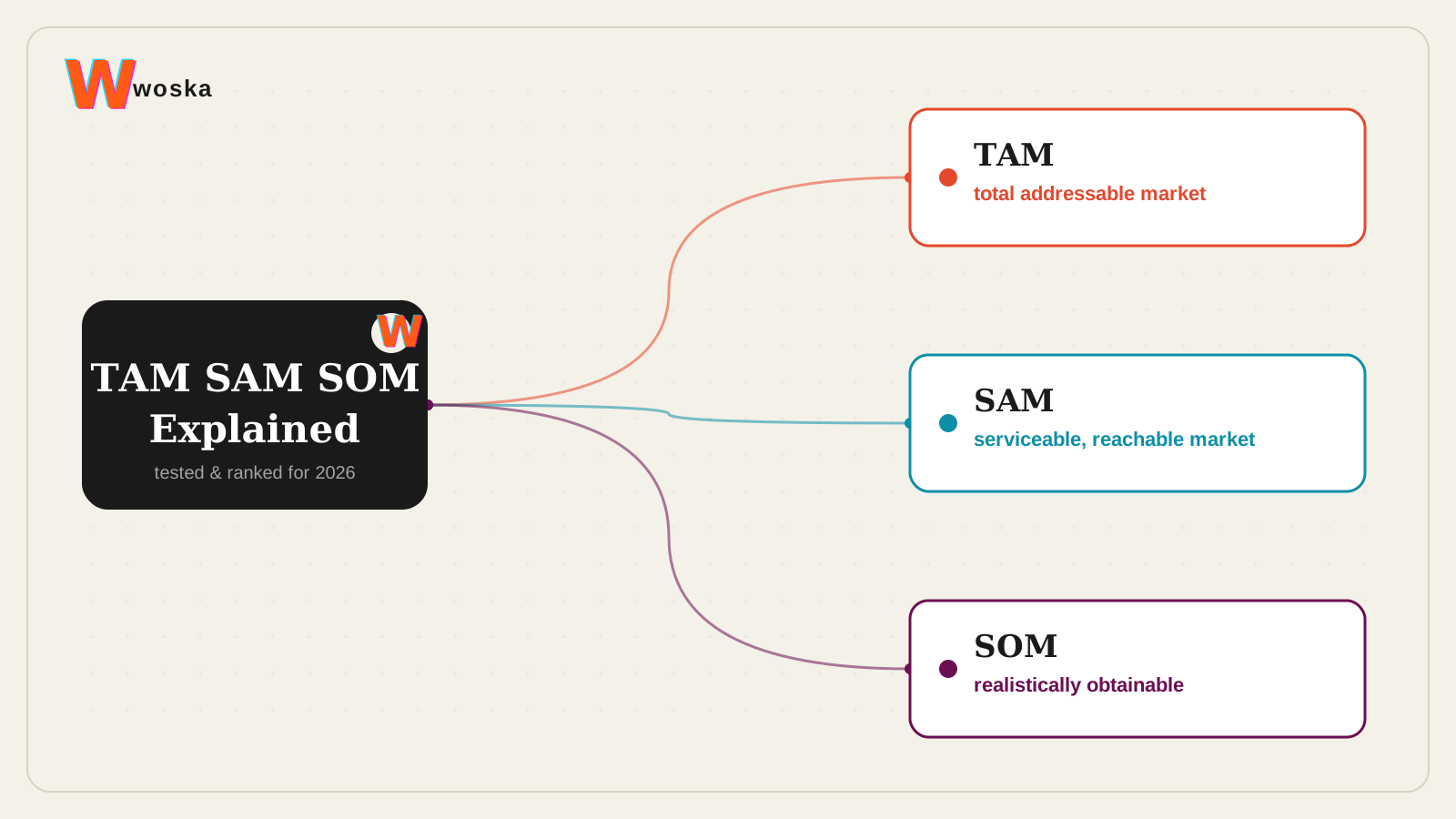
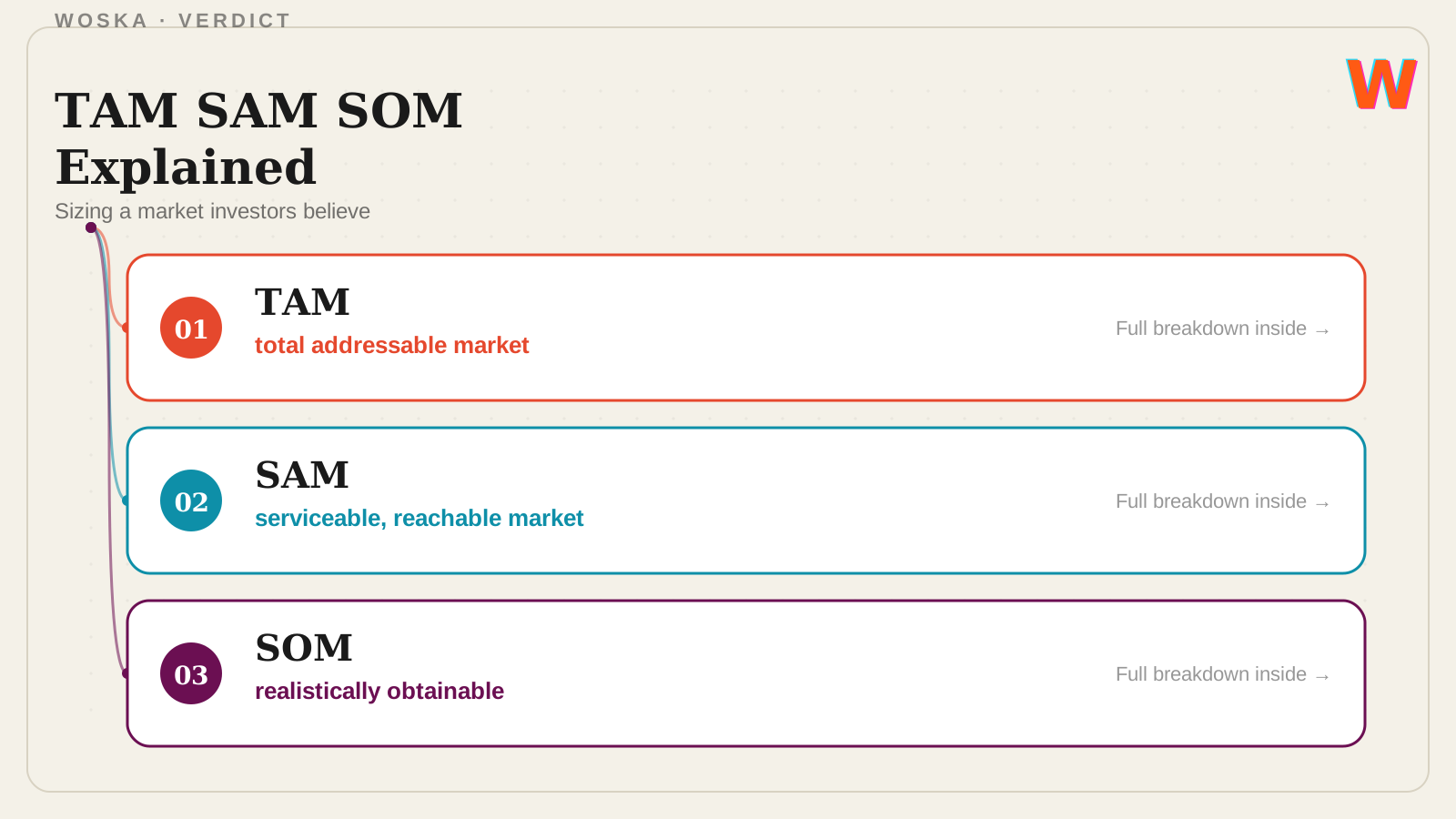
TAM is the total market for what you sell if everyone who could ever buy it did, SAM is the slice of that market you can realistically reach given your geography, channel, and product, and SOM is the share you can realistically win in the near term. Investors don't actually care about your TAM on its own — they care whether you can walk credibly from a huge total market down to a specific, defensible number you can actually capture. A slide with a big TAM and no clear path to SOM is one of the most common pitch deck red flags.
TAM: the whole market, no constraints
Total Addressable Market is every potential customer for your category, everywhere, with no consideration for whether you can actually reach them. It's usually sourced from a credible industry report or government data — not a number you invent — since investors will ask where it came from.
SAM: the market you can actually serve
Serviceable Addressable Market narrows TAM down by real constraints: the countries you operate in, the channels you actually have access to, the segment of the product your version specifically serves. This is where a lot of pitches go wrong — TAM narrows to SAM by applying honest limitations, not just an optimistic percentage.
SOM: what you can realistically win
Serviceable Obtainable Market is your realistic near-term capture rate within SAM — based on your actual go-to-market capacity, competition, and comparable companies' real market share after several years. Investors are skeptical of SOM claims above 10-20% of SAM for a new entrant; base your percentage on comparable companies, not ambition.
Calculate your own TAM, SAM, and SOM →
Step 1: Start with a sourced TAM
Use a credible external number — an analyst report, a government trade statistic, a well-cited industry figure — not your own back-of-envelope estimate. A TAM you can't cite is a TAM investors will discount immediately.
Step 2: Narrow to SAM using real operating constraints
Ask specifically: which countries do you actually sell in? Which channels do you actually have access to? Which part of the broader category does your specific product serve? Each answer should shrink the TAM number by a defensible, explainable amount — not an arbitrary percentage picked to make the final number look impressive.
Step 3: Ground SOM in comparable companies, not hope
Look at similar companies at a similar stage and see what share of their SAM they actually captured after 2-3 years. Use that as your benchmark for SOM rather than an aspirational round number like "we'll capture 25% of the market."
Quick reference
| Term | Question it answers | Typical source |
|---|---|---|
| TAM | What's the total market? | Industry report, government data |
| SAM | What can I actually reach? | Your real geography, channel, product fit |
| SOM | What can I realistically win? | Comparable companies' actual market share |
Is a bigger TAM always better for a pitch?
No. An implausibly large TAM with no credible SAM-to-SOM narrowing logic often reads as a red flag rather than a strength — it signals the founder hasn't done the harder, more useful work of figuring out what's actually winnable. A smaller, well-justified TAM paired with a credible SOM is usually the more convincing story, even if the headline number is less impressive.
FAQ
Why do investors care about TAM/SAM/SOM specifically? It's a standard way to show a market is big enough to be worth investing in (TAM) while being honest about what's realistically capturable in the near term (SOM) — the narrowing logic itself is what investors are actually evaluating.
How often should I update these numbers? Revisit them whenever your target market, geography, or product scope changes meaningfully, and periodically as your company matures — your SOM especially should grow as you gain real traction and comparable data points.
Can I use this for a B2B market instead of consumers? Yes — the same top-down logic applies whether your total market is measured in consumers or target companies; just make sure your source data matches the market you're actually sizing.
What if my SAM and TAM are basically the same number? That usually means you haven't applied real constraints yet — very few businesses can serve their entire total addressable market without some limitation from geography, channel, or product fit.
Is there a standard, defensible SOM percentage to use? No universal number — investors are generally skeptical of anything above 10-20% of SAM for a new entrant, but the right number depends heavily on your specific market and competitive landscape.
Related guides
- How to Calculate Your Break-Even Point
- What to Include on an Invoice So You Actually Get Paid on Time
- Break-Even & Profit Margin Calculator
- Explore Business & Sales tools
*Last updated September 2026.*
Bogdex · Founder & editor, woska
Bogdex builds and curates woska, testing AI tools against real workflows to judge which ones actually save time rather than which have the longest feature list.