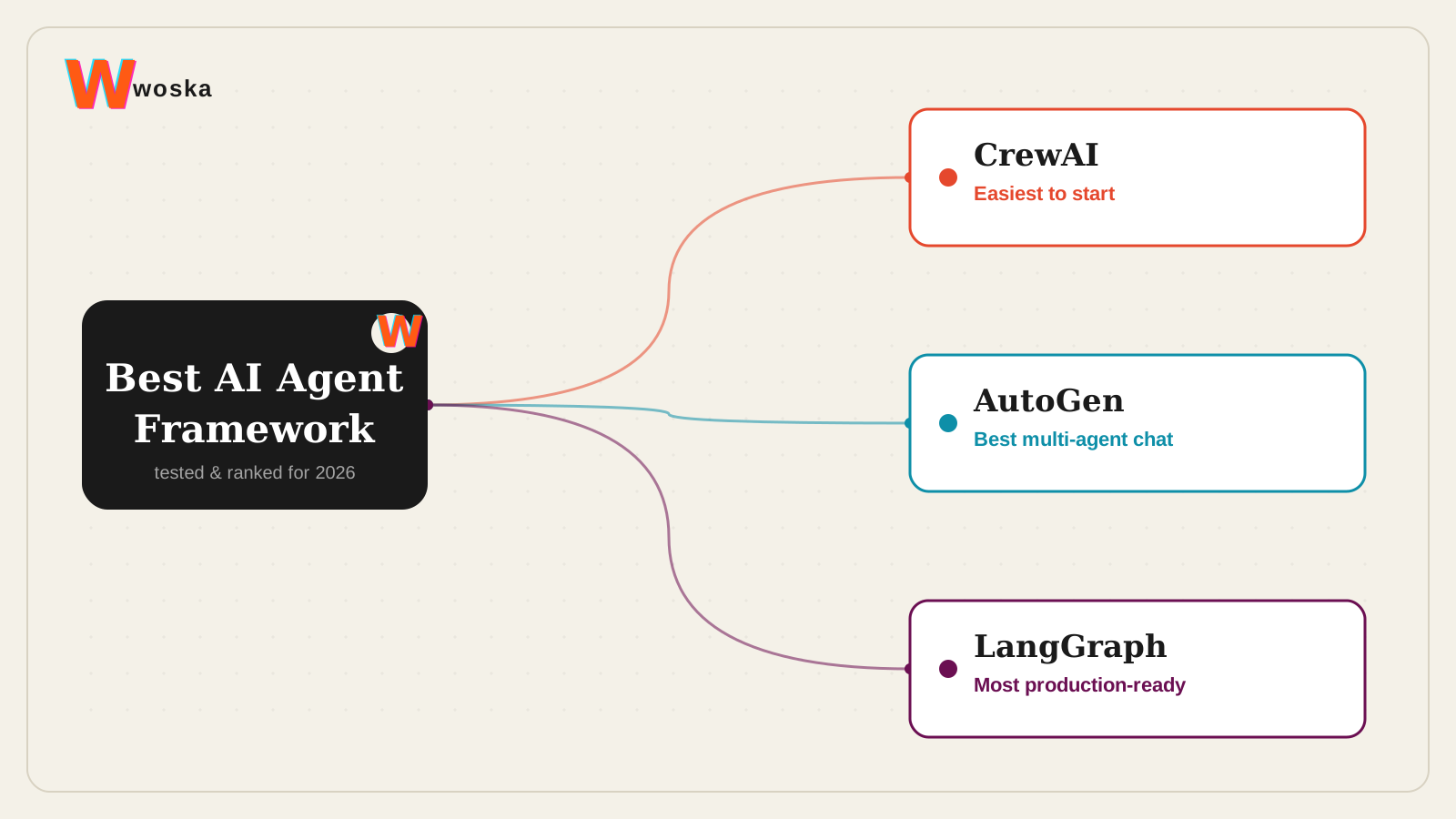
CrewAI wins as the easiest framework to get a working multi-agent setup running from scratch, AutoGen wins for flexible multi-agent conversations and research-style experimentation, and LangGraph wins when you need production-grade, controllable state instead of an agent that might loop forever. All three are open-source and free to use — the real cost is developer time learning the framework's mental model, which differs more between these three than the marketing suggests.
If you want a builder instead of a framework — no code, a visual canvas — see Best No-Code AI Agent Builder instead.
The three, in one line each
CrewAI organizes agents as a "crew" of role-based workers with defined tasks, which maps cleanly onto how people already think about delegating work and gets a first working multi-agent setup running fastest.
Microsoft AutoGen is built around multi-agent conversations — agents that talk to each other and to tools — which suits research, experimentation, and setups where the interaction pattern isn't fully decided up front.
LangGraph models agent logic as an explicit graph with controllable state, which is more upfront work to design but gives the reliability and debuggability that ad-hoc agent loops don't, once something is actually shipping to production.
Where each one actually wins
CrewAI rewards getting something working fast: define your agents' roles and tasks, and you have a functioning crew sooner than the alternatives, which matters most for prototypes and internal tools. AutoGen rewards exploratory work where the right agent interaction pattern isn't obvious yet — its conversation-first model makes it easy to try different setups quickly. LangGraph rewards production systems where you need to reason about and constrain exactly what state an agent can be in, catching infinite loops and unexpected paths before they reach users, not after.
Quick comparison
| Tool | Cost | Core job | Best fit |
|---|---|---|---|
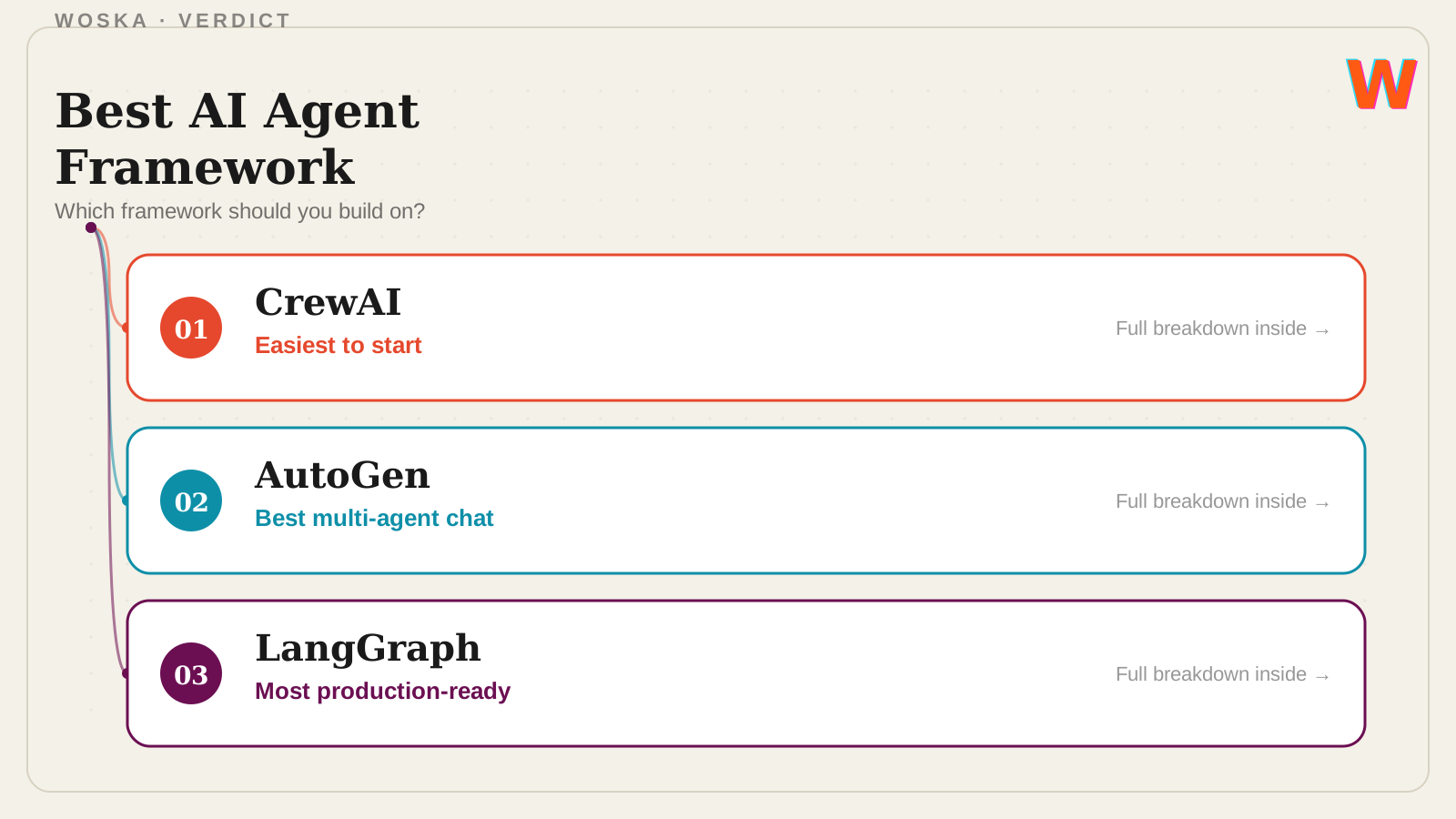
| CrewAI | Free, open-source | role-based agent crews | Fastest first working multi-agent setup |
| Microsoft AutoGen | Free, open-source | multi-agent conversations | Research and exploratory agent design |
| LangGraph | Free, open-source (paid LangSmith add-on) | stateful, graph-based agents | Production systems needing controllable state |
Which one should you use?
Start with CrewAI if you want the fastest path to a working multi-agent prototype. Reach for AutoGen if you're still exploring how your agents should interact and want to experiment quickly. Move to LangGraph once you're building something that has to run reliably in production and you need to constrain and debug exactly what state it's in.
FAQ
Do I need to know all three, or can I pick one and stick with it? Most teams settle on one as their default and only reach for another for a specific project's needs — there's real switching cost in relearning each framework's mental model, so picking based on your actual near-term project (prototype vs. production) matters more than trying to future-proof the choice.
Which is easiest for someone new to building AI agents? CrewAI's role-based model is generally the most approachable starting point, since "assign a task to a worker" maps onto a mental model most developers already have.
Can these frameworks call external tools and APIs? Yes, tool-calling is a core feature of all three — connecting agents to search, code execution, databases, or your own APIs is standard, not an advanced feature bolted on.
Is a framework overkill if I just need one simple agent, not a team of them? Often yes — a single well-prompted agent with tool access doesn't need a multi-agent framework at all. These three earn their complexity once you actually need multiple agents coordinating, not before.
Related guides
- Microsoft Is Retiring AutoGen Into Agent Framework: What It Means for 2026
- Part of our complete guide: AI Coding & Developer Tools
- Best No-Code AI Agent Builder in 2026
- Best Autonomous AI Coding Agent in 2026
- What Are AI Agents? A Plain-English Guide
- Explore AI Agents tools
*Ratings and pricing reviewed monthly. Last updated August 2026.*
Bogdex · Founder & editor, woska
Bogdex builds and curates woska, testing AI tools against real workflows to judge which ones actually save time rather than which have the longest feature list.