Relevance AI wins as the most well-rounded no-code builder for custom AI workers, Respell wins for spreadsheet-style workflows that feel familiar to non-developers, and Stack AI wins once enterprise IT requirements — SOC 2, private model deployment, SSO — are non-negotiable. All three let someone without coding experience wire together prompts, tools, and logic into a working agent, aimed at internal business processes rather than consumer products.
If you'd rather write code and want real control over agent state, see Best AI Agent Framework for Developers instead.
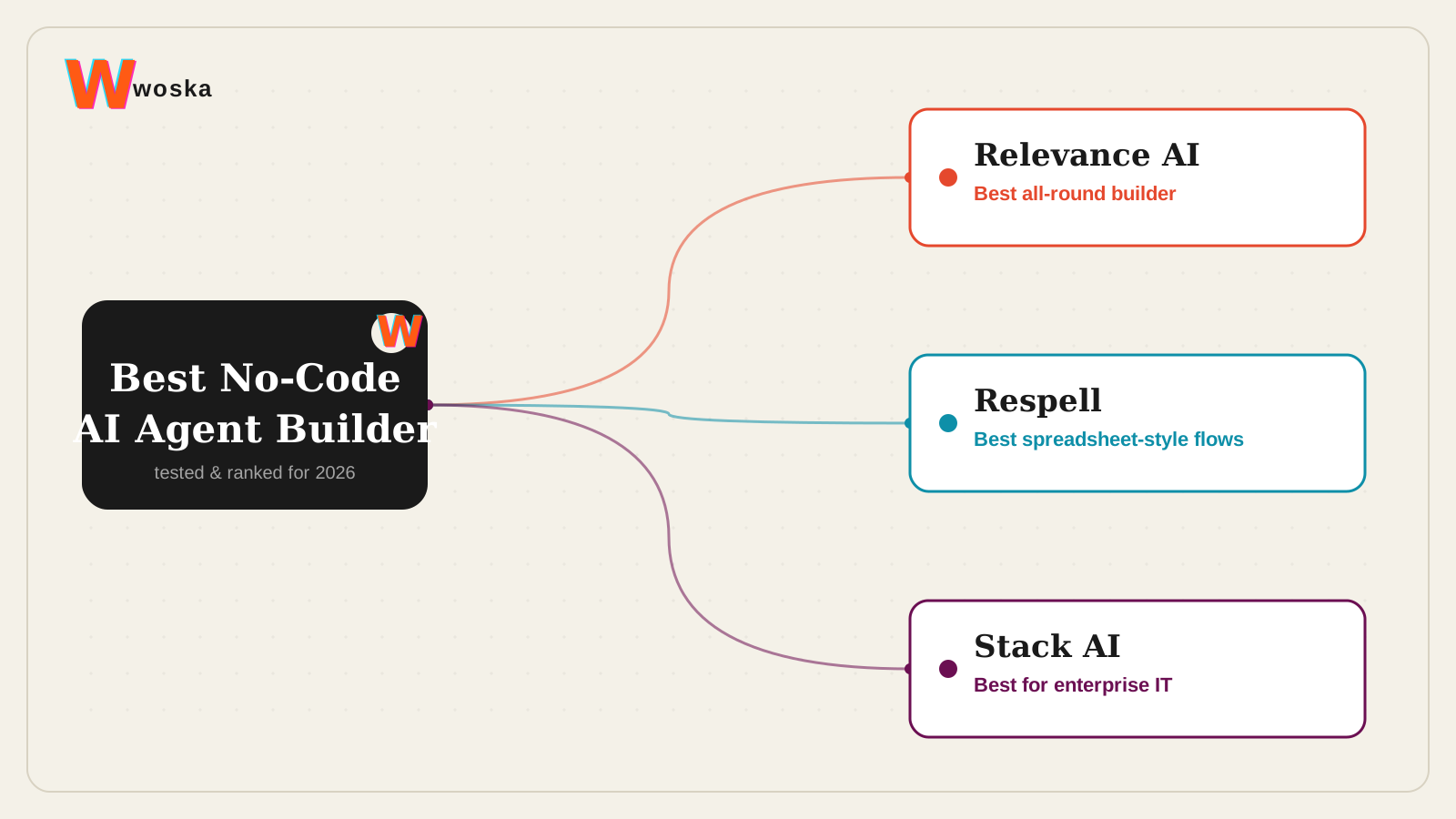
The three, in one line each
Relevance AI is a general-purpose no-code platform for building custom AI workers that handle repeatable business tasks, with enough flexibility to cover most internal-process use cases without switching tools.
Respell builds agents as visual, spreadsheet-style flows that connect to everyday business tools, which lowers the learning curve for anyone comfortable with a spreadsheet but not with a developer-style canvas.
Stack AI targets enterprise IT from the start, with SOC 2 Type II compliance, audit logs, and private model deployment options that the other two don't lead with.
Where each one actually wins
Relevance AI rewards teams that want one flexible builder covering a range of internal agent use cases without hitting a wall on complexity. Respell rewards non-technical teams specifically, since the spreadsheet-style model is the lowest-friction entry point of the three for someone who's never built an automation before. Stack AI rewards IT and security teams who need to say yes to compliance questions before a single agent goes live — the tradeoff is a self-serve experience that's been pared back in favor of the enterprise tier.
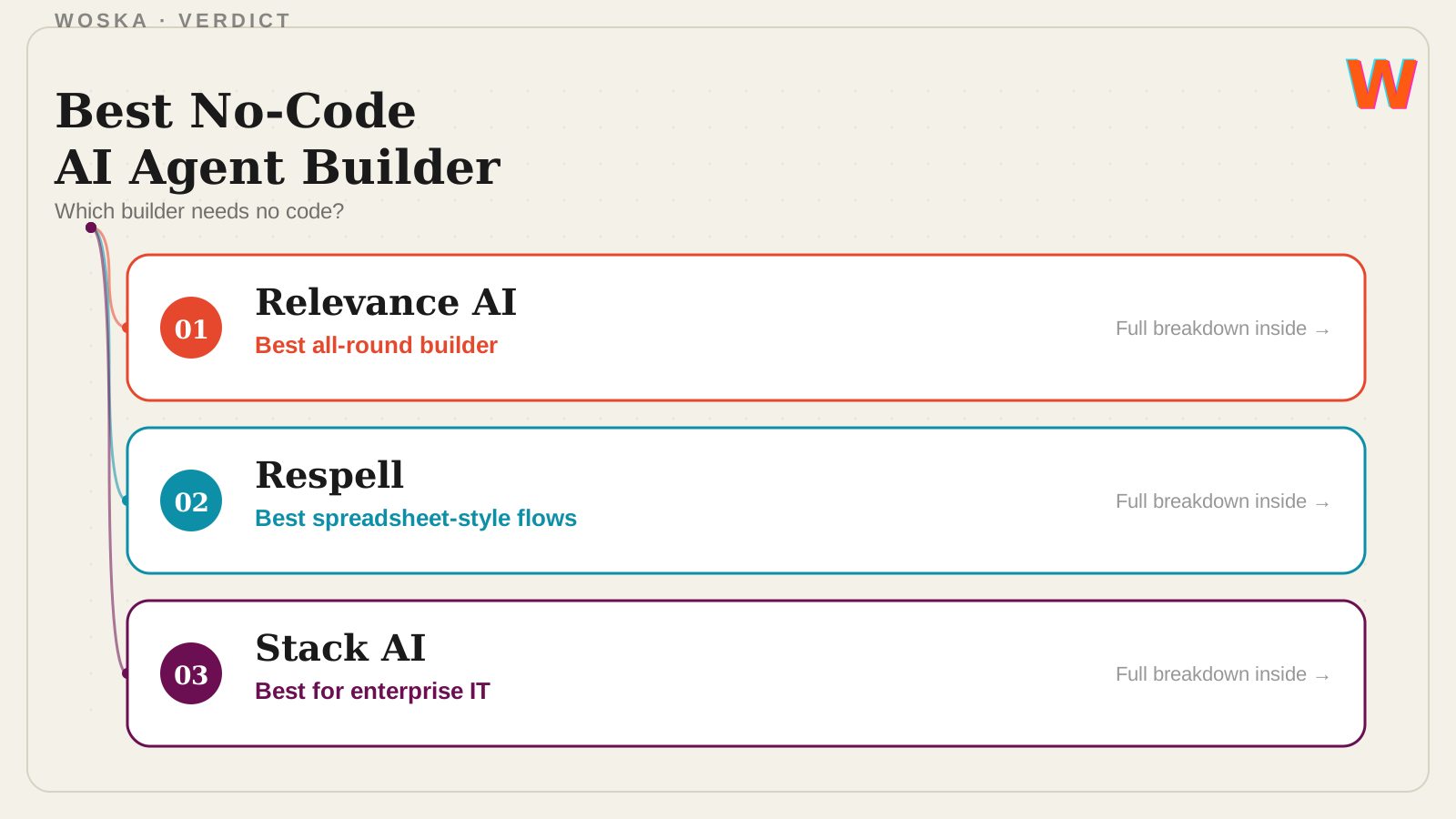
Quick comparison
| Tool | Starting price | Core job | Best fit |
|---|---|---|---|
| Relevance AI | Free tier, freemium | general-purpose no-code agent builder | Flexible internal-process automation |
| Respell | Free tier, freemium | spreadsheet-style agent flows | Non-technical teams, lowest learning curve |
| Stack AI | Free tier, custom enterprise | compliant enterprise agent platform | SOC 2, SSO, and IT sign-off required |
Which one should you use?
Start with Relevance AI as the default if you want one flexible builder for a range of internal automations. Choose Respell if the team building the agent has never used anything more technical than a spreadsheet. Choose Stack AI if IT and security requirements are the actual gate to getting any agent approved for use.
FAQ
Do I need to know how to prompt an LLM well to use these? Some prompting skill helps regardless of the tool, but all three are built to reduce that dependency with templates and guided setup — you'll get better results faster if you're willing to iterate on instructions, but you don't need deep AI expertise to start.
Can a no-code agent builder replace a developer entirely? For well-defined internal processes, often yes. For anything requiring custom integrations with unusual internal systems, complex business logic, or tight performance requirements, you'll likely still need developer involvement — these tools cover the common cases, not every case.
Which is cheapest to try before committing? All three offer a free tier, making Relevance AI, Respell, or Stack AI's free plan the lowest-risk way to build a first agent and confirm it actually solves your problem before paying for anything.
Is my company's data safe with a no-code agent builder? Stack AI is explicitly built around this concern with SOC 2 compliance and private deployment options; check Relevance AI's and Respell's current data policies directly if you're handling sensitive information, since standards vary and change.
Related guides
- Part of our complete guide: AI Coding & Developer Tools
- Best AI Agent Framework for Developers in 2026
- Best AI Browser Agent in 2026
- How Much Do AI Agents Cost in 2026?
- Explore AI Agents tools
*Ratings and pricing reviewed monthly. Last updated August 2026.*
Bogdex · Founder & editor, woska
Bogdex builds and curates woska, testing AI tools against real workflows to judge which ones actually save time rather than which have the longest feature list.