An AI agent is software that can take a goal, break it into steps, use tools like your inbox or CRM, and finish the job with little or no supervision. That's different from a chatbot, which only replies to what you type, and different from classic automation, which only follows fixed if-this-then-that rules you wrote in advance.
The distinction matters because the pricing, the setup work, and the risk are different for each. Buying "AI" without knowing which of the three you're getting is how small businesses end up with a tool that either does too little or too much.
Chatbot vs. automation vs. agent
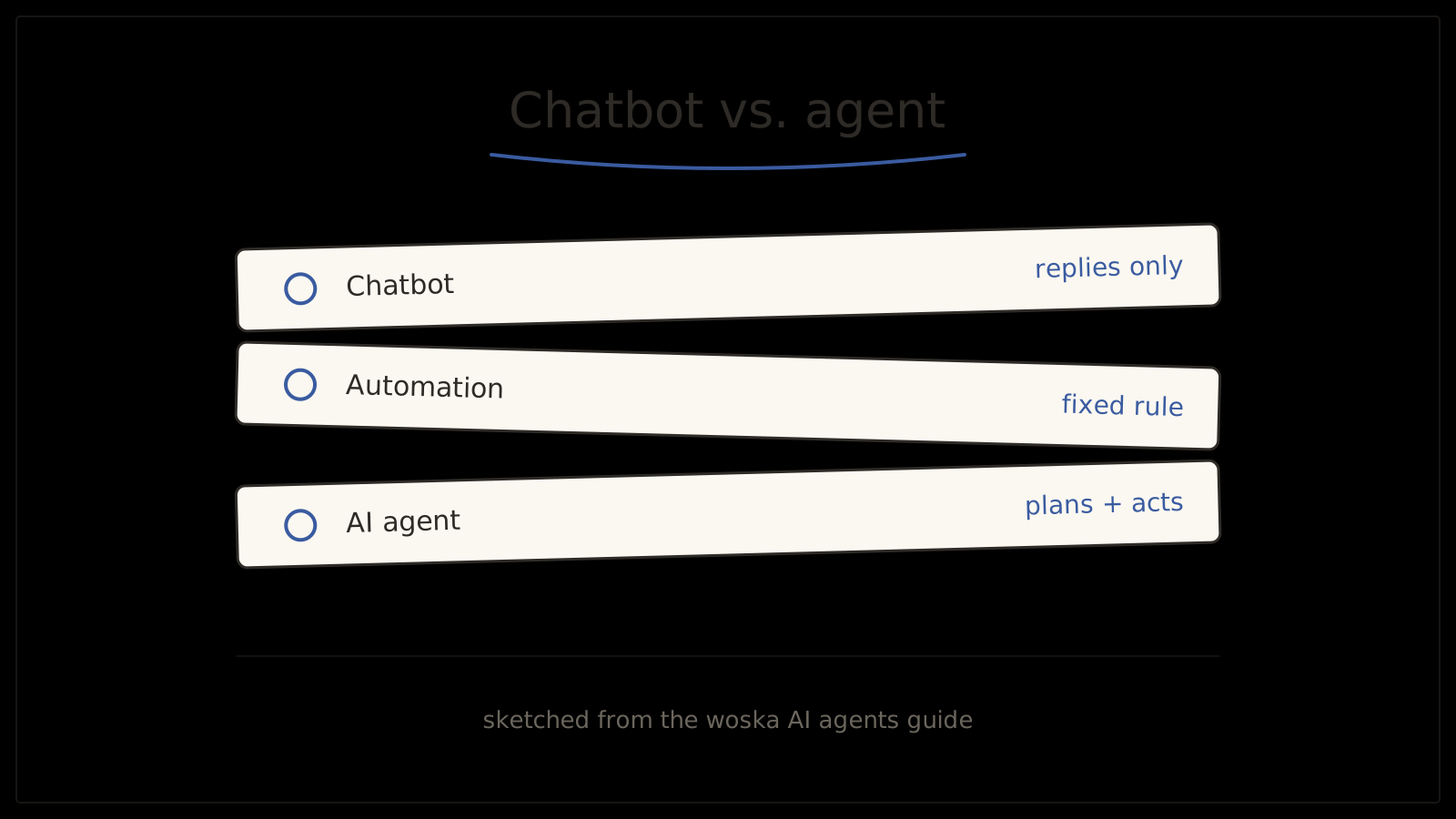
A chatbot answers questions inside a conversation. It doesn't take action outside the chat window unless someone builds that in separately.
Classic automation, like a Zapier trigger, runs a fixed path: when X happens, do Y, every time, the same way. It's reliable and cheap, but it can't handle a situation the rule didn't anticipate.
An agent sits above both. Give it a goal — "reply to this lead," "reconcile this invoice," "triage this support ticket" — and it decides which steps to take, checks a tool or a data source, and adjusts if the first approach doesn't work. It's the difference between a vending machine and an employee who improvises when the vending machine is out of stock.
What this looks like in a real business
A few concrete examples, not hypotheticals: an agent that reads incoming support emails, checks order status in your store platform, and drafts (or sends) a reply. An agent that watches a shared inbox for new leads, enriches them with public company info, and logs a summary in your CRM. An agent that reconciles expense receipts against your accounting software and flags anything it can't match.
Lindy is built around this exact pattern: describe the job in plain English, connect your tools, and it runs the steps without you building a flowchart first.
Curious where this fits in your business specifically? Take the free AI Readiness Audit → and get a personalized 30-day roadmap in about two minutes, no signup required.
Where agents still need a human
Agents are good at repeatable, well-scoped work with a clear source of truth. They are not good at ambiguous judgment calls, anything with legal or financial exposure if it's wrong, or tasks where the "right answer" depends on context nobody wrote down anywhere. The realistic setup, for now, is an agent doing the first draft or the first 80% of a task, with a person reviewing before anything external goes out.
Quick comparison
| Type | How it works | Best fit |
|---|---|---|
| Chatbot | Replies inside a conversation | FAQs, simple lookups |
| Automation (Zapier, Make) | Fixed trigger → action rules | Predictable, repetitive syncing |
| AI agent | Plans, uses tools, adapts | Multi-step work that varies each time |
Which one should you use?
Start with automation for anything truly repetitive and low-risk. Reach for an agent like Lindy or Relevance AI once the task involves judgment or several tools working together, and use n8n if you want full visibility into every step an agent takes.
FAQ
Is an AI agent the same as ChatGPT? No. ChatGPT is a conversational assistant you prompt directly. An agent is built to act on a goal with less back-and-forth, often without you present for every step.
Do AI agents work without any setup? No. Every agent needs to be connected to your actual tools and given a scoped task. The setup is usually lighter than custom software, but it isn't zero.
What's the safest first agent to try? Something with low external risk if it makes a mistake, like drafting (not sending) replies, or logging data instead of deleting it. Add autonomy once you trust the output.
Related guides
- Take the free AI Readiness Audit
- Does My Business Need AI? 7 Signs You're Ready
- Is my business ready for AI agents?
- What Is an AI Opportunity Score?
- Explore AI Agents tools
*Ratings and pricing reviewed monthly. Last updated July 2026.*
Bogdex · Founder & editor, woska
Bogdex builds and curates woska, testing AI tools against real workflows to judge which ones actually save time rather than which have the longest feature list.