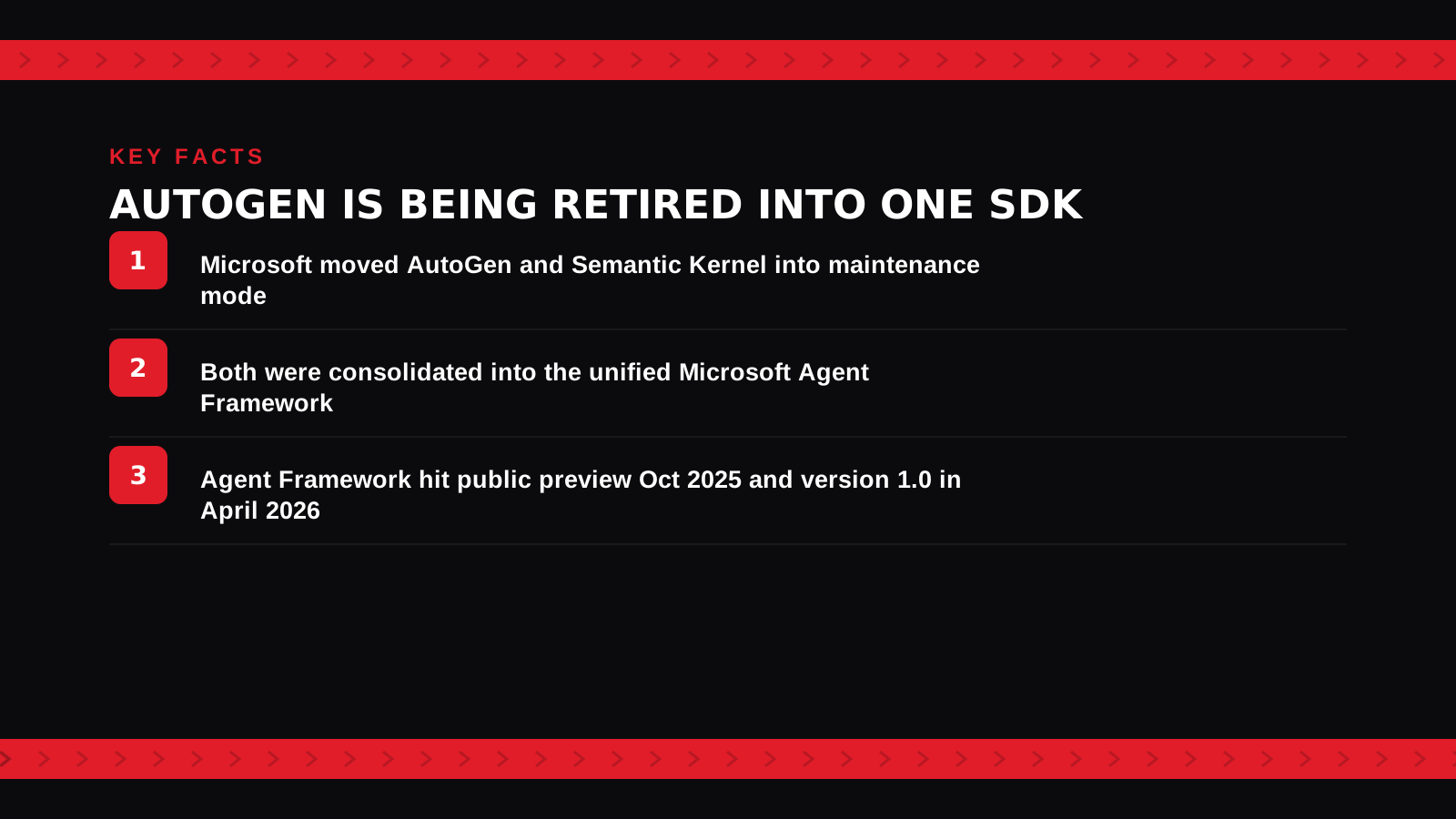
Microsoft has put both AutoGen and Semantic Kernel into maintenance mode, consolidating them into a single, unified Microsoft Agent Framework — which shipped in public preview on October 1, 2025 and reached version 1.0 on April 3, 2026. If you built a multi-agent system on AutoGen, this is the migration that's now actually due, not a future hypothetical.
What actually happened
AutoGen and Semantic Kernel were two separate Microsoft frameworks solving overlapping problems — AutoGen focused on multi-agent conversations and flexible experimentation, Semantic Kernel focused on production-grade features like session state, type safety, and enterprise telemetry. Rather than maintaining both indefinitely, Microsoft merged the two into Agent Framework: AutoGen's simple agent abstractions combined with Semantic Kernel's enterprise foundations, plus a new graph-based workflow layer for explicit control over multi-agent execution paths.
This is a genuine consolidation, not a rename — Agent Framework adds real capability neither predecessor had on its own, particularly around state management for long-running, human-in-the-loop scenarios.
What this means if you built on AutoGen
Maintenance mode means AutoGen still works and still receives critical fixes, but new feature development is happening in Agent Framework instead. Anything you're actively building or planning to scale should target Agent Framework directly rather than investing further in AutoGen's existing API — Microsoft has published a migration guide, and the underlying agent-abstraction concepts carry over more directly than a full rewrite would suggest.
If you have a stable, working AutoGen setup that isn't actively being extended, there's no fire-drill urgency — but budget the migration for the next time that project needs meaningful new work, not indefinitely.
Where this leaves open-source agent frameworks generally
Microsoft AutoGen itself isn't going away — it remains usable and open-source, just no longer where Microsoft's active development lives. If you're choosing a framework today rather than migrating an existing one, CrewAI is still the fastest path to a first working multi-agent setup thanks to its role-based model, and LangGraph remains the stronger choice for production systems that need explicit, controllable agent state — a niche Agent Framework's new workflow layer now also competes for directly.
FAQ
Do I need to migrate off AutoGen immediately? No — maintenance mode means it still works and still gets critical fixes. Plan the migration around your next major round of feature work on that project rather than treating it as urgent.
Is Microsoft Agent Framework only for .NET, or does it support Python too? Both — Agent Framework supports Python and .NET, carrying forward AutoGen's Python-first audience alongside Semantic Kernel's stronger .NET presence.
Does this affect CrewAI, LangGraph, or other non-Microsoft frameworks? Not directly — this is specifically a Microsoft-internal consolidation. It does raise the competitive bar, since Agent Framework's new workflow layer now covers some of the production-state-management ground that previously favored LangGraph specifically.
Is Agent Framework open-source like AutoGen was? Yes — Microsoft has kept Agent Framework open-source, continuing the licensing model both AutoGen and Semantic Kernel shipped under.
Related guides
- Best AI Agent Framework for Developers in 2026
- Best No-Code AI Agent Builder in 2026
- Explore AI Agents tools
*News and pricing details reviewed as they change. Last updated August 2026.*
Bogdex · Founder & editor, woska
Bogdex builds and curates woska, testing AI tools against real workflows to judge which ones actually save time rather than which have the longest feature list.