AI tool pricing hasn't been stable in 2026 — but it also hasn't moved in one simple direction. Some prices technically held steady while real costs quietly rose, others increased outright, and at least one major platform's biggest cost pressure is still ahead of it rather than behind it. Here's a running tracker of what's actually confirmed so far, without the misleading headline version of each story.
Claude Sonnet 5: the price that froze, and the cost that didn't
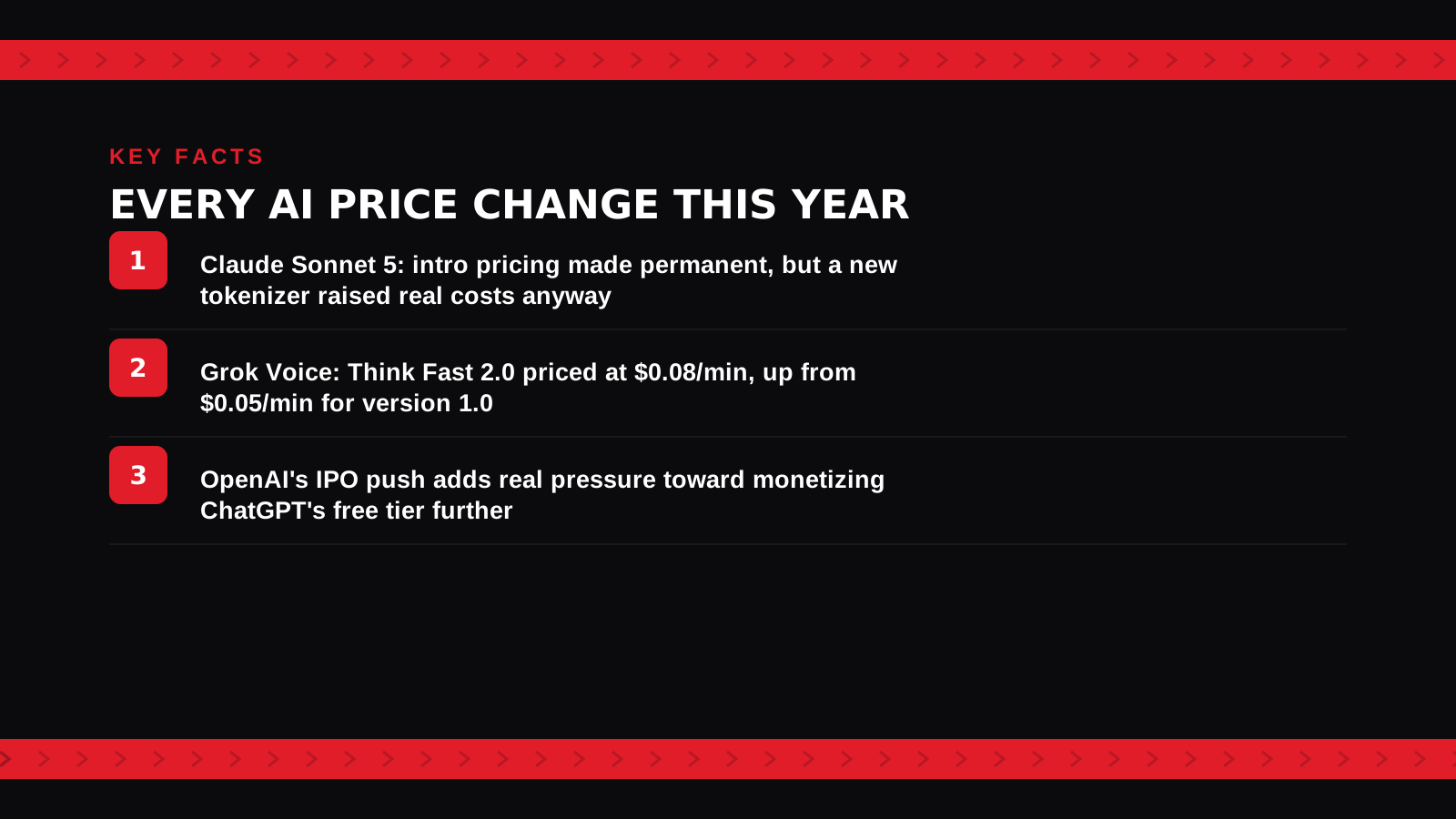
Anthropic confirmed on August 10, 2026 that Sonnet 5's $2/$10 per-million-token intro pricing is now permanent — the planned increase to $3/$15 on September 1 is canceled. That's the headline, and it's accurate. What it leaves out: Sonnet 5's new tokenizer counts roughly 30% more tokens for the same text than the previous model, so the real cost of an equivalent task can still rise even with the per-token price locked. Full breakdown →
Grok Voice: a straightforward increase
xAI's Think Fast 2.0 voice model is priced at $0.08 per minute of audio through the API, up from $0.05/minute for version 1.0 — a real, unambiguous price increase tied to a real capability jump (faster response time, meaningfully better accuracy). Consumer access is unchanged in structure: free tier on X and grok.com, SuperGrok around $30/month, SuperGrok Heavy around $300/month. Full breakdown →
ChatGPT: no confirmed change yet, but real pressure building
OpenAI hasn't announced a ChatGPT price change, but its S-1 IPO filing — expected mid-to-late August 2026 ahead of a September listing — puts new quarterly-earnings pressure on the company that historically tends to show up eventually as tighter free-tier limits or new monetization, not necessarily an immediate headline price hike. Worth watching rather than acting on yet. Full breakdown →
The pattern across all of these
The sticker price is increasingly not the whole story. Claude's per-token price didn't move, but the tokenizer did. Grok's price moved directly and transparently. ChatGPT's price hasn't moved, but the structural pressure behind it clearly has. If you're trying to actually budget for AI tool costs in 2026, checking a pricing page once and assuming it's settled is no longer a safe assumption — the mechanism behind a price (tokenizer, rate limits, session windows) matters as much as the number on the page.
FAQ
Is this list complete? This tracks the major, publicly confirmed changes as of this writing — smaller adjustments across other tools happen frequently and aren't all individually newsworthy. Check each tool's own pricing page for the current, authoritative number before budgeting.
Which AI tool has had the most confusing pricing story in 2026? Claude Sonnet 5, by a clear margin — a canceled price increase that still results in higher real costs for many users is a genuinely harder story to communicate than a simple hike or simple freeze.
Should I lock in a plan now before prices change further? Annual plans can hedge against near-term increases, but they also lock you in if a competitor's pricing becomes more favorable later. Weigh that tradeoff against how price-sensitive your specific usage actually is.
Related guides
- Claude Sonnet 5 Pricing: The Increase That Wasn't
- Grok Voice Think Fast 2.0: What Changed and Is It Worth Trying
- OpenAI Is Going Public: What Its IPO Filing Means for ChatGPT Users
- Explore Business & Sales tools
*This tracker is updated as new pricing changes are confirmed. Last updated August 2026.*
Bogdex · Founder & editor, woska
Bogdex builds and curates woska, testing AI tools against real workflows to judge which ones actually save time rather than which have the longest feature list.