On August 10, 2026, Anthropic confirmed that Claude Sonnet 5's introductory pricing — $2 per million input tokens, $10 per million output tokens — is now permanent. The price increase to $3/$15 that was originally scheduled for September 1, 2026 is not happening. That sounds like straightforwardly good news, and for the sticker price, it is. But the real story is more specific than "no increase" — Sonnet 5 also ships with a new tokenizer that counts meaningfully more tokens for the same text, which means the per-token price freezing doesn't mean your actual bill freezes too.
What Anthropic actually confirmed
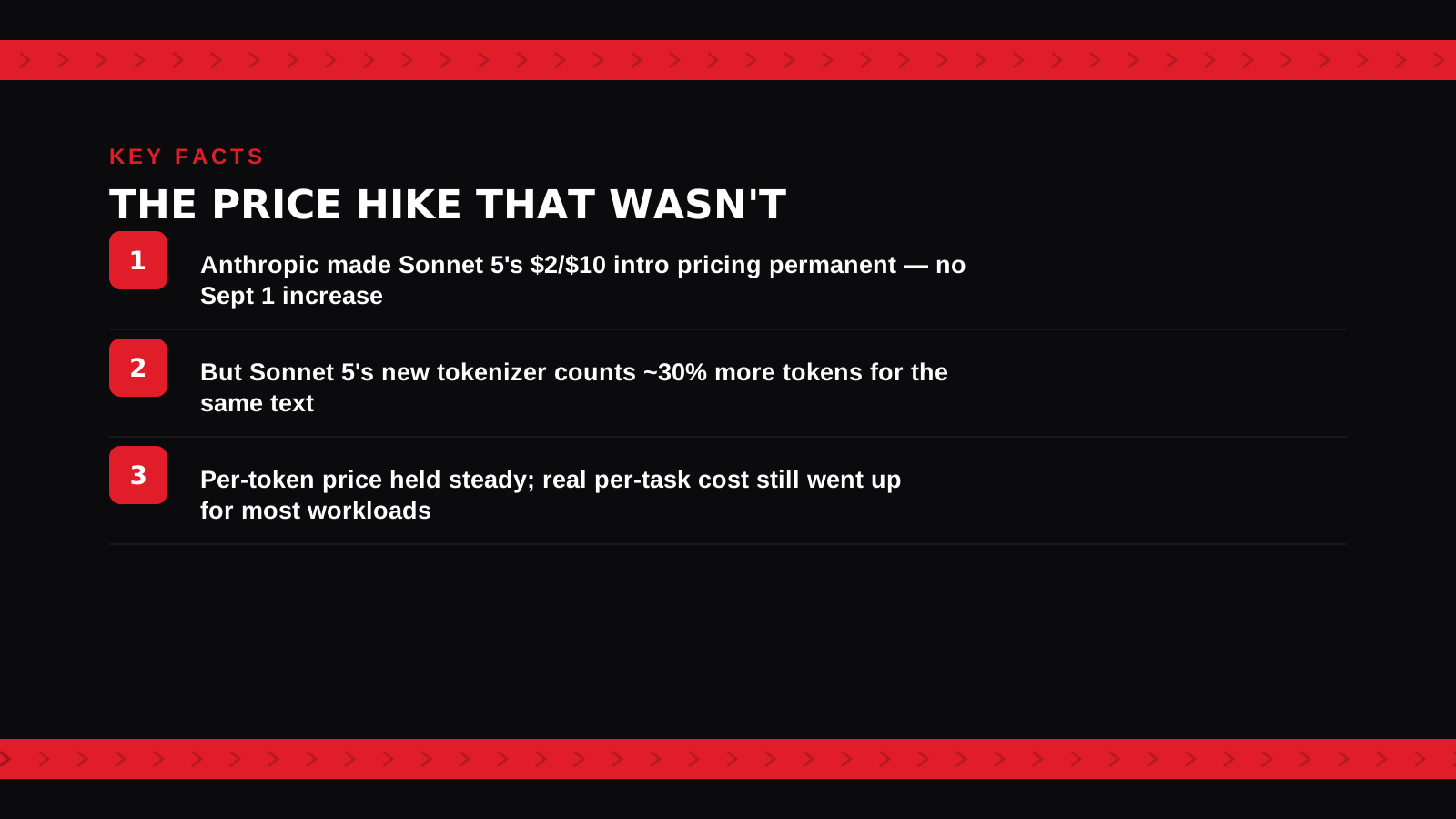
The headline is simple: the $2/$10 introductory rate, originally framed as a limited-time launch price running through August 31, 2026, is now the standard, ongoing price. No increase to $3/$15 on September 1. If you were budgeting around that scheduled jump, you can stop.
The part that's easy to miss
Sonnet 5 uses a new tokenizer, and Anthropic's own documentation is direct about what that means: the same input text produces roughly 30% more tokens on Sonnet 5 than it did on Sonnet 4.6. Per-token pricing is unchanged — but per-token parity is not the same thing as per-request parity. A request that cost a certain amount on Sonnet 4.6 can cost more on Sonnet 5 even though nothing about the listed price per token moved at all.
Why this matters more than the headline
"Pricing frozen" is the version of this story that's easiest to report and easiest to believe, and it's not wrong — it's just incomplete. If your workloads are large or run constantly (an internal tool calling the API on a schedule, a product feature that queries Sonnet on every user action), a 30% increase in tokens-per-request is a real cost change, not a rounding error, even with the per-token price locked at intro rates.
What to actually do about it
Check your actual usage, not just the pricing page. If you're calling the API programmatically, log token counts before and after switching to Sonnet 5 on a representative sample of real requests — the 30% figure is what Anthropic states for equivalent text, but your specific prompts and outputs may land somewhat above or below that depending on structure. If cost is genuinely tight, this is also a reasonable moment to test whether a request needs Sonnet's full capability or would hold up fine on a smaller, cheaper model for that specific task.
FAQ
So is Claude actually getting more expensive or not? Both are true depending on what you're measuring. The listed price per token is not increasing. The real cost of an equivalent task can still increase because Sonnet 5's tokenizer counts more tokens for the same text.
Does this affect the Claude consumer app (Pro/Max plans), or just the API? Anthropic's confirmation specifically addresses API pricing per token. Consumer subscription pricing is a separate decision Anthropic sets independently — check Claude's current plan page for consumer pricing, since API and subscription pricing don't automatically move together.
Should I switch away from Sonnet 5 because of the tokenizer change? Not automatically. Compare your actual measured cost per task, not just the headline token-count increase — some workloads see less of an increase than the average 30% figure, depending on prompt structure and output length.
Related guides
*News and pricing details reviewed as they change. Last updated August 2026.*
Bogdex · Founder & editor, woska
Bogdex builds and curates woska, testing AI tools against real workflows to judge which ones actually save time rather than which have the longest feature list.