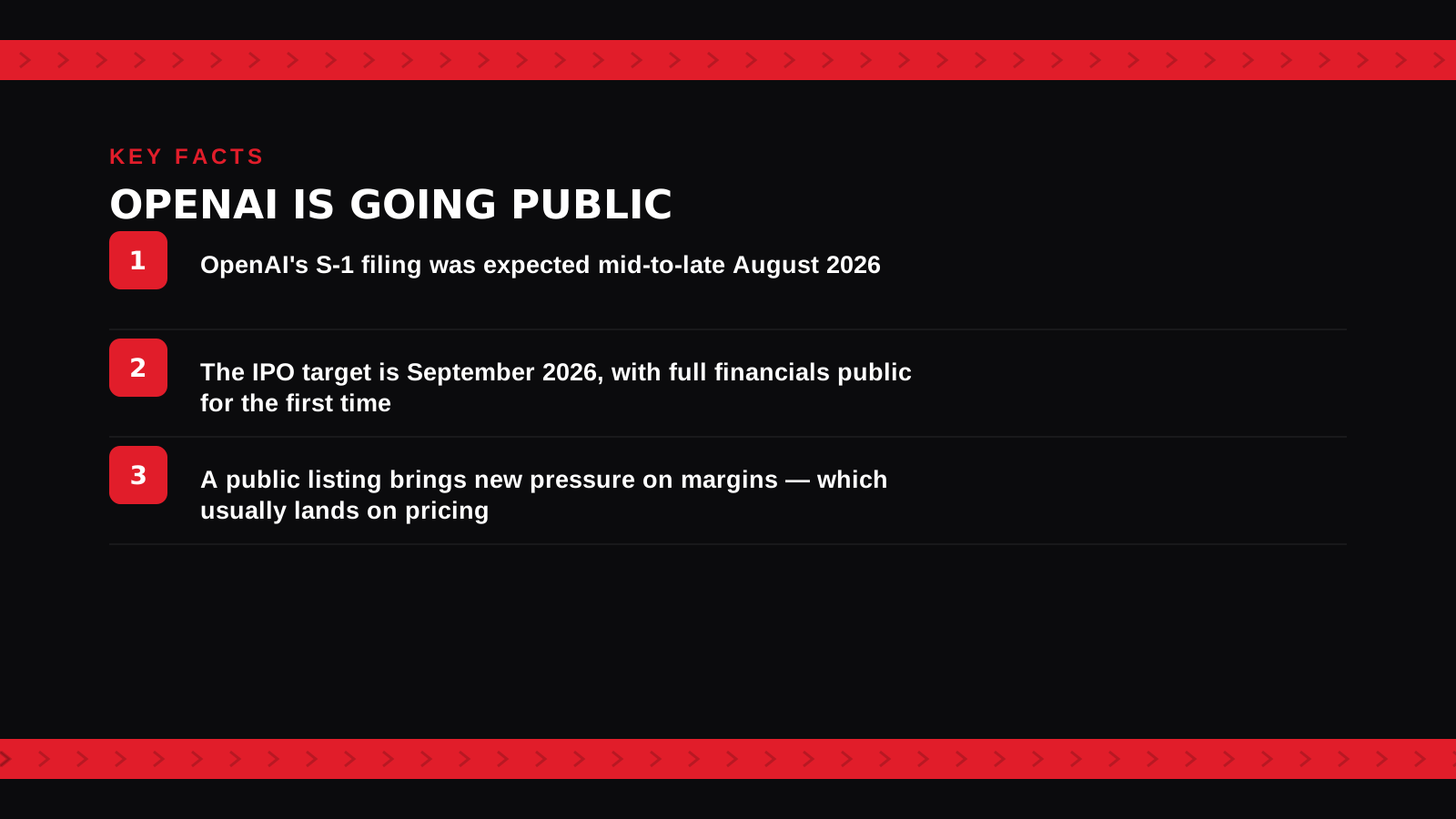
OpenAI's S-1 filing — the document that makes a company's detailed financials public for the first time ahead of an IPO — was expected mid-to-late August 2026, with a September 2026 listing target. For everyday ChatGPT users, an IPO filing might sound like background financial news. It isn't. Going public changes the pressure a company is under in ways that tend to eventually show up in the product — and this is the first time the actual numbers behind ChatGPT become public rather than estimated.
What an S-1 filing actually reveals
An S-1 is not a press release — it's a legal disclosure document required before a US stock listing, and it typically includes revenue breakdowns, profitability (or the lack of it), unit economics, and risk factors the company has to state plainly rather than spin. For a company like OpenAI, whose finances have mostly been estimated from leaks and reporting until now, this is the first time outsiders get an authoritative look at how much ChatGPT actually costs to run per user, how revenue splits across consumer subscriptions versus API and enterprise deals, and how close (or far) the company actually is from sustainable profitability.
Why this matters for a free product
Once a company is public, it answers to shareholders every quarter, not just to its own long-term roadmap. That's not automatically bad for users, but it does create a specific, predictable kind of pressure: public companies come under real scrutiny for burning cash on unprofitable free tiers, and the free tier of a product like ChatGPT is exactly the kind of cost center that gets asked about on earnings calls.
That doesn't mean ChatGPT's free tier disappears the day OpenAI lists. It does mean the incentive to convert free users to paying ones, tighten free-tier limits, or expand ad-supported options gets structurally stronger the moment the company has quarterly public shareholders to answer to instead of just its own private investors.
What to actually watch for
Keep an eye on free-tier usage limits and any new ad-supported or lower-tier paid options in the months following the IPO — that's the most common lever public AI companies pull when margin pressure increases. The S-1 itself, once filed, is also worth a skim if you're a heavy user or building anything on top of OpenAI's API: the risk-factors section in particular tends to be unusually candid about what the company itself sees as its biggest threats, since it's legally required to be.
FAQ
Does an IPO mean ChatGPT will start costing more immediately? Not immediately, and not automatically — but the underlying financial pressure that tends to lead to tighter free tiers or new monetization does increase once a company has public shareholders and quarterly earnings expectations.
Where can I actually read OpenAI's S-1 once it's filed? Once filed, S-1 documents are public on the SEC's EDGAR database, searchable by company name — no subscription or account needed to read one.
Will this affect API pricing for developers? Possibly, though not necessarily right away. API pricing is a separate lever from consumer free-tier limits, and companies often adjust them independently based on which one is under more margin pressure at a given time.
Related guides
*News and financial details reviewed as they change. Last updated August 2026.*
Bogdex · Founder & editor, woska
Bogdex builds and curates woska, testing AI tools against real workflows to judge which ones actually save time rather than which have the longest feature list.