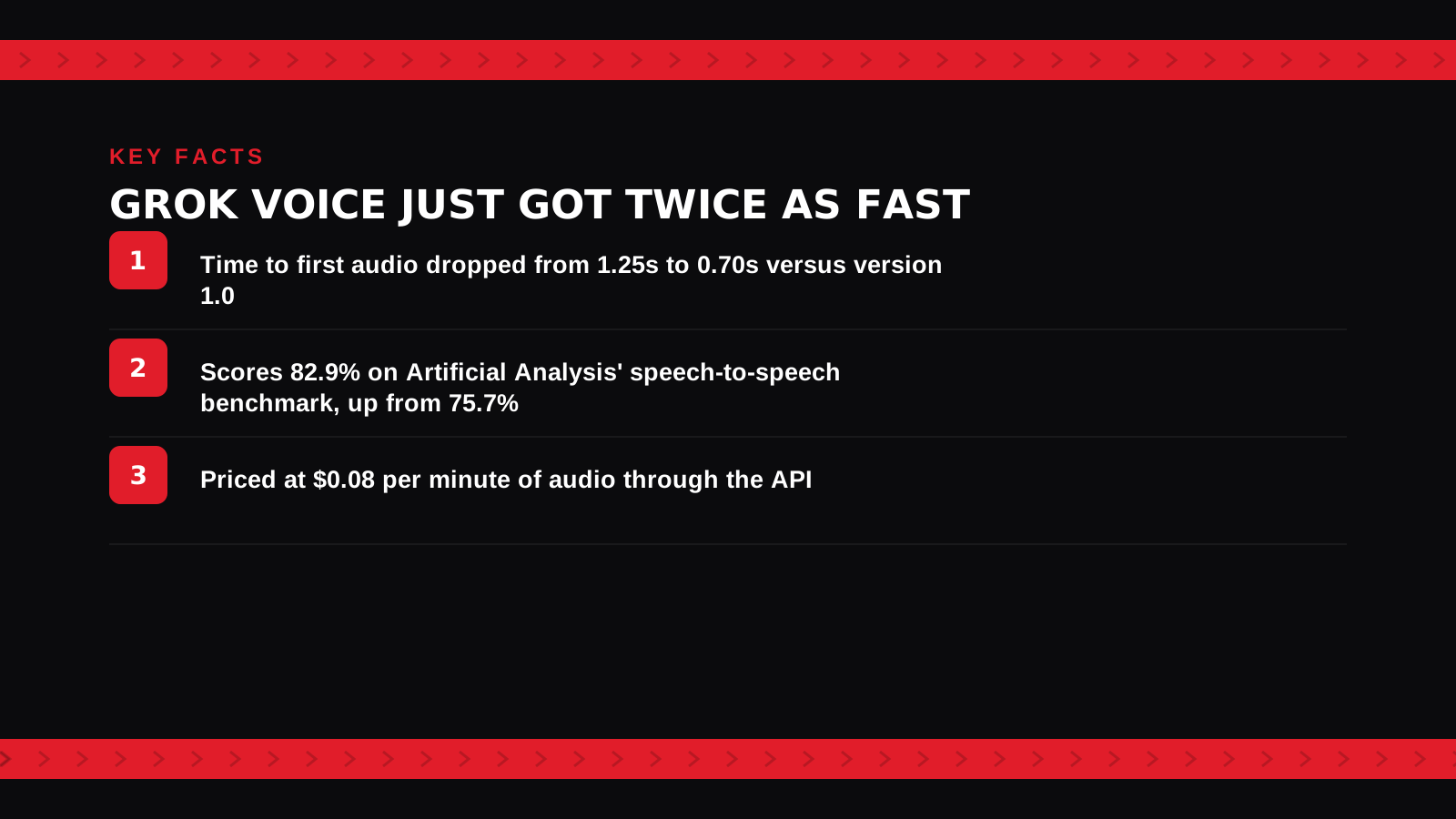
xAI's Grok Voice Think Fast 2.0, launched July 29, 2026, cut the time it takes to hear the first word of a response from 1.25 seconds down to 0.70 seconds, and jumped from 75.7% to 82.9% on Artificial Analysis' speech-to-speech benchmark. Those aren't small, marketing-friendly improvements — they're the difference between a voice assistant that feels like it's thinking and one that feels like it's actually listening. Here's what's actually new.
What actually changed
The core claim is that Think Fast 2.0 listens, reasons, and speaks at the same time rather than in a strict take-turns sequence — no dead air waiting for a full response to generate before speech starts. It also uses fewer reasoning tokens per turn than its predecessor, which is why tool calls execute faster: in practice, a tool can finish running before the model has even finished speaking its first sentence out loud.
The transcription numbers back up the "actually listening" claim specifically: 1.4x better accuracy than version 1.0, and roughly 10x better than competing models in noisy environments — the scenario where most voice AI quietly falls apart (background noise, crosstalk, accents it wasn't tuned for).
Who this is actually built for
xAI is explicit that the target use cases are enterprise: customer support automation, multi-step workflows, and conversations that involve real interruptions rather than clean back-and-forth turns. That framing matters — this isn't primarily positioned as a consumer voice-chat toy, even though it's accessible through Grok's consumer app too.
What it costs
Through the API, Think Fast 2.0 is priced at $0.08 per minute of audio, up from $0.05/minute for version 1.0 — the faster, more accurate model costs more per minute, not less. For context, that's roughly $4.80/hour of continuous audio, which matters if you're building anything with long or always-on voice sessions rather than short interactions.
On the consumer side, voice access comes bundled into Grok's existing plans — the free tier on X and grok.com, a SuperGrok tier around $30/month, and a SuperGrok Heavy tier around $300/month for the highest usage limits and newest models.
Should you switch?
If you're building anything latency-sensitive — voice support, real-time agents, anything where a person is on the other end waiting for a response — the jump from 1.25s to 0.70s time-to-first-audio is large enough to notice immediately, not just on a benchmark chart. If your use case tolerates a bit of lag and cost is the tighter constraint, the price increase from version 1.0 is worth weighing against how much the speed actually matters for your specific workflow.
FAQ
Is Grok Voice available for free? Yes, through Grok's free tier on X and grok.com, though usage limits apply — heavier or more frequent use is what the paid SuperGrok tiers are built for.
Does Think Fast 2.0 replace the older Grok Voice model entirely? The `grok-voice-latest` API alias moved to point at 2.0 as of August 5, 2026, which is the clearest signal that xAI intends it as the default going forward rather than a parallel option.
How does it compare to other real-time voice AI models? xAI cites roughly 10x better transcription accuracy than competitors specifically in noisy conditions — that's the benchmark to check if your use case involves anything other than a quiet room and a clear microphone.
Related guides
*News and pricing details reviewed as they change. Last updated August 2026.*
Bogdex · Founder & editor, woska
Bogdex builds and curates woska, testing AI tools against real workflows to judge which ones actually save time rather than which have the longest feature list.