"Used to love it, now it's nagware" has become one of the most common sentiments in AI tool reviews and community threads through 2026. The specific complaints are consistent across Reddit, X, and GitHub: rate limits that hit faster than advertised, context windows that feel smaller in practice than on paper, and upsell prompts that show up more often than the actual product does. Here's the real pattern behind the frustration, and what's actually different about the tools losing the least goodwill.
The complaints, in order of how often they come up
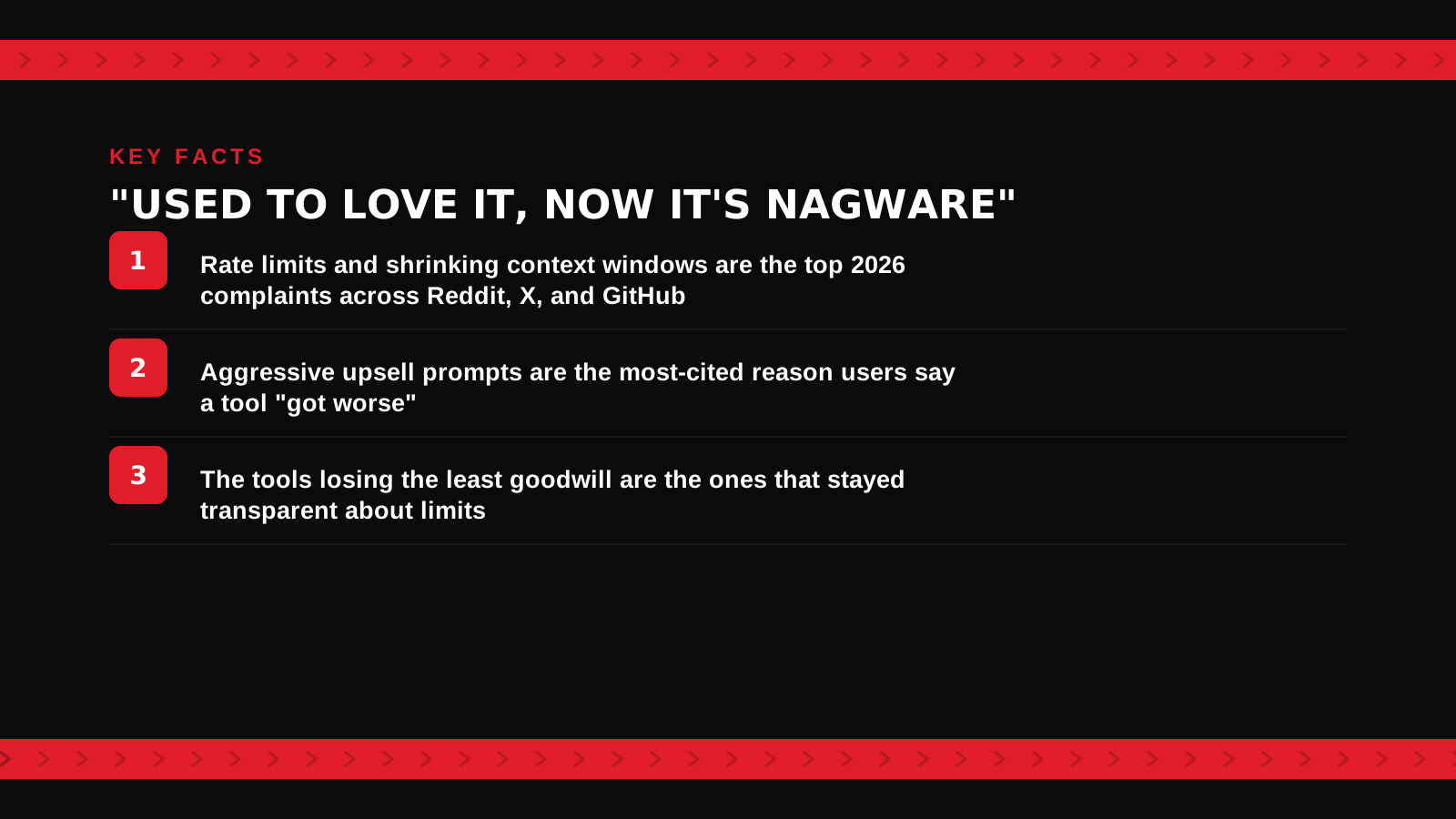
Rate limits and degraded context top the list. Users report session windows and usage caps that empty faster than the advertised numbers suggest, and a sense that context windows — the amount a model can "remember" within a conversation — perform worse in practice than the specs imply, especially on longer sessions or larger codebases.
Aggressive upselling is the single most-cited reason someone says a tool "got worse" even when the underlying model quality didn't change. A tool that used to just work and now interrupts with upgrade prompts reads as a regression to users, regardless of whether the core capability actually declined.
Pricing changes with unclear framing compound both of the above — see Claude Sonnet 5's tokenizer change as a live example: the per-token price didn't rise, but real per-task cost did for many workloads, and that kind of nuance is exactly what gets lost in a frustrated user's actual experience of "my bill went up and nobody clearly told me why."
What separates the tools losing less goodwill
The pattern across less-frustrated communities is consistent: transparency about limits before you hit them, not after. Tools that clearly state usage caps, explain pricing changes in plain terms when they happen, and give users a way to check remaining quota before starting a long task get meaningfully less backlash than tools where a limit just silently kicks in mid-task with no warning. It's less about which tool has the generous limits in absolute terms, and more about whether the limit was communicated honestly before it became a problem.
What you can actually do about it
Check your usage and limits proactively rather than discovering them mid-task — most major tools now expose some form of quota visibility if you go looking for it. If a specific tool's upsell frequency has crossed from "occasional" to "constant," that's worth weighing as a real cost, not just an annoyance — it affects how usable the product actually is day to day. And when a pricing change is announced, look for the specific mechanism (a new tokenizer, a changed rate-limit window, a redefined "message") rather than just the headline framing, since that's usually where the real impact is hiding.
FAQ
Is this backlash likely to change how AI companies operate? Some signal exists that transparency reduces backlash even without changing the underlying limits — companies that communicate clearly seem to retain more goodwill for the same constraints. Whether that changes broader industry behavior long-term is genuinely unclear.
Are free tiers getting worse across the board, or is this really the paid tiers too? Both get cited in community complaints, but paid-tier frustration tends to land harder specifically because users are already paying and feel a tool "used to be better" for the same money.
Is there a way to avoid rate limits entirely? Not entirely, short of self-hosting an open model — but higher-tier plans, narrower context per request, and choosing tools that are transparent about limits before you hit them all reduce how often you actually run into one.
Related guides
- Why Your Claude Code Session Runs Out So Fast
- Claude Sonnet 5 Pricing: The Increase That Wasn't
- Explore Productivity tools
*News and community sentiment reviewed as they change. Last updated August 2026.*
Bogdex · Founder & editor, woska
Bogdex builds and curates woska, testing AI tools against real workflows to judge which ones actually save time rather than which have the longest feature list.