An AI opportunity score is a single number, usually out of 100, that estimates how much of your business's day-to-day work could realistically be handled by AI right now — based on your team size, how leads and follow-up actually move, and how much time goes into manual admin and research. It isn't a measure of how advanced your tech stack is. It's a measure of how much time is currently sitting on the table, and where.
Most businesses have never had a real answer to "how much of this could be automated" — just a vague sense that "AI could probably help somewhere." A score forces that vague sense into something you can act on.
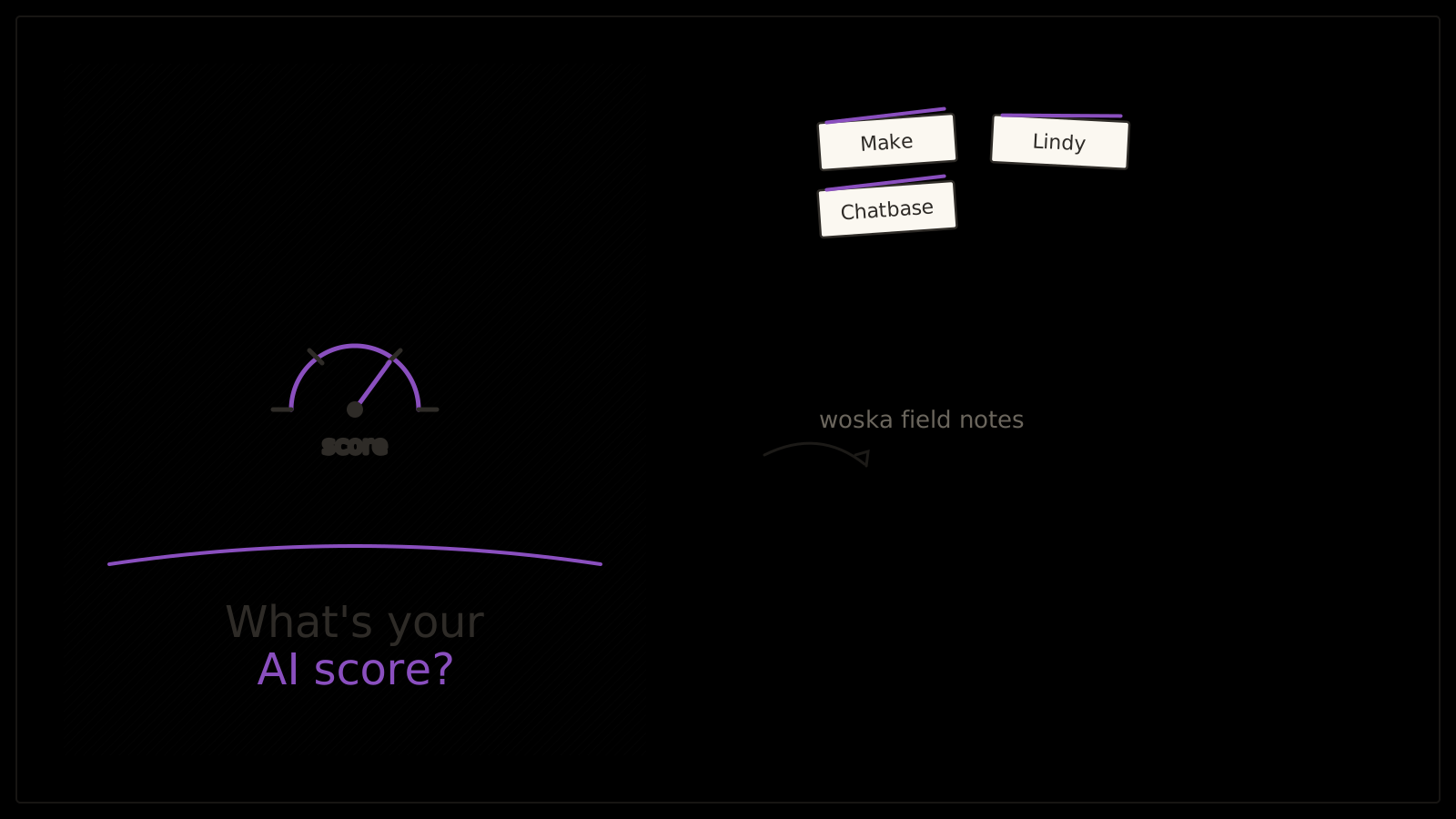
What actually feeds the number
A useful score isn't generic — it's built from specifics about how your business actually runs:
- Team size and inbound volume. A five-person team fielding 20 inquiries a week has a completely different opportunity profile than one fielding 200.
- Where time currently goes. Prospecting, follow-up, manual data entry, and research each represent a different kind of opportunity, with different tools that fit.
- What should stay human. Pricing decisions, hiring, legal judgment calls, and complaint handling get excluded on purpose — a score that ignores this just oversells what AI should be doing.
That last point matters more than it sounds. A score that says "everything is automatable" isn't useful advice, it's marketing copy.
Why a generic score doesn't mean anything
Industry-wide AI readiness benchmarks are close to useless at small-business scale. A five-person real estate brokerage running almost entirely on referrals and a five-person agency answering 200 inbound requests a week are both "small businesses" by every standard definition, but their opportunity scores should look nothing alike — one has almost no repeatable volume to automate, the other has a follow-up bottleneck that's costing real deals every week.
Want your own number instead of a guess? Take the free AI Readiness Audit → — answer a few questions about how your business runs and get an AI opportunity score, a breakdown of where it's coming from, and a 30-day roadmap. No signup required.
What a good score actually unlocks
The point of the number isn't the number — it's what it points to next. A score broken into leads, follow-up, admin, and research should tell you which one workflow to start with, not hand you a shopping list of ten tools to try at once.
Make is a reasonable starting point when the answer is "automate a workflow across tools I already use" rather than replace a role outright — it connects what exists instead of asking you to rebuild around a new platform.
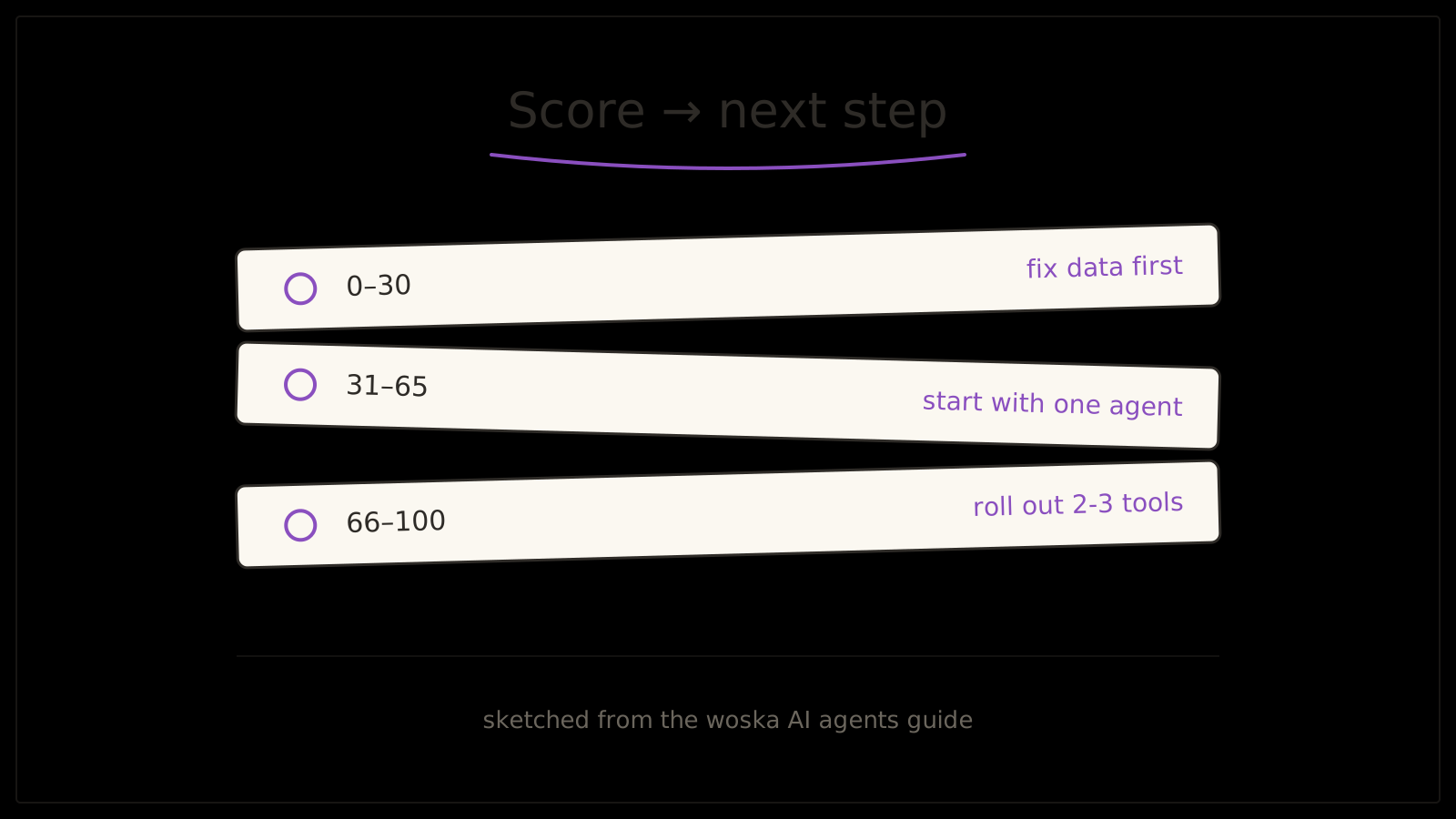
Quick comparison
| Score range | What it usually means | Reasonable next step |
|---|---|---|
| 0–30 | Most work is judgment-based or too inconsistent yet | Fix process or data gaps before buying tools |
| 31–65 | A few repeatable workflows are ready now | Start with one workflow, one tool |
| 66–100 | Multiple high-volume, repeatable workflows exist | Roll out 2–3 tools with a review process in place |
Which tool fits your score?
If your opportunity is spread across tools you already use — lead routing, follow-up reminders, data moving between apps — Make connects them without replacing anything. If the opportunity looks more like an entire role's worth of repetitive work (inbox triage, scheduling, first-pass replies), Lindy is built to act more like an assistant than a workflow. If the opportunity is customer-facing questions eating support time, Chatbase turns your existing docs into a support agent.
FAQ
Is a low score a bad sign? No — it usually means your process or data isn't consolidated enough yet to automate safely, which is fixable and worth knowing before spending on tools that won't have anything reliable to work from.
Does a higher score mean I should buy more tools? No. A high score means more of your workflows are ready, but the advice is still to start with one, prove it works, then move to the next — not to roll out everything the score technically allows.
How is this different from a generic "AI maturity" framework? Enterprise maturity frameworks measure governance, infrastructure, and data strategy across departments. A small-business opportunity score measures something much narrower and more useful day to day: which specific workflow is worth automating first.
Related guides
- Take the free AI Readiness Audit
- Does My Business Need AI? 7 Signs You're Ready
- How to Measure AI ROI for a Small Business
- Explore AI Agents tools
- Is My Business Ready for AI Agents? A Practical Readiness Check
*Ratings and pricing reviewed monthly. Last updated August 2026.*
Bogdex · Founder & editor, woska
Bogdex builds and curates woska, testing AI tools against real workflows to judge which ones actually save time rather than which have the longest feature list.