Your business needs AI if you can point to a specific, recurring task that's costing real time or money and nobody's actually said out loud "we should fix this yet." That's a lower bar than most of the hype suggests, and a higher bar than "everyone else is doing it." By mid-2026, 89% of small businesses in the US use AI in some capacity, up from just 36% in 2023 — but only 27% feel confident they're actually doing it well. Adoption isn't the hard part anymore. Knowing whether *your* business specifically has a real use case is.
7 signs you're actually ready
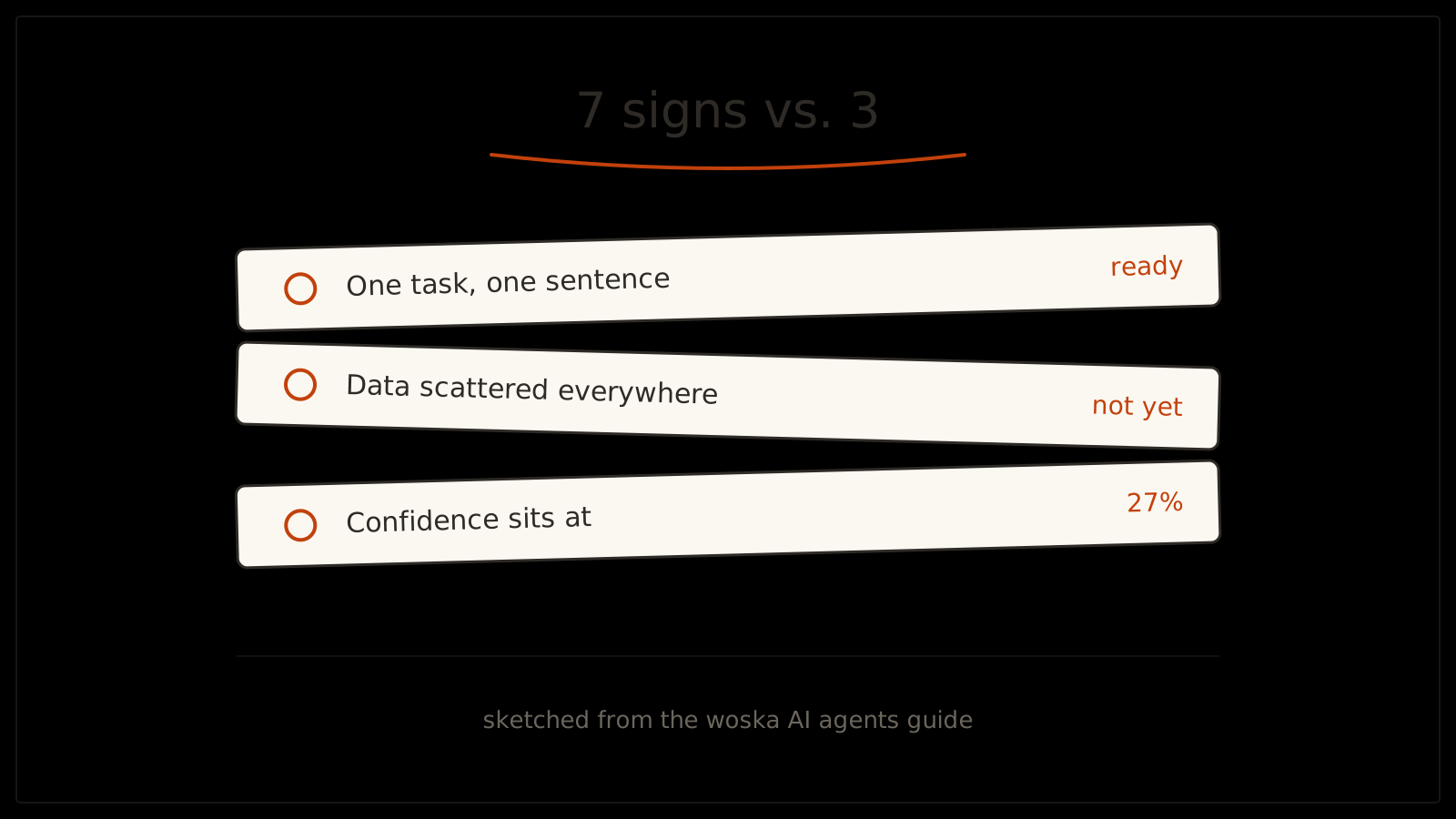
- You can name the task in one sentence. "Someone manually copies leads from our contact form into a spreadsheet every morning" is specific. "We should use more AI" is not.
- The task happens often enough to matter. Daily or weekly beats "a few times a year" — a rare task isn't worth the setup time regardless of how annoying it is.
- The information already lives somewhere. Your inbox, your CRM, a spreadsheet, your help docs. If the answer only exists in one person's head, there's nothing yet for AI to work from.
- You have 30 minutes a week to check the output. Every new automation needs a human reviewing its first few weeks of work. If nobody has that time this month, the tool isn't the blocker — the review capacity is.
- 91% of small businesses already using AI report it boosts revenue, and 90% report better efficiency. That's not a guarantee for you specifically, but it means the base rate of "this was worth it" for businesses your size is genuinely high once they pick a real task.
- You've felt the cost of the manual version. A missed follow-up, a slow response that lost a lead, an hour a day that could go toward something that actually grows the business — a felt cost is a stronger signal than a vague sense you're behind.
- Someone actually owns the decision. Not a committee — one person who can say "we're trying this" and "we're stopping this" without a month of meetings.
3 signs you're not ready yet
- The process changes every time. If how you handle a task depends heavily on the specific situation, an AI tool will need constant correction rather than actually saving time.
- The data is scattered or undocumented. If the information needed lives across six disconnected tools or only in someone's memory, that's a real problem worth fixing — but it comes before automating, not after.
- Nobody has bandwidth to review anything new. Adding an unreviewed AI tool during a chaotic month is how a business ends up with a customer-facing mistake nobody caught for weeks.
Not sure which of these actually applies to you? Take the free AI Readiness Audit → — answer a few questions about how your business runs and get a personalized AI opportunity score, the workflows most worth automating first, and a 30-day roadmap. No signup required.
The confidence gap is the real story
The barrier for most small businesses in 2026 isn't access to tools — it's clarity about where to start. That gap between 89% adoption and 27% confidence is exactly why "does my business need AI" is the wrong first question for a lot of owners. The better question is "which one task, specifically, is worth trying first" — and that answer looks different for a five-person agency than a twenty-person retailer, even if both technically "use AI" by year's end.
Quick comparison
| Signal | Ready now | Not yet |
|---|---|---|
| Task clarity | One sentence, specific | "We should use more AI" generally |
| Data location | Lives in a tool you use daily | Scattered or only in someone's head |
| Review capacity | 30 min/week available | No time to check new output this month |
| Ownership | One person decides and adjusts | Committee, or nobody's clearly in charge |
Which one should you use?
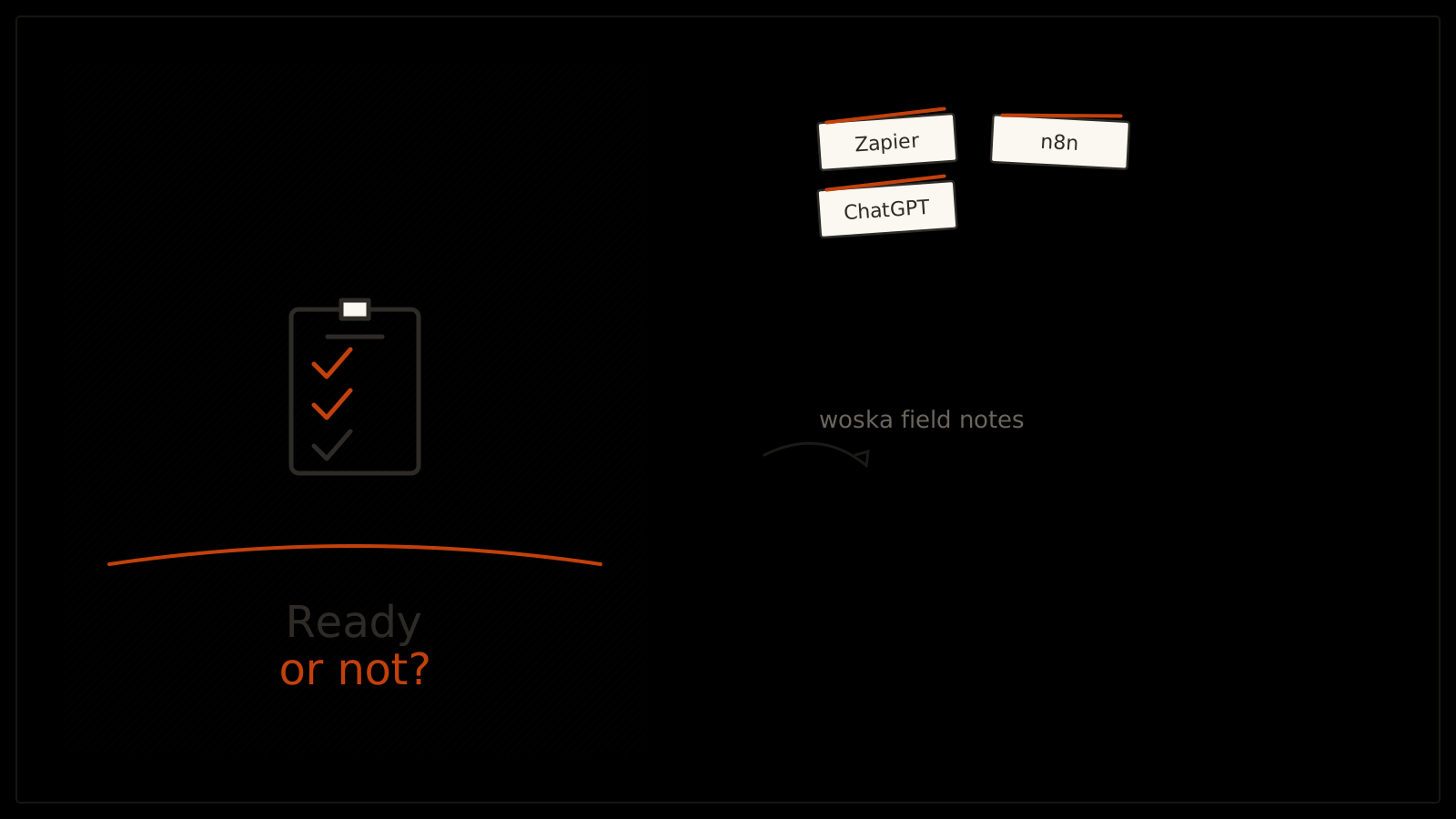
Once you've confirmed a real task exists, Zapier is the simplest starting point for connecting apps and automating the repetitive parts. Use n8n if you want more visibility and control over each step of the workflow. Reach for ChatGPT directly if the task is more about drafting or reasoning through something than moving data between tools.
FAQ
Is it too late to start if we haven't adopted AI yet? No — adoption is still climbing (89% now, projected 72% using it for at least one core function by 2028 per McKinsey), and starting later with a clear, specific use case beats starting early with a vague one.
What if we try one workflow and it doesn't work? That's a normal, expected outcome for a first attempt — most failures at this stage are scope problems (the task was less repeatable than it looked), not proof AI doesn't work for your business.
Do we need a technical person on staff to get started? No, for a single narrow workflow. No-code tools like Zapier and n8n are built for exactly this, and a technical hire only becomes relevant once you're automating something more complex than one clear task.
How do we know if we're actually ready versus just feeling behind? Feeling behind is social pressure; readiness is a specific task, existing data, and review time. If you can't name the task in one sentence, you're not behind — you just haven't found the use case yet.
Related guides
- Take the free AI Readiness Audit
- Is My Business Ready for AI Agents? A Practical Readiness Check
- How to Measure AI ROI for a Small Business
- Common AI Agent Mistakes Small Businesses Make in 2026
- Explore AI Agents tools
*Ratings and pricing reviewed monthly. Last updated September 2026.*
Bogdex · Founder & editor, woska
Bogdex builds and curates woska, testing AI tools against real workflows to judge which ones actually save time rather than which have the longest feature list.