GitHub Copilot is the cheapest real entry point at $10/month, Cursor and Claude Code anchor the now-standard $20/month tier, Replit Agent and OpenAI Codex sit close behind, and usage-based tools like Sourcegraph Amp and Devin can end up costing much more or much less depending on how hard you push them. The sticker price on the pricing page increasingly isn't the number you actually pay — most of these tools now meter usage on top of (or instead of) a flat subscription, so two teams on the "same" plan can land on very different bills.
If you're still deciding which agent to use before worrying about the bill, start with Best AI Coding Assistant or Best Autonomous AI Coding Agent.

The pricing models, in plain terms
Coding agents in 2026 bill you in one of three ways: a flat monthly subscription with a fixed usage pool (Cursor, Claude Code), a credit or token-based system that starts cheap and scales with how much you use premium models (GitHub Copilot, OpenAI Codex), or usage-based billing with no flat floor at all (Sourcegraph Amp, Devin's per-task pricing). Free and open-source agents like Aider, Gemini CLI, and Block Goose remove the subscription entirely, but you still pay your model provider per token unless you're running fully local.
What each tool actually costs
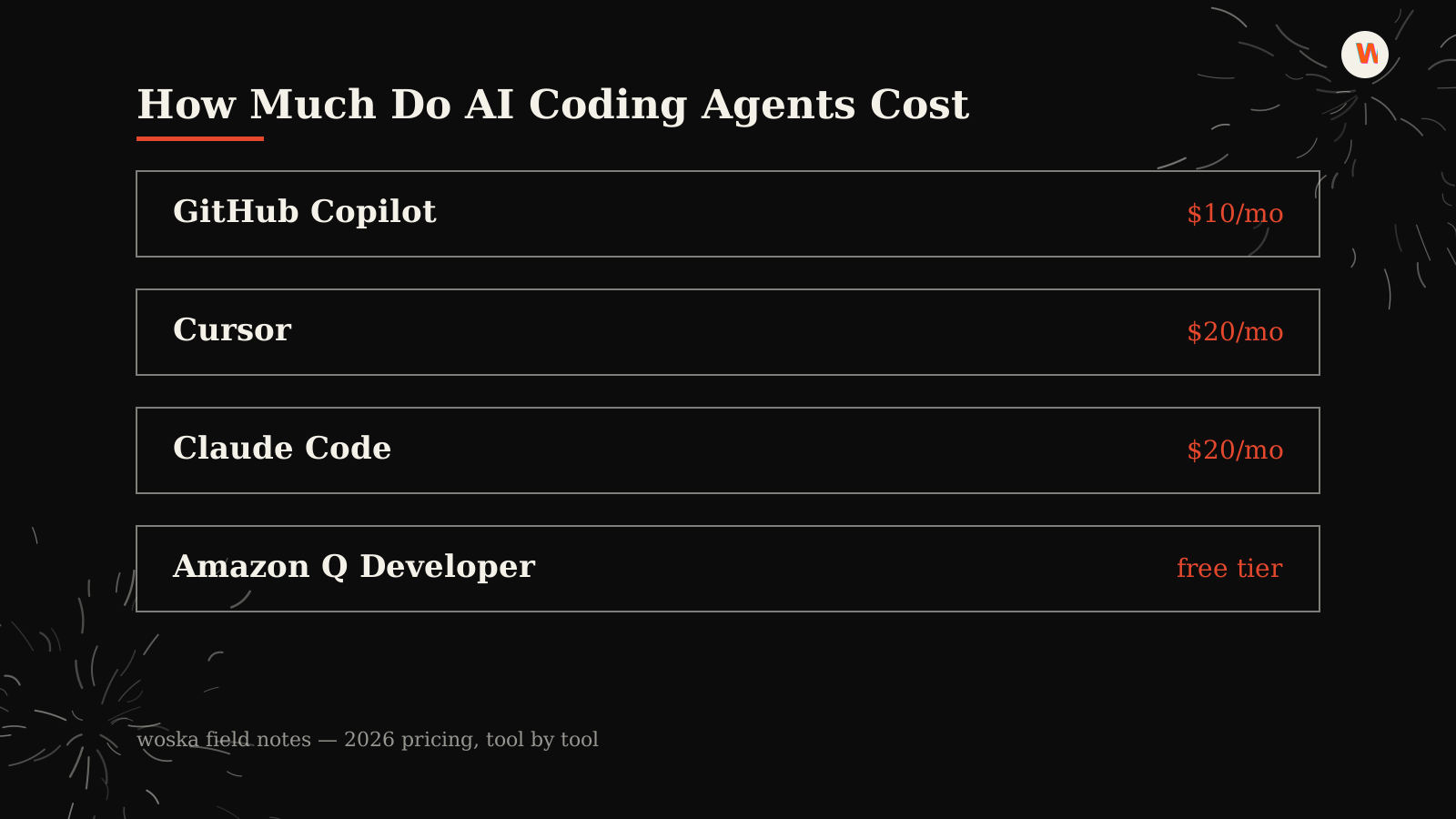
GitHub Copilot starts at $10/month for the Pro tier, which now runs on AI credits (1 credit = $0.01) rather than unlimited use — the cheapest way in, but heavy agent-mode use can burn through credits faster than the flat price suggests.
Cursor starts at $20/month for Pro, with a shared usage pool; heavier users move up to $60/month Pro+ or higher tiers as that pool runs out faster than expected.
Claude Code also starts at $20/month through a Claude subscription, with $100–$200/month tiers for teams running it constantly across large codebases.
OpenAI Codex starts at $20/month, billed similarly to Copilot with usage on top for heavier cloud-assigned task volume.
Replit Agent starts at $25/month, priced for its all-in-one hosted workspace rather than as an add-on to an existing setup.
Amazon Q Developer has a genuinely usable free tier (50 suggestions/month), with a Pro tier around $19/user/month for unlimited use and enterprise controls.
Sourcegraph Amp and Devin are the two least predictable: Amp bills by usage with no flat floor, and Devin's per-task, credit-based pricing means cost tracks how much work you assign it, not a calendar month.
Open Sourcegraph Amp → · Open Devin →
Quick comparison
| Tool | Starting price | Billing model | Watch out for |
|---|---|---|---|
| GitHub Copilot | $10/mo | AI credits | Heavy agent-mode use burns credits fast |
| Cursor | $20/mo | shared usage pool | Pool runs out before the month does |
| Claude Code | $20/mo | usage-capped subscription | Constant large-repo use needs the $100+ tier |
| OpenAI Codex | $20/mo | subscription + usage | Cloud task volume adds up |
| Replit Agent | $25/mo | hosted workspace | Priced as an all-in-one, not an add-on |
| Amazon Q Developer | Free / ~$19/mo Pro | free tier + subscription | Free tier caps at 50 suggestions/month |
| Sourcegraph Amp | Usage-based | pay per use | No flat ceiling on a heavy month |
| Devin | Per-task, from $20/mo | credit-based | Cost tracks tasks assigned, not time |
How to actually budget for this
Judge cost per finished task, not the sticker price on the plan page. A $10/month tool that burns through credits by the second week of every sprint isn't cheaper than a $20/month tool with a usage pool that comfortably covers the same work — and a usage-based agent like Devin can be either far cheaper or far more expensive than a flat subscription depending entirely on how much you assign it. If you're not sure yet, start on the cheapest tier of GitHub Copilot or the free tier of Amazon Q Developer, track a real month of usage, then move up once you know your actual pattern.
FAQ
What's the cheapest AI coding agent overall? GitHub Copilot at $10/month for individuals, or Amazon Q Developer's free tier if 50 suggestions a month is enough for how you'd use it.
Why did my AI coding tool bill go up even though I'm on the same plan? Most tools moved from flat, unlimited-feeling plans to credit or usage-based billing in 2026. The plan name and price can stay the same while your actual monthly cost rises with usage, especially agent-mode and premium-model requests.
Is a free, open-source agent actually free? The tool itself is, but Aider, Gemini CLI, and most others still send requests to a model provider that bills by token — real savings mainly come from choosing a cheaper model, not from the agent being open source.
Is it worth paying for more than one coding agent at once? Often yes: a common, cost-effective pattern is one cheaper editor-based tool for daily work (GitHub Copilot or Cursor) plus one agent reserved for harder, less frequent tasks (Claude Code or Devin), rather than paying for the most expensive tier of a single tool.
Related guides
- Part of our complete guide: AI Coding & Developer Tools
- Best AI Coding Assistant in 2026
- Best Autonomous AI Coding Agent in 2026
- Amazon Q Developer Review 2026
- Explore Coding & Dev tools
*Ratings and pricing reviewed monthly. Last updated July 2026.*
Bogdex · Founder & editor, woska
Bogdex builds and curates woska, testing AI tools against real workflows to judge which ones actually save time rather than which have the longest feature list.