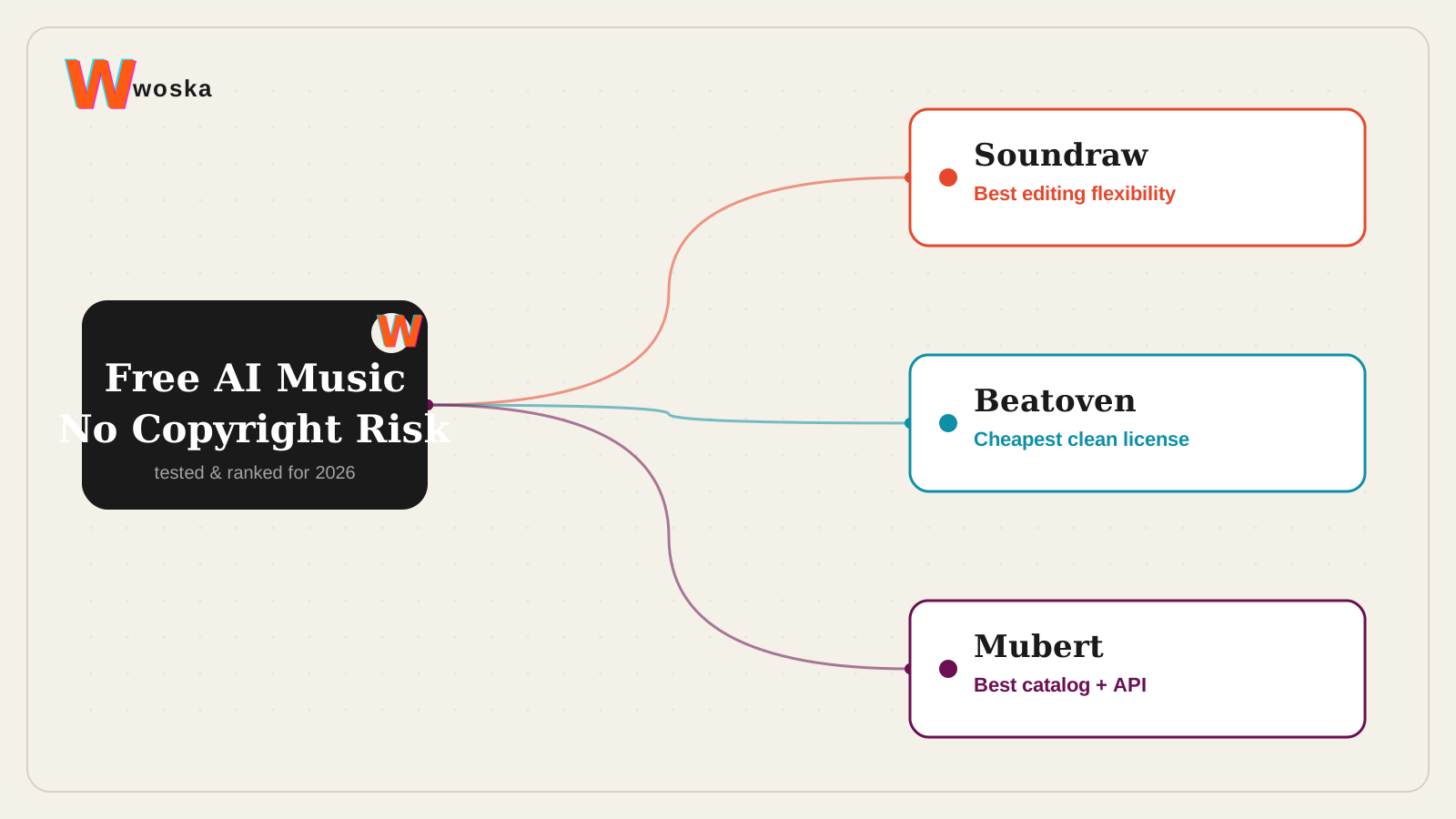
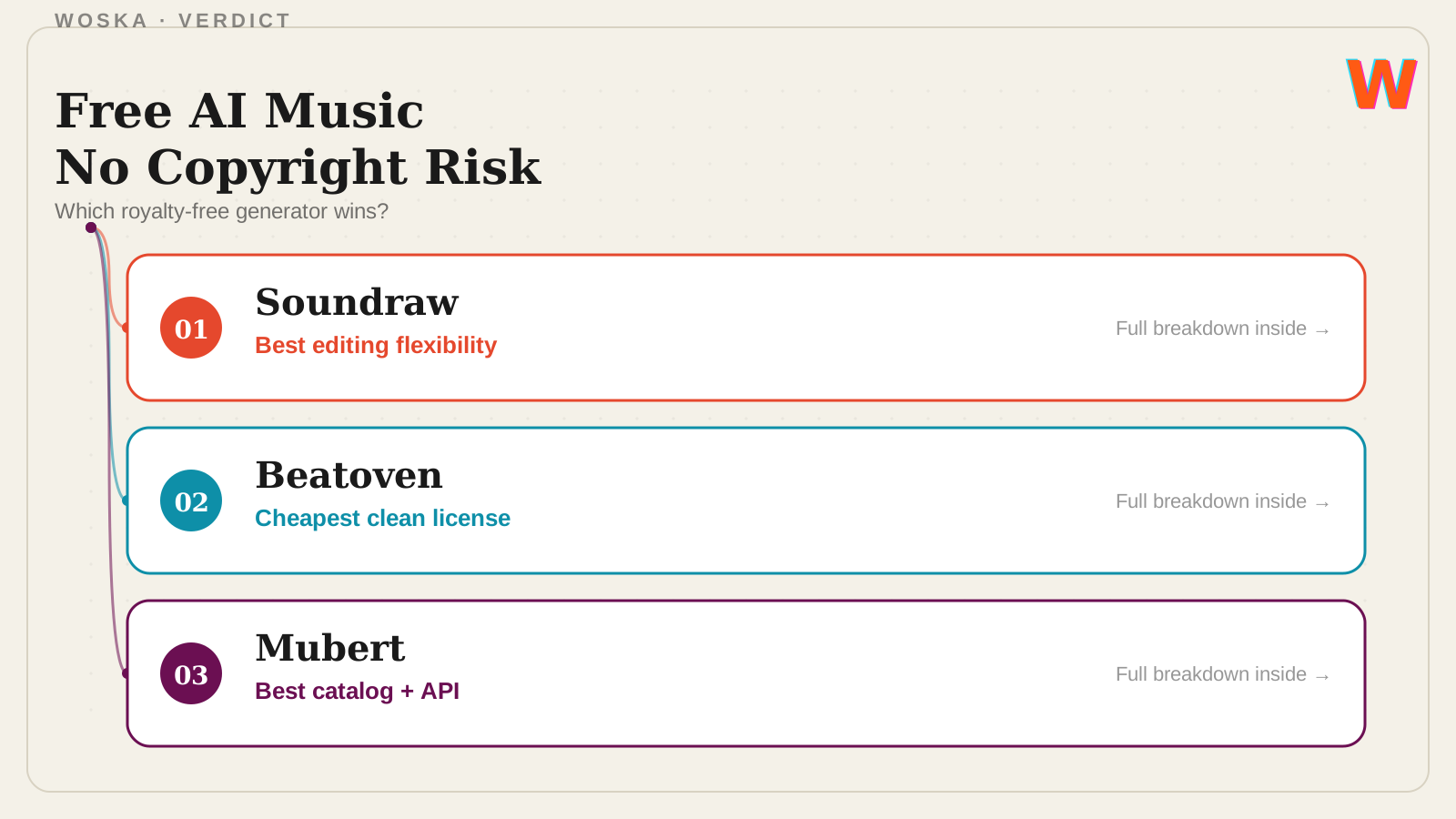
Soundraw wins for creators who want to actually edit a generated track — rearranging sections and layers rather than accepting a single output. Beatoven wins as the cheapest option with a genuinely clean license. Mubert wins for the largest royalty-free catalog and streaming-friendly ambient/electronic output. Boomy wins if the goal is getting a finished track onto Spotify and other platforms as fast as possible. All four avoid the specific risk that Suno and Udio still carry in 2026: active, unresolved label litigation over training data.
Why this list exists separately from the big-name generators
Suno and Udio dominate the AI-music conversation, but both are still navigating major-label lawsuits over their training data as of mid-2026 — a real, if manageable, risk for anyone building a monetized channel or client work on top of them. The four tools below were built for a narrower, lower-risk job from the start: royalty-free background and instrumental music for video, content, and games, without a lead vocal and without the same legal exposure.
Where each one actually wins
Soundraw lets you generate a track by selecting genre, mood, tempo, and length, then rearrange sections, adjust intensity, and tweak individual layers — editing flexibility that's more intuitive than most competitors in this tier.
Beatoven is the budget pick, starting around $2.50/mo, and is one of the few tools in the category with Fairly Trained certification — independent verification that its training data was properly licensed. Its music is cleared for use as background inside your content, though direct redistribution on streaming platforms isn't part of the license.
Mubert generates continuous, stream-friendly ambient and electronic music from a large sample library, with a render/streaming API for developers who need generated audio inside their own product rather than a one-off download.
Boomy is built to go from a style prompt to a finished, distributed track fastest — including direct distribution to Spotify and other streaming platforms, which none of the other three in this list handle natively.
Quick comparison
| Tool | Starting price | Best fit | Streaming distribution |
|---|---|---|---|
| Soundraw | Freemium | Editable background tracks | No |
| Beatoven | ~$2.50/mo | Cheapest clean license | No |
| Mubert | Freemium | Ambient/electronic catalog + API | No |
| Boomy | Freemium | Fastest to a distributed track | Yes |
Which one should you actually use?
Pick Soundraw if you need to fine-tune a track rather than accept the first generation. Pick Beatoven if budget and license certainty matter more than editing depth. Pick Mubert if you need a large catalog or an API for generated audio inside your own app. Pick Boomy if the actual goal is a track live on Spotify, not just a file for a video.
FAQ
Are these tools really lower-risk than Suno or Udio? Yes, meaningfully — none of the four carry the same active major-label litigation over training data that Suno and Udio are navigating in 2026. That said, always read the current license terms before commercial use; "lower risk" isn't "zero risk," and terms change.
Can I get vocals with any of these four? Not full lead vocals in the way Suno, Udio, or ElevenLabs Music produce them — these four are built primarily for instrumental and background music. If you need a vocal track specifically, see our vocal AI music generator comparison.
Which one is genuinely free to use, not just freemium? Soundraw and Mubert both have usable free tiers for evaluation, though commercial rights on generated tracks typically require a paid plan across all four.
Can I put a Boomy track on Spotify under my own artist name? Yes — that direct distribution pipeline is Boomy's core differentiator against the other three, which are built for background/sync use rather than artist releases.
Related guides
- Best AI Music Generator With Vocals in 2026
- Udio Review 2026
- Stable Audio Review 2026
- Explore Audio & Voice tools
*Ratings and pricing reviewed monthly. Last updated August 2026.*
Bogdex · Founder & editor, woska
Bogdex builds and curates woska, testing AI tools against real workflows to judge which ones actually save time rather than which have the longest feature list.