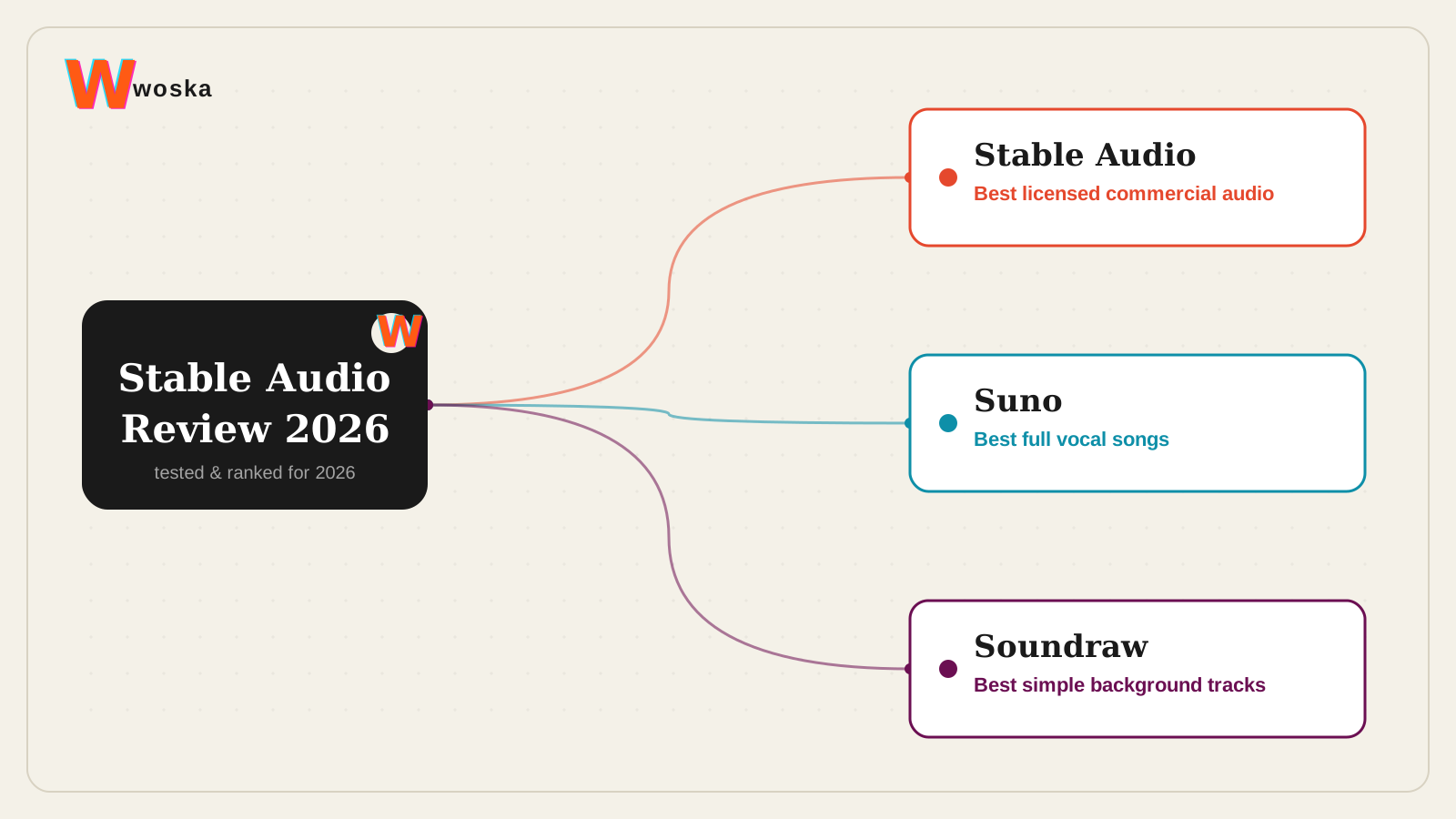
Stable Audio is the AI music tool to choose when the deliverable is a clean instrumental, a stem, or a sound effect — not a full vocal song — and you want a licensing story you can actually explain to a client. Stable Audio 3.0, released May 20, 2026, generates full six-minute compositions trained entirely on data licensed from Warner and Universal, and ships open weights on three of its four models. That last part matters more than it sounds: it's the direct opposite of Suno and Udio's closed, still-litigated approach to training data.
What it's actually good at
Describe the track in plain language — genre, mood, instruments, BPM, length — and Stable Audio generates a fully-realized track you can download and use commercially. The 3.0 release extended output length to a full six minutes and added sound-effect and foley generation alongside music, widening its use beyond background scoring into general sound design.
Because the model isn't trying to synthesize a lead vocal and a backing track at the same time, the instrumentals it produces tend to come out cleaner and punchier than output from tools splitting attention between voice and music. If the brief is a three-minute cinematic instrumental, a clean techno loop, or a precise sound effect, Stable Audio is one of the more capable options available.
The medium model generates audio in under two seconds on an H200 GPU, and the small models run on CPU only — no GPU required at all, which matters if you're running generation locally rather than through a hosted API.
What it doesn't do
Stable Audio does not generate coherent lead vocals from custom lyrics — if the deliverable needs a sung vocal, this isn't the tool, and you'll want Suno, Udio, or ElevenLabs Music instead. The flagship Large model also stays API-only rather than shipping open weights, and as a brand-new release, Stable Audio 3.0 hasn't yet been independently benchmarked against the field the way Suno v5.5 has.
Quick comparison
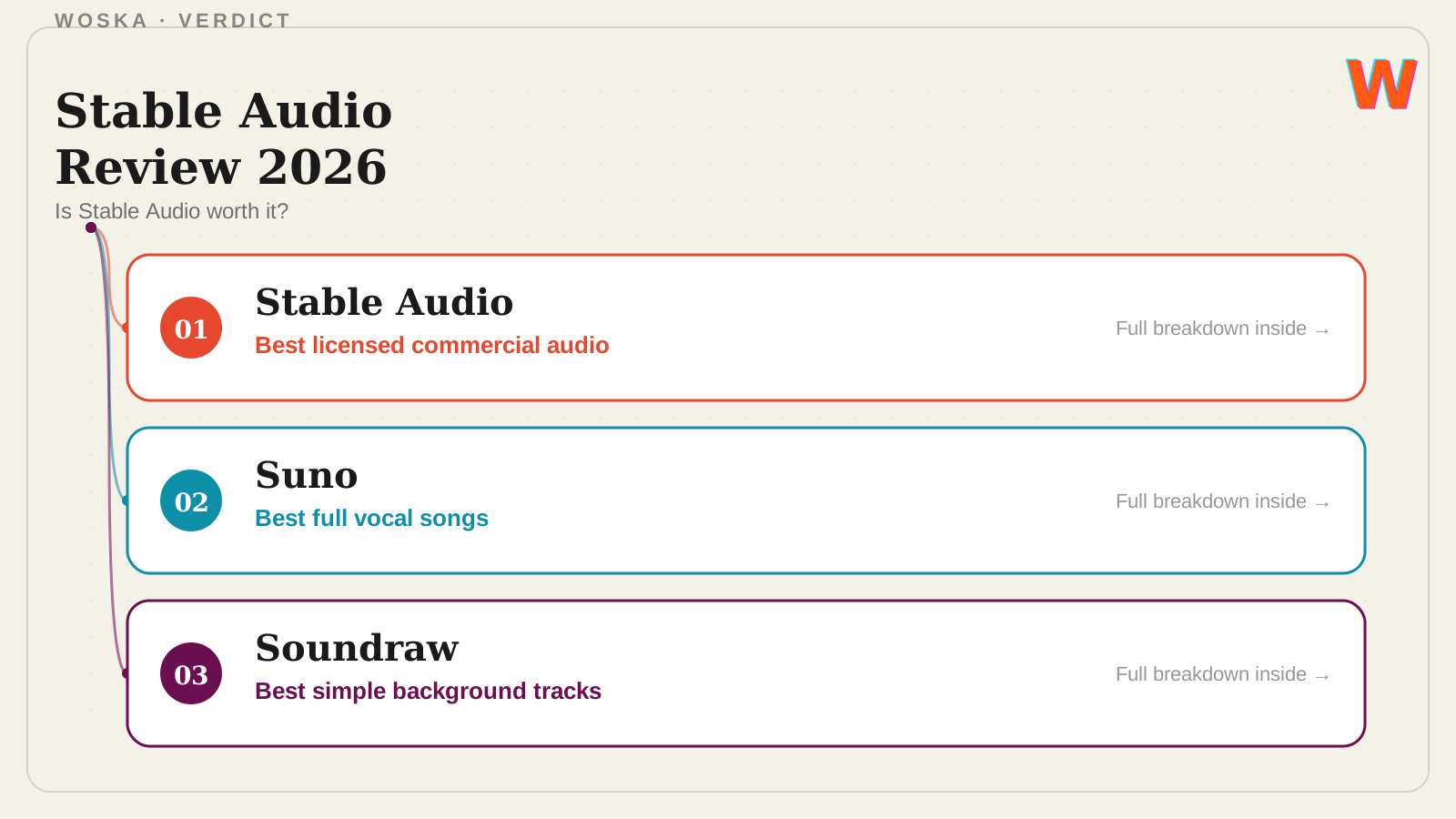
| Tool | Vocals | Licensing | Best fit |
|---|---|---|---|
| Stable Audio | No | Licensed (Warner/Universal), open weights | Instrumentals, stems, sound effects |
| Suno | Yes, full songs | Training data in litigation | Complete vocal songs fast |
| Soundraw | No | Royalty-free, in-house compositions | Editable background tracks |
Is it worth it?
If you need a vocal song, Stable Audio is the wrong tool regardless of how clean its licensing is — that's a hard limitation, not a quality gap. But for instrumentals, stems, and sound effects where commercial-use certainty actually matters — client work, ads, anything where "is this legally safe" is a real question your team asks — Stable Audio's licensed-data approach and open weights make it one of the more defensible choices in the category, not just a technically good one.
FAQ
Can Stable Audio generate vocals at all? No — it's intentionally instrumental- and effects-only. Pair it with a dedicated vocal tool if a track needs singing.
What does "open weights" actually mean for a non-technical user? It means the underlying model files for most of Stable Audio's variants are publicly downloadable and can run on your own hardware, rather than only through Stability AI's hosted service — useful for privacy, cost control at scale, or offline workflows, less relevant if you're happy using the hosted version.
How does the Warner/Universal licensing actually reduce risk compared to Suno or Udio? Stable Audio's training data was licensed directly from those rights holders before the model was trained, rather than scraped and later disputed in court — which is the situation Suno and Udio are still resolving as of mid-2026.
Is Stable Audio free to use? It's freemium — a free tier exists for evaluation, with paid plans around $12/mo unlocking longer generations and commercial usage rights.
Related guides
- Best AI Music Generator With Vocals in 2026
- Free & Cheap AI Music Generators Without Copyright Risk in 2026
- Explore Audio & Voice tools
*Ratings and pricing reviewed monthly. Last updated August 2026.*
Bogdex · Founder & editor, woska
Bogdex builds and curates woska, testing AI tools against real workflows to judge which ones actually save time rather than which have the longest feature list.