The single biggest mistake small businesses make with AI agents is buying the tool before picking the workflow — subscribing first, then hoping a use case shows up. Gartner projects more than 40% of agentic AI projects will be cancelled by 2027, and the three root causes behind that number — unclear business value, runaway costs, and weak governance — are all sequencing problems, not technology failures. None of what follows requires a better model. It requires doing things in a different order.
The mistakes that actually sink most attempts
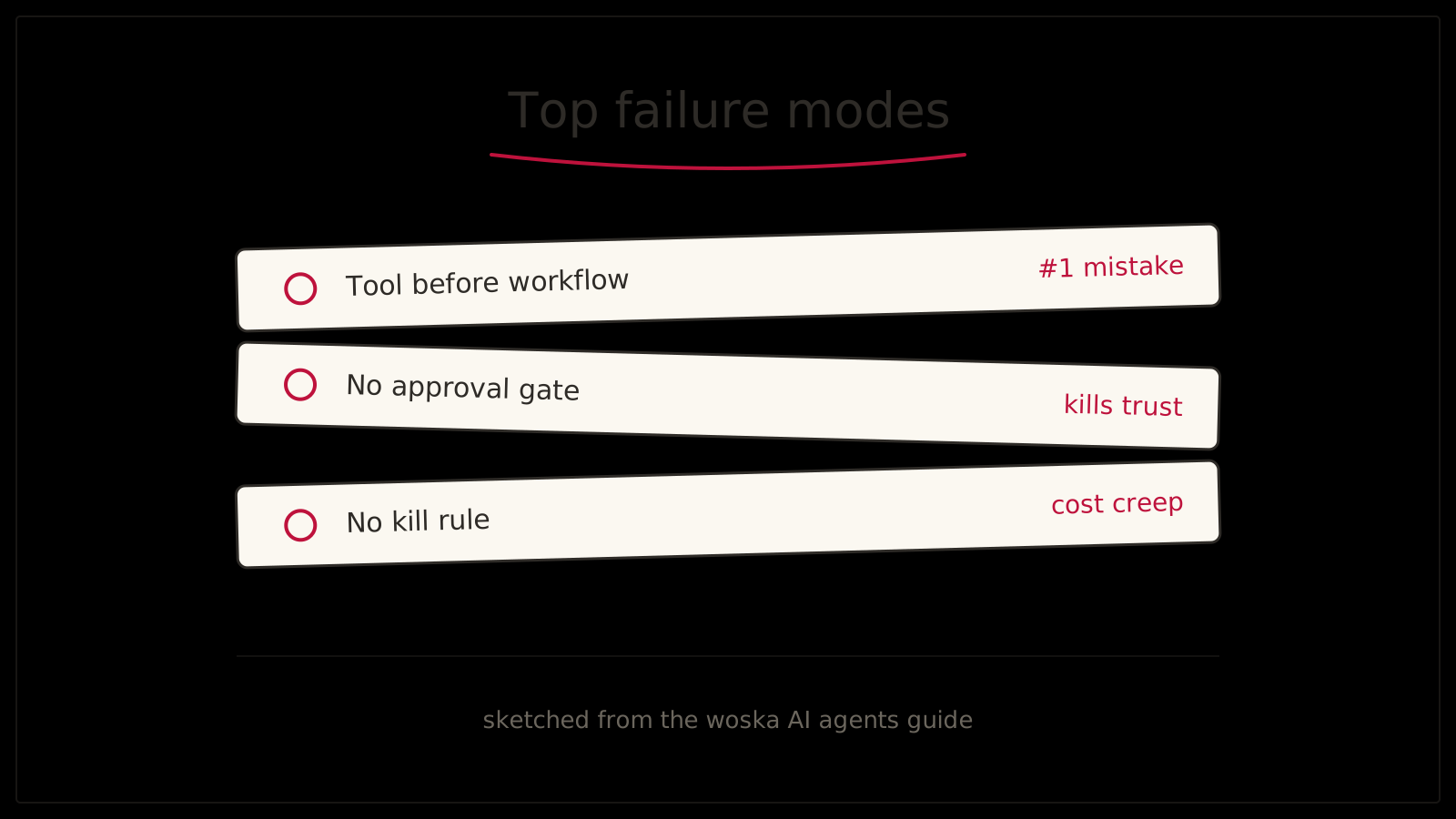
- Tool-first adoption. Buying a license because a competitor mentioned it, then trying to find something for it to do. Pick the workflow first; the tool is the easy part after that.
- No real context given to the agent. An agent that never received your actual pricing, policies, brand voice, or past examples produces generic output — and generic output is what makes a team stop trusting the tool within a week.
- No approval gate on the first outputs. The first bad output an agent produces, unreviewed, is often what kills the whole project's credibility — even if every output after that would have been fine.
- The project stays a "pilot" forever. No ship date, no decision point, just an indefinite trial that quietly dies when everyone gets busy with something else.
- Nobody actually owns it. Assigned to whoever had free time that week instead of whoever owns the process being automated — ownership matters more than technical skill here.
- No kill rule. Subscriptions pile up because nobody set a condition for cancelling one that isn't working, so cost creeps upward with nothing to show for it.
- Measuring outputs instead of hours returned. "We generated 200 drafts this month" is not the same question as "did this actually save anyone time," and conflating the two hides whether the tool is genuinely working.
The technical failure modes worth knowing
Beyond the process mistakes, 2026's most common technical failure patterns in production AI agents are hallucinated actions, runaway loops that rack up unexpected cost, tool misuse, context loss on longer tasks, and silent wrong answers that look confident enough nobody double-checks them. None of these are exotic — they're exactly why the "review the first 20 outputs" step matters more than picking the fanciest available model.
Want to know which of these risks actually applies to your setup? Take the free AI Readiness Audit → — it flags the workflows where a mistake here would actually cost you something, and where it wouldn't. No signup required.
How to avoid the whole list at once
Every mistake above traces back to the same fix: start with one narrow, well-owned workflow, give the agent real context from your business, review its output for the first few weeks, and set a specific date to decide whether it's working before letting it run indefinitely. That's a smaller ask than most "AI transformation" advice implies, and it's exactly why it actually gets finished.
Quick comparison
| Mistake | What it looks like | Fix |
|---|---|---|
| Tool-first adoption | Bought a license, no clear task | Pick the workflow before the tool |
| No real context | Generic, unusable output | Feed it your actual pricing, voice, past examples |
| No approval gate | First bad output kills trust | Review outputs for the first few weeks |
| No kill rule | Subscriptions pile up unused | Set a decision date before starting |
Which one should you use?
Start narrow with Zapier if the workflow is simple, trigger-based automation between two apps. Use n8n if you want to see every step the agent takes, which makes catching a silent wrong answer much easier. Try Gumloop if you expect the workflow's volume to grow and want usage-based pricing that scales with it rather than a flat seat cost regardless of use.
FAQ
Is it our fault if an AI agent produces a bad or embarrassing output? Partly — the model can be wrong, but skipping a review step on the first weeks of output is the more preventable failure. Treat early review as mandatory, not optional, for anything customer-facing.
How do we know if a "pilot" has actually failed or just hasn't been given enough time? Set the decision date before you start, not after — if you're deciding whether to extend a pilot in the moment, you've already lost the discipline that a pre-set kill rule was supposed to provide.
What's the fastest way to tell if we're about to make the "tool-first" mistake? If you can't answer "what specific task will this agent do, starting Monday" in one sentence, you're buying the tool before the workflow — pause and find the task first.
Do these mistakes only apply to complex, multi-step agents, or simple automations too? They apply to both, though the technical failure modes (runaway loops, cascading errors) matter more for multi-step agents — the process mistakes (no owner, no kill rule, no review) sink simple automations just as often.
Related guides
- Take the free AI Readiness Audit
- Does My Business Need AI? 7 Signs You're Ready
- How to Measure AI ROI for a Small Business
- Is My Business Ready for AI Agents? A Practical Readiness Check
- Explore AI Agents tools
*Ratings and pricing reviewed monthly. Last updated September 2026.*
Bogdex · Founder & editor, woska
Bogdex builds and curates woska, testing AI tools against real workflows to judge which ones actually save time rather than which have the longest feature list.