Composio wins for solo developers and small teams building an agent product, with a TypeScript SDK built specifically for agentic tool-calling and roughly 250 apps that cover most consumer-facing scenarios. Pipedream wins for teams that want a low-code visual builder alongside the agent-tool layer, backed by a much larger raw connector catalog (3,000+ apps). Both connect AI agents to the SaaS apps, auth, and APIs they need to actually take action — the difference is developer-first SDK versus low-code platform with agent tooling bolted on.
The two, in one line each
Composio is an integration layer purpose-built for AI agents — it connects agents to SaaS apps, handles auth, and exposes actions and external APIs through an SDK designed around agentic tool-calling from the ground up.
Pipedream is a developer automation platform for connecting APIs, workflows, and AI agent actions with code, built on a much larger existing connector catalog and a low-code visual option Composio doesn't offer.
Where each one actually wins
Composio wins on ergonomics for agent-specific work — its TypeScript SDK is built and battle-tested specifically for the tool-calling pattern agents need, and its roughly 250 integrations cover the large majority of consumer-facing scenarios a small team building an agent product actually hits. Pipedream wins on raw catalog size and flexibility — over 3,000 connectors and 10,000+ pre-built tools, plus a visual, low-code option for less-technical builders that Composio doesn't offer at all. Since Workday's November 2025 acquisition of Pipedream, it's worth watching whether the platform stays as open and general-purpose or becomes more inward-facing toward Workday's own ecosystem — a real consideration for anyone building a long-term dependency on it.
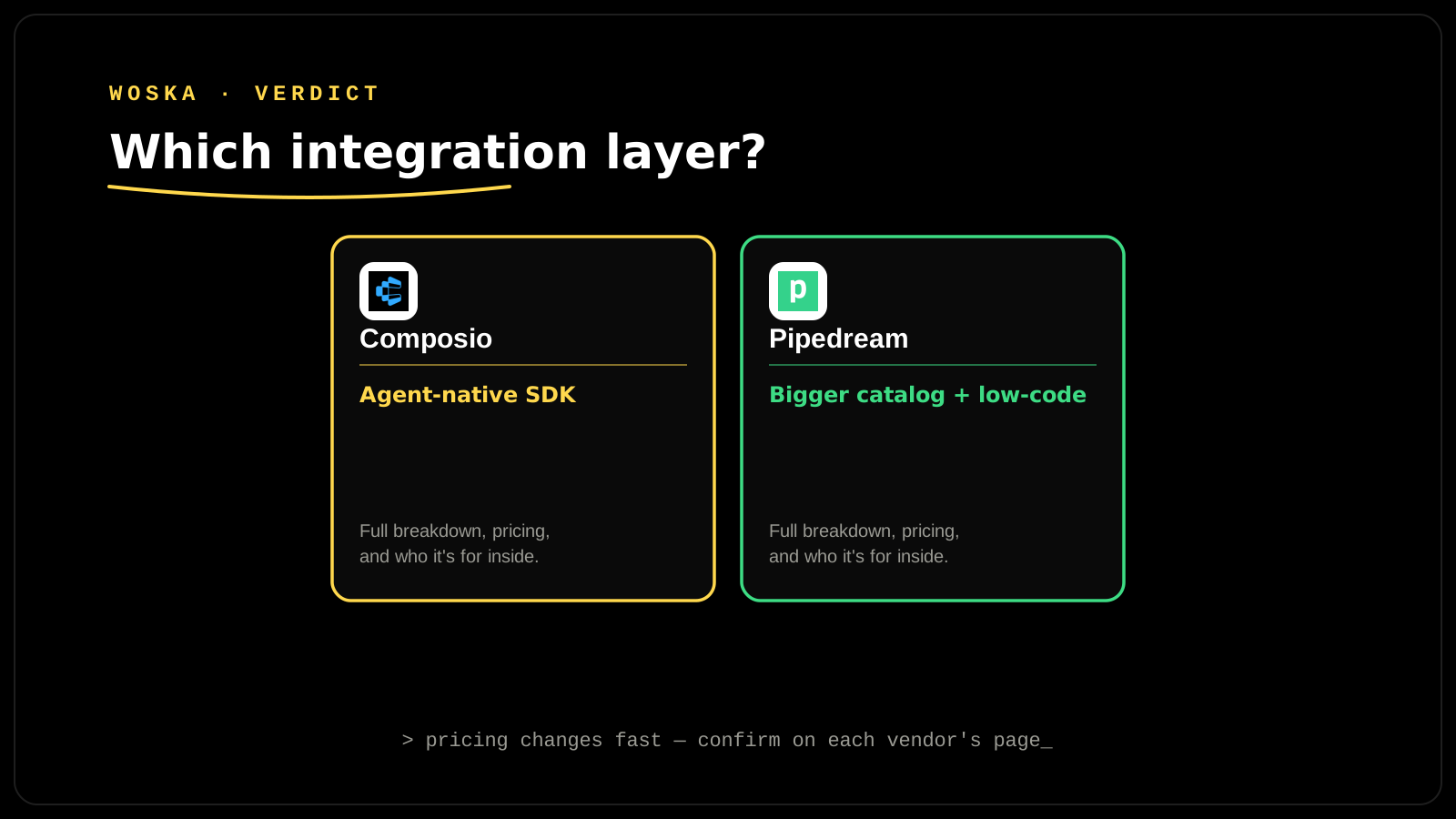
Quick comparison
| Tool | Starting price | Core job | Best fit |
|---|---|---|---|
| Composio | Freemium; per-call pricing at scale | Agent-native tool-calling SDK | Solo developers and small teams shipping an agent product |
| Pipedream | Freemium; credit-based at scale | Low-code automation + agent tool layer | Larger connector catalog, visual builder option |
Which one should you use?
Choose Composio if you're a developer building an agent product and want an SDK designed specifically around agentic tool-calling, with enough integration coverage for most consumer-facing use cases. Choose Pipedream if you need a much larger raw connector catalog, want a low-code visual option alongside code, or are already using Pipedream for broader workflow automation beyond just agent tool-calling.
FAQ
Does either platform charge per tool call, or is it a flat subscription? Both scale with usage rather than a flat unlimited subscription — Composio's pricing runs on a per-call basis and Pipedream on credits, so budget for roughly 3-5x your expected "happy path" tool-call volume rather than the cheapest advertised number.
Is Pipedream's Workday acquisition a reason to avoid it? Not necessarily, but it's a real factor to watch — acquisitions can shift a platform's roadmap toward the acquirer's own priorities, so teams building a long-term dependency on Pipedream should keep an eye on how open and general-purpose it remains post-acquisition.
Can I use a low-code visual builder with Composio? No — Composio is developer-first with an SDK, not a visual workflow builder; if a low-code option matters to your team, that's a real point in Pipedream's favor.
Which has better authentication handling for connecting to end-user accounts? Composio is specifically built around handling auth for agent-to-app connections as a core feature, which is part of why it's often recommended for agent products that need to act on behalf of many different end users, not just a single internal workflow.
Related guides
- Browser Use vs Browserbase: Best AI Browser Automation Tool in 2026
- Flowise vs Dify vs Langflow: Best Open-Source AI Agent Builder in 2026
- Best Free Alternatives to Zapier in 2026
- Explore AI Agents
*Ratings and pricing reviewed monthly. Last updated September 2026.*
Bogdex · Founder & editor, woska
Bogdex builds and curates woska, testing AI tools against real workflows to judge which ones actually save time rather than which have the longest feature list.