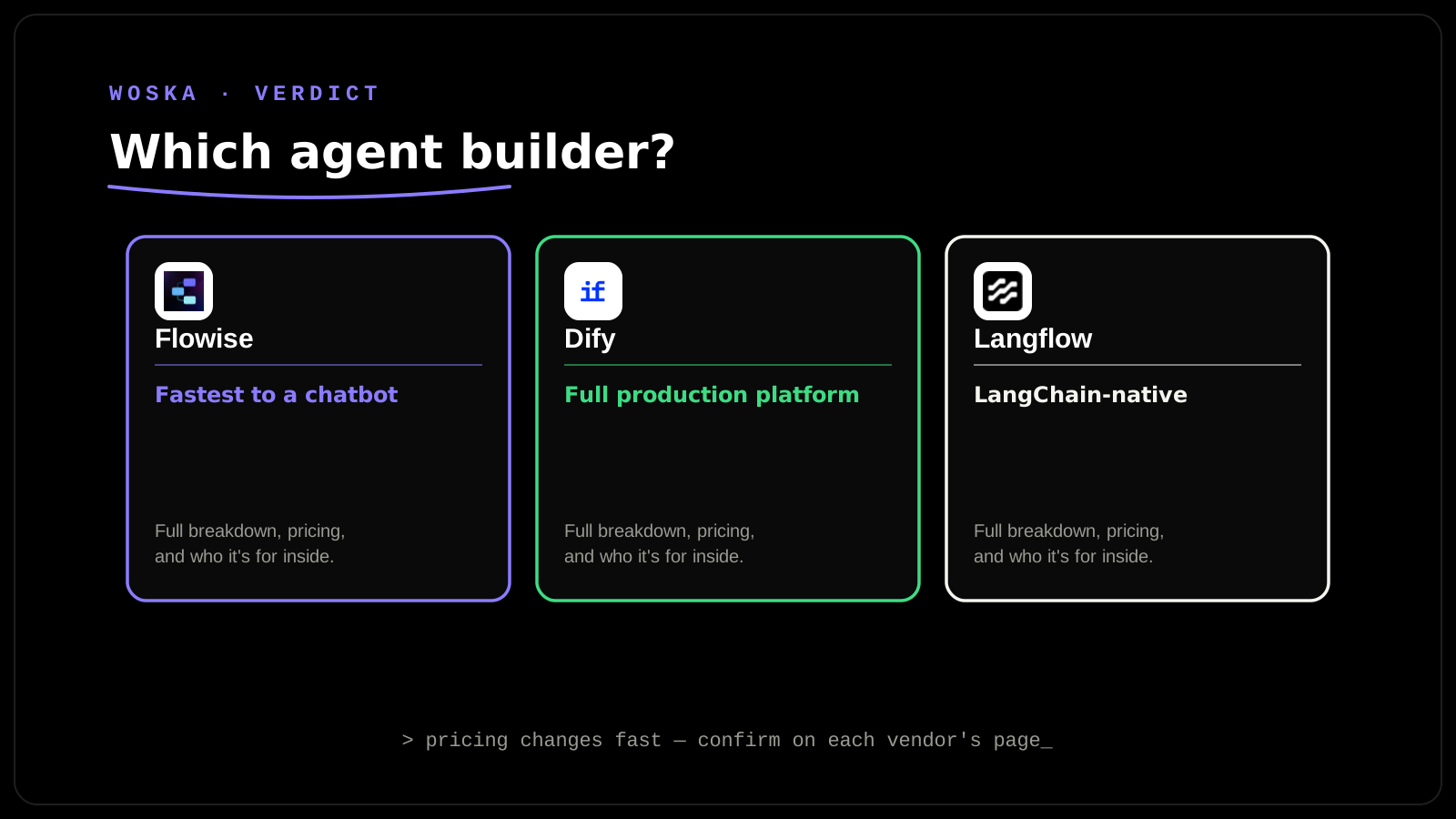
Flowise wins when you want the fastest path to a working chatbot or embeddable widget, with the smallest footprint and fewest moving parts to learn. Dify wins when you're building a real production application — it ships with a backend, database, admin UI, and API gateway, not just a flow canvas. Langflow wins for developers who want visual prototyping that compiles down to actual LangChain code they can keep editing by hand. All three are open-source, self-hostable, node-based builders for AI agents and LLM workflows — the real choice is how much platform you want underneath the canvas.
The three, in one line each
Flowise is the lightweight option — a visual builder for AI agents, chatflows, and tool-connected LLM workflows, built to get a chatbot or embeddable widget running without starting from code or standing up infrastructure.
Dify is the most opinionated and complete of the three: an open-source platform for building AI apps, agent workflows, and RAG systems with a full backend, prompt management, and multi-user workspaces included out of the box.
Langflow is the LangChain-native option — a visual, node-based canvas for prototyping LLM chains and tool calls that compiles down to real LangChain code, aimed squarely at developers who want to keep editing what the canvas produces.
Where each one actually wins
Flowise wins on time-to-first-chatbot — its smaller feature surface means less to learn before something is actually running, which matters most for teams testing whether a no-code agent builder fits their use case at all before committing further. Dify wins once the project is real: production-grade RAG knowledge bases, API publishing for other apps to call, and multi-user admin all come standard, which is exactly the layer Flowise and Langflow expect you to build yourself. Langflow wins specifically for teams already writing Python and LangChain who want the visual canvas as a prototyping accelerator, not a replacement for code — flows exported from Langflow are a starting point for further development, not a black box.
Quick comparison
| Tool | Starting price | Core job | Best fit |
|---|---|---|---|
| Flowise | Free (self-hosted), Apache 2.0 | Fast chatbots and embeddable widgets | Smallest footprint, quickest to a working demo |
| Dify | Free (self-hosted); cloud plans vary | Full AI app platform with RAG and backend | Production apps needing a real backend, not just a flow |
| Langflow | Free, open-source (MIT) | LangChain-native visual prototyping | Developers who want editable code, not a closed canvas |
Which one should you use?
Start with Flowise if you want to validate an agent or chatbot idea fast, with the least infrastructure to think about first. Move to Dify once the project needs to be a real, multi-user application with its own RAG knowledge base and API — not just a working demo. Choose Langflow if your team already writes LangChain code and wants a visual layer that speeds up prototyping without hiding the underlying implementation.
FAQ
Do I need to self-host all three, or is there a managed option? All three are open-source and free to self-host; Dify and Langflow (via DataStax) also offer managed cloud hosting for teams that don't want to run their own infrastructure — check each vendor's site for current cloud pricing, since self-hosted and managed costs are very different questions.
Can I move a workflow between these three tools later? Not directly — each has its own flow format, so switching tools generally means rebuilding the workflow rather than importing it, which is worth factoring in before committing to one for a large project.
Is Langflow's LangChain-generated code actually usable outside Langflow? Yes — that's the specific design goal. Flows compile down to real LangChain code you can take out of the canvas and keep developing conventionally, unlike a closed no-code tool that only runs inside its own platform.
Which of the three has the most active community and updates? All three are actively maintained open-source projects with regular releases as of 2026, but check each project's GitHub activity directly before betting a production system on any of them, since open-source momentum can shift.
Related guides
*Ratings and pricing reviewed monthly. Last updated September 2026.*
Bogdex · Founder & editor, woska
Bogdex builds and curates woska, testing AI tools against real workflows to judge which ones actually save time rather than which have the longest feature list.