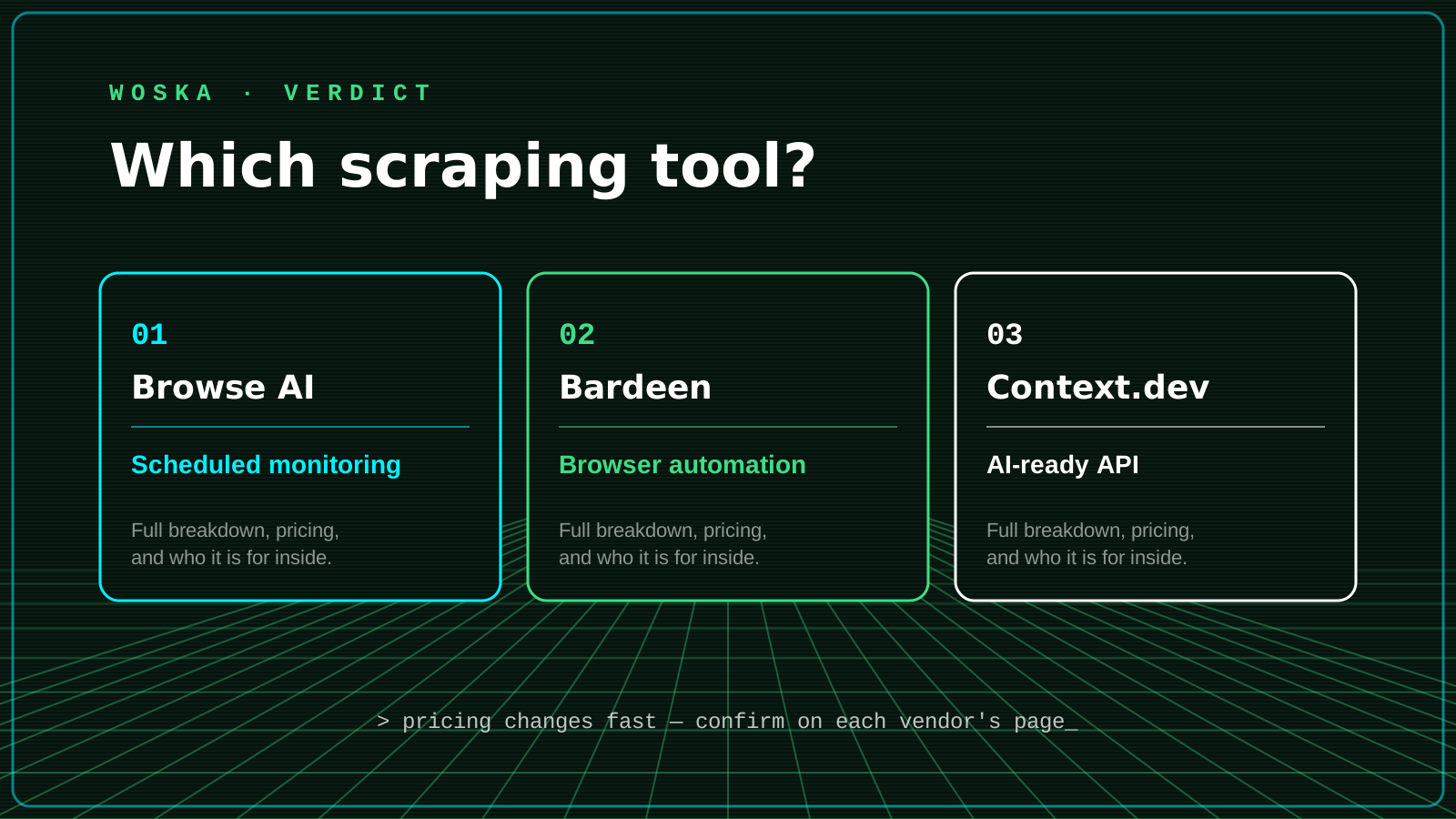
Browse AI wins for monitoring specific websites and extracting structured data on a schedule, without building a custom scraper. Bardeen wins for automating browser work — scraping, enrichment, repetitive tasks — across the tools you already use day to day. Context.dev wins as a pure developer API, built specifically to turn URLs into clean markdown or structured data for an AI agent to consume. All three solve "get data off the web without writing a scraper," but for three different users: the no-code operator, the browser-automation power user, and the developer building an AI pipeline.
The three, in one line each
Browse AI monitors websites and extracts structured data on a recurring schedule, built for people who need reliable, repeated extraction (competitor prices, listings, leads) without building or maintaining a custom scraper.
Bardeen automates browser work across the sites and tools you already use — scraping, data enrichment, and repetitive multi-step tasks — positioned as a browser co-pilot rather than a standalone scraping product.
Context.dev is a scraping API built specifically for AI agents: it converts URLs and websites into clean markdown, HTML, or structured data that an LLM can actually consume, rather than raw HTML a human would parse.
Where each one actually wins
Browse AI wins for a business user who needs the same data pulled from the same sites on a recurring basis — price monitoring, lead lists, listing aggregation — set up once as a "robot" and left running. Bardeen wins for someone automating their own repetitive browser work across many different sites and tools rather than monitoring a fixed set of sources, since it's built around browser actions generally, not just extraction. Context.dev wins specifically for developers feeding an AI agent or RAG pipeline — its output format (clean markdown/structured data) is built for a model to consume directly, at a lower per-scrape cost than the no-code tools once volume gets real.
Quick comparison
| Tool | Starting price | Core job | Best fit |
|---|---|---|---|
| Browse AI | From ~$19/mo (annual) | Scheduled website monitoring & extraction | No-code recurring data extraction |
| Bardeen | Free tier; paid from $99/mo | Browser automation across many tools | Automating your own repetitive browser tasks |
| Context.dev | From $25/mo (10,000 credits) | Scraping API formatted for AI agents | Developers feeding an LLM or RAG pipeline |
Which one should you use?
Choose Browse AI if you need the same data extracted from the same websites on a recurring schedule and want a no-code setup. Choose Bardeen if the real problem is your own repetitive browser work across many different sites and SaaS tools, not just data extraction. Choose Context.dev if you're a developer building an AI agent or RAG system and need scraped content already formatted for a model to consume, at API scale.
FAQ
Which of these is cheapest at high volume? Context.dev's per-credit pricing (10,000 credits for $25/mo on the Developer plan) tends to work out cheaper per scrape at real volume than Browse AI's credit system, since it's built for API-scale developer usage rather than a smaller number of scheduled "robots."
Can Browse AI or Bardeen output data formatted for an LLM the way Context.dev does? Not natively in the same way — both are built primarily for human-readable structured data (spreadsheets, tables, enrichment fields) rather than the clean markdown format Context.dev specifically optimizes for feeding directly into an AI model's context window.
Do these tools work on websites that actively block scrapers? Results vary by site and by tool — none of the three guarantee success against aggressive anti-bot measures, and it's worth testing against your specific target sites before committing to a paid plan.
Is any of these free to start? Bardeen has a genuine free tier (100 credits/month); Browse AI and Context.dev both offer free trials or limited free usage but are built around paid plans for real, ongoing use.
Related guides
- Browser Use vs Browserbase: Best AI Browser Automation Tool in 2026
- Composio vs Pipedream: Best AI Agent Integration Platform in 2026
- Explore Research & Data tools
*Ratings and pricing reviewed monthly. Last updated September 2026.*
Bogdex · Founder & editor, woska
Bogdex builds and curates woska, testing AI tools against real workflows to judge which ones actually save time rather than which have the longest feature list.