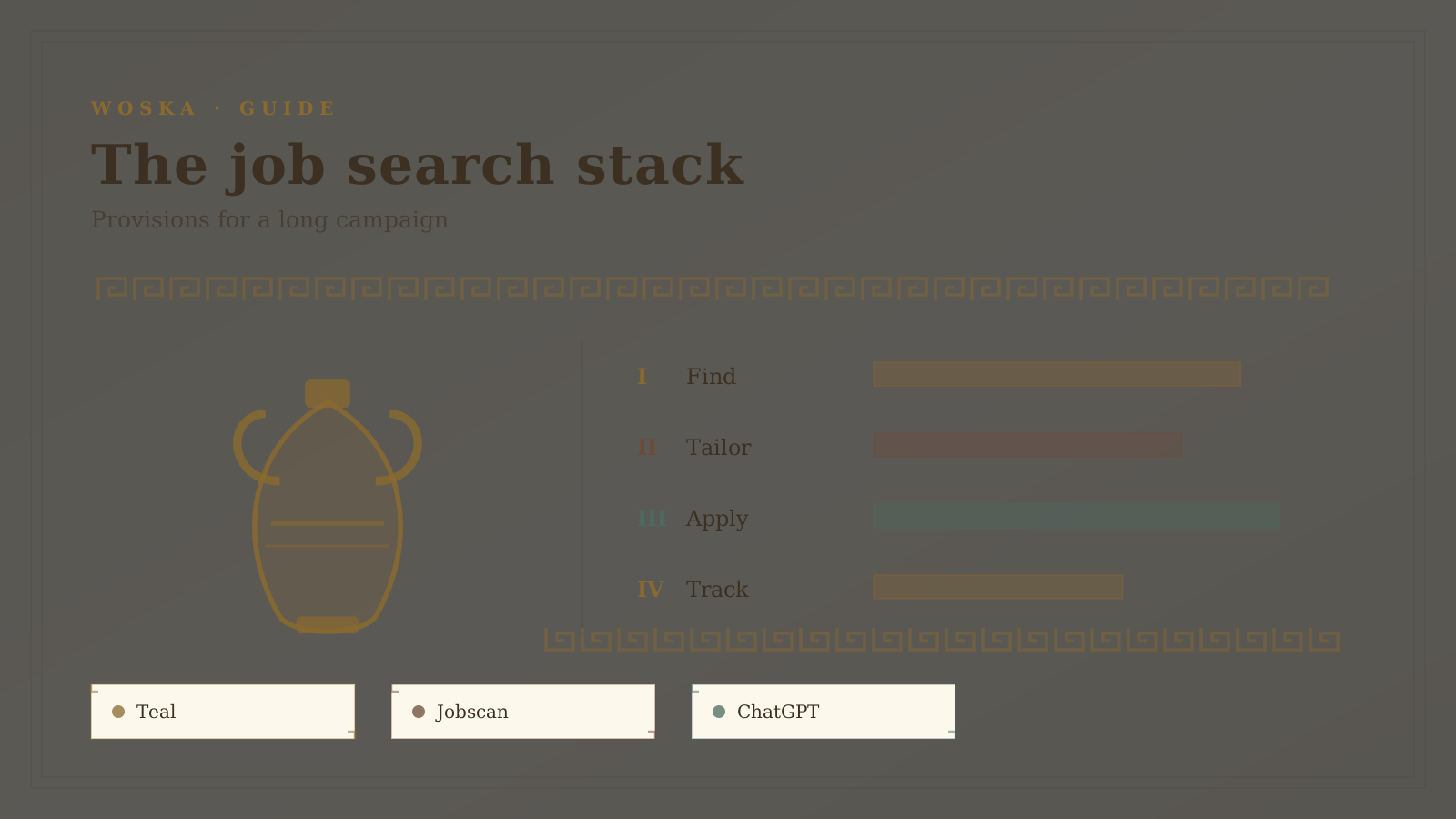
Teal is the best single AI tool for a job search in 2026 because it covers the whole loop — tailor, apply, track — and the free tier is enough to run a real search. Jobscan is the add-on when you are targeting specific high-value roles, and ChatGPT is the flexible layer that fills every gap the dedicated tools leave.
A job search has five distinct jobs, and most tools only do one well. This guide maps tools to stages rather than ranking them against each other, because the stack matters more than any single pick.
Why Teal is the strongest starting point
The unglamorous truth about job searching is that it is a tracking problem before it is a writing problem. Forty applications in, you cannot remember which resume version went where, which company you already spoke to, or what you claimed in the letter you sent three weeks ago.
Teal handles that: a resume builder, per-application tailored versions, keyword matching against the posting, and a tracker that keeps it all attached to the right role. The free tier is unusually generous — unlimited resumes and tracking without a trial clock — which matters because a search lasts months.
Start here, and add a specialist tool only when you hit a specific wall.
Pricing: Freemium, with a paid tier around $79/year. Always confirm the live vendor page before buying because AI products often change credits, limits, and plan names.
When Jobscan is the better choice
Teal tells you which keywords are missing. Jobscan tells you how a specific applicant tracking system will read your document, which is a different and deeper question.
Use it when you are applying to a small number of roles you really want, at large companies that run established systems like Workday or Greenhouse. At roughly $50/mo it is expensive to keep running all search long, so most people use it in a targeted burst rather than as a subscription.
When ChatGPT belongs on the shortlist
Every job search has work that no dedicated tool covers: explaining a career gap, deciding whether a role is worth applying for, preparing for a specific interviewer, drafting a follow-up note that does not sound desperate, or negotiating an offer.
ChatGPT is the general-purpose layer for all of it. It is also the best tool for the research step most candidates skip — reading the job posting closely enough to work out what the role actually is, as opposed to what the title says.
Mapping tools to the five stages
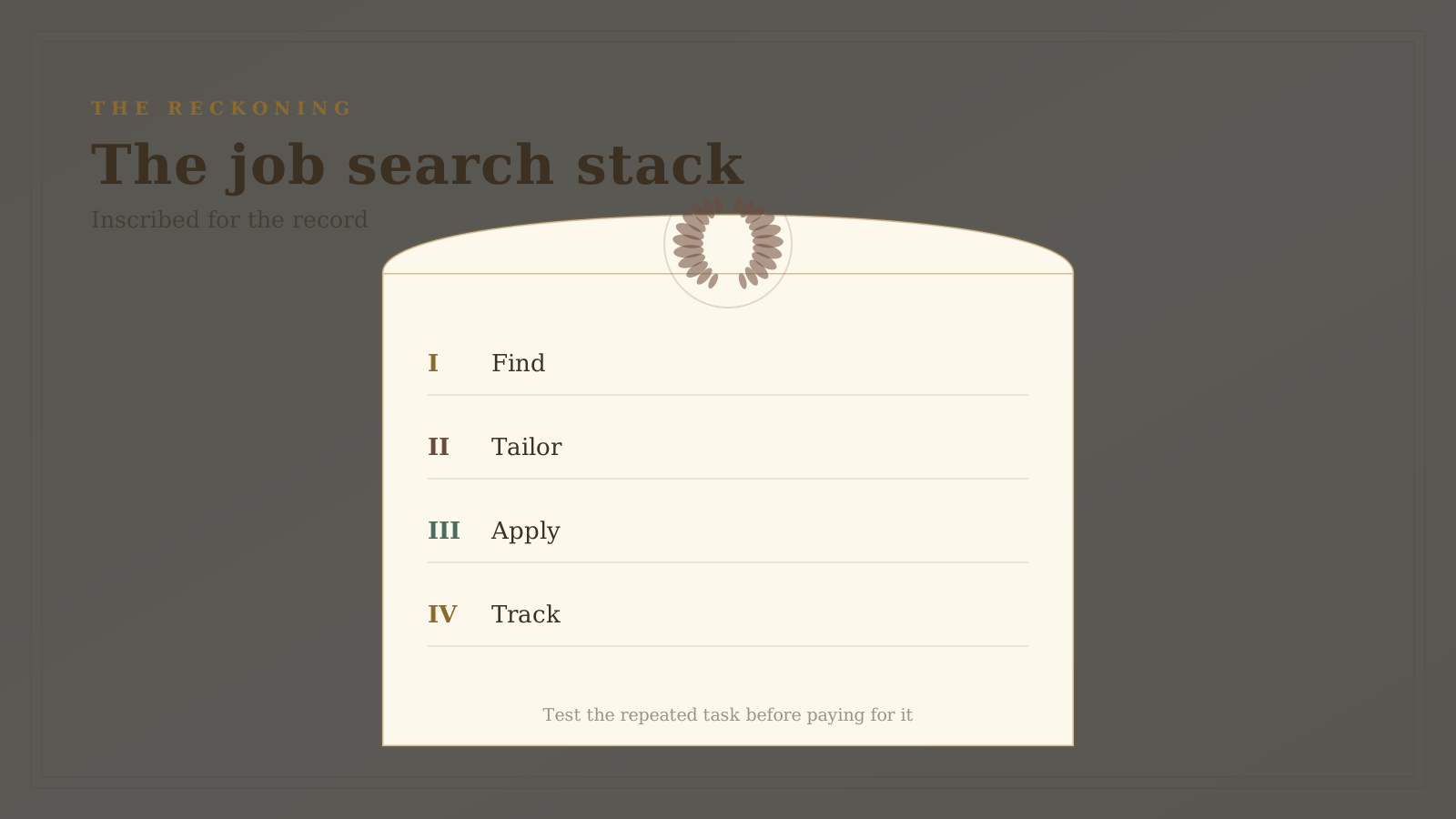
- Finding roles. LinkedIn and job boards still do this better than AI-native tools. AI helps you filter, not discover.
- Tailoring documents. Teal for volume, Jobscan for precision, Claude or ChatGPT when the writing itself needs work. See the resume writing guide and cover letter guide.
- Getting seen. Your LinkedIn profile does more work than most applications. Covered in the LinkedIn profile guide.
- Interviewing. Practice out loud, not on the page. Covered in the interview prep guide.
- Tracking and following up. Teal, or a spreadsheet you actually maintain.
The one thing to avoid
Auto-apply tools that fire hundreds of applications on your behalf are the fastest-growing part of this category and the least useful. They optimize the metric that does not matter.
Recruiters notice untailored bulk applications, and some systems flag them. More importantly, the response rate on a generic application is low enough that a hundred of them is often worth less than five considered ones. If a tool's main promise is application volume, it is selling you activity rather than outcomes.
Quick comparison
| Tool | Starting price | Core job | Use it when |
|---|---|---|---|
| Teal | Freemium | tailoring plus application tracking | You want one tool for the whole search |
| Jobscan | Freemium, ~$50/mo | ATS-specific resume scanning | You are targeting high-value roles |
| ChatGPT | Freemium | everything the specialists miss | You need flexible help at any stage |
| Careerflow | Freemium | LinkedIn and resume scoring | You want a free second opinion |
How to choose
Run the free version of Teal for two weeks. It will show you where your search is actually stuck — usually in one of three places: not enough applications, applications that do not surface, or interviews that do not convert. Buy the tool that fixes your bottleneck, not the one that fixes the stage you enjoy most.
Most searches stall at the third one, and no resume tool helps there.
FAQ
Can AI tools actually get me a job faster? They reliably save time on documents and organization, which lets you apply to more roles with better tailoring. They do not change whether you are a fit for the role or how you perform in an interview, which is where most searches are decided.
Should I disclose that I used AI on my application? Employers generally expect AI-assisted writing at this point and rarely ask. What matters is that the claims are true and you can discuss anything in the document in detail. Undisclosed AI use during a live interview is the case where employers do object.
Are paid job search tools worth it? Usually for a targeted period rather than the full search. Free tiers of Teal and Careerflow cover most needs; pay for Jobscan or similar in the weeks you are applying to roles you really want.
How many applications should I be sending? Fewer and better beats more and generic, but not to the point of applying to three roles a month. A dozen well-tailored applications a week is a realistic target for an active search.
Related guides
- Best AI tool for resume writing
- Best AI tool for ATS resume optimization
- Explore Productivity tools
- All woska guides
*Ratings and pricing reviewed monthly. Last updated July 2026.*
Bogdex · Founder & editor, woska
Bogdex builds and curates woska, testing AI tools against real workflows to judge which ones actually save time rather than which have the longest feature list.