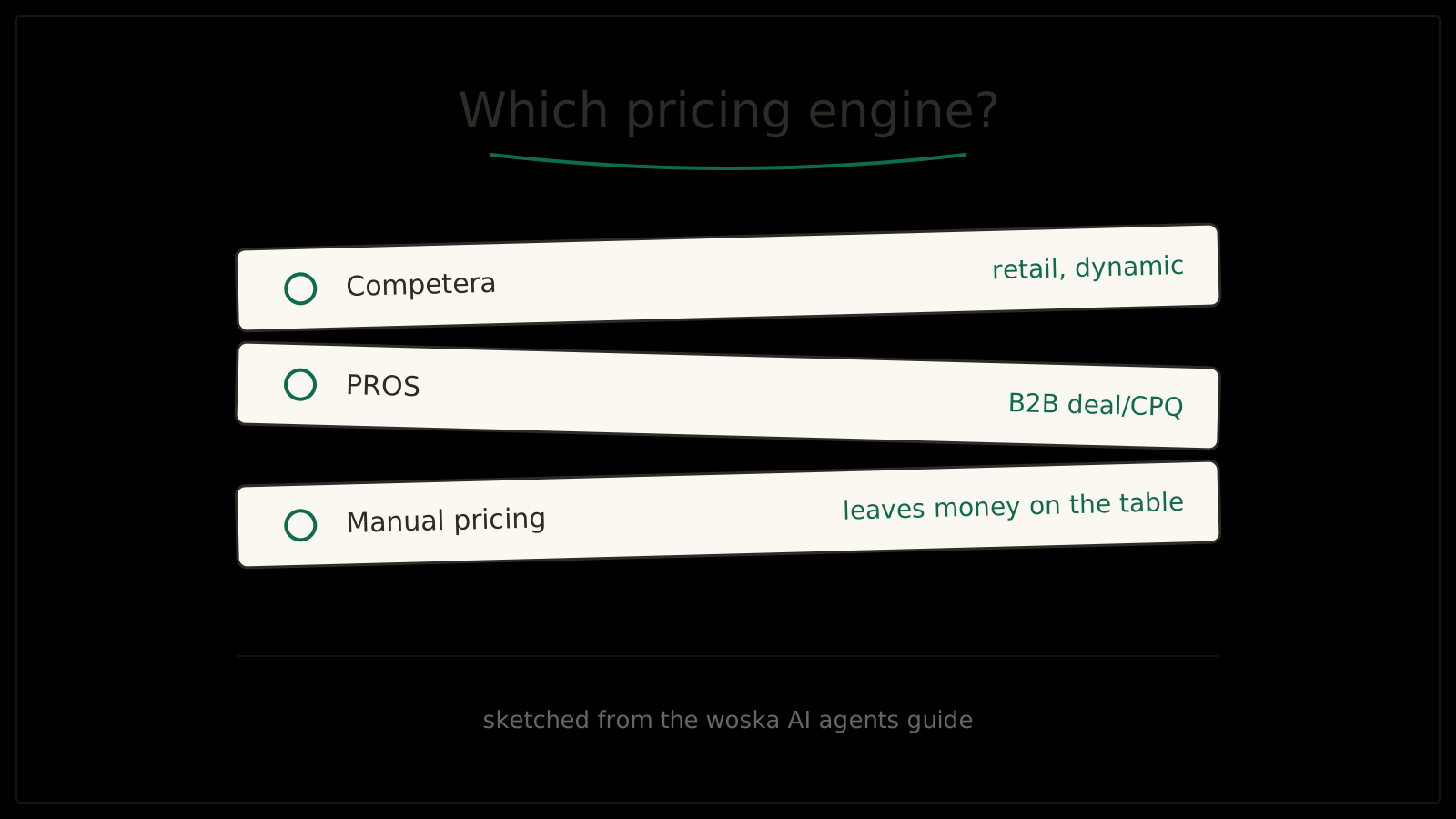
Competera is the best pick for retailers and brands managing large, complex assortments who want to price on actual demand instead of just matching competitors. PROS is the best pick for B2B companies optimizing deal-level and CPQ pricing, and was named a Leader in Gartner's 2026 Magic Quadrant for B2B Pricing and Rebate Optimization. Both replace pricing decisions made on gut feel or a simple competitor-matching rule with AI models that actually account for demand.
The two, in one line each
Competera models demand elasticity across more than 20 pricing and non-pricing factors — including cross-elasticities, cannibalization, halo effects, stock levels, and seasonality — to set optimal prices across thousands of SKUs at once.
PROS is built for B2B companies dialing in sales and pricing strategy, specializing in deal and CPQ pricing with real-time dynamic pricing recommendations for sales reps in the moment they're quoting a customer.
Where each one actually wins
Competera wins decisively for retail and ecommerce — its whole model is built around SKU-level demand across a large catalog, which is a different problem than pricing a single negotiated deal. PROS wins for B2B and enterprise sales organizations where the pricing decision happens deal by deal, often with a sales rep needing real-time guidance on how much room they actually have to negotiate before a quote goes out.
If your business sells thousands of products to consumers and your pricing challenge is catalog-wide, Competera's demand-elasticity modeling is built for exactly that scale. If your business sells to other businesses through a sales team negotiating individual deals, PROS' deal and CPQ pricing focus is the more directly relevant tool.
Quick comparison
| Tool | Starting price | Core job | Best fit |
|---|---|---|---|
| Competera | Custom pricing | Catalog-wide demand-based pricing | Retailers and brands with large assortments |
| PROS | Custom pricing | Deal and CPQ pricing optimization | B2B sales teams negotiating individual deals |
Which one should you use?
Choose Competera if you're pricing a large product catalog and want AI that models real demand instead of just competitor-matching. Choose PROS if your pricing challenge happens deal by deal in a B2B sales process and you need real-time guidance on optimal quote pricing.
FAQ
Do these tools replace a pricing team, or work alongside one? Both are built to work alongside a pricing or revenue team, surfacing AI-driven recommendations that a human still reviews and approves — neither is designed to fully automate pricing decisions without oversight.
How is Competera different from simple competitor price-matching tools? Competera explicitly targets teams that have outgrown competitor-matching, since matching a competitor's price ignores your own demand elasticity, inventory position, and margin — Competera's model factors all of that in instead of just copying a rival's number.
Can PROS help with rebate management too, not just pricing? Yes — PROS was specifically named a Leader in the pricing and rebate optimization category, meaning its scope extends to managing rebate programs alongside core pricing logic.
Is either tool suitable for a small business, or are they enterprise-only? Both are generally positioned and priced for mid-market to enterprise organizations with meaningful pricing complexity — a very small catalog or sales team may not see proportional value versus the cost and implementation effort.
How long does it typically take to implement one of these platforms? Enterprise pricing platforms like these typically involve a multi-week to multi-month implementation to integrate with existing product, sales, or ERP data — budget for an onboarding period rather than expecting instant activation.
Related guides
- How to Calculate Your Break-Even Point
- ROAS vs CAC vs LTV: The 3 Marketing Metrics That Actually Matter
- Best AI Inventory & Demand Forecasting Tool in 2026
- Explore Business & Sales tools
*Ratings and pricing reviewed monthly. Last updated September 2026.*
Bogdex · Founder & editor, woska
Bogdex builds and curates woska, testing AI tools against real workflows to judge which ones actually save time rather than which have the longest feature list.