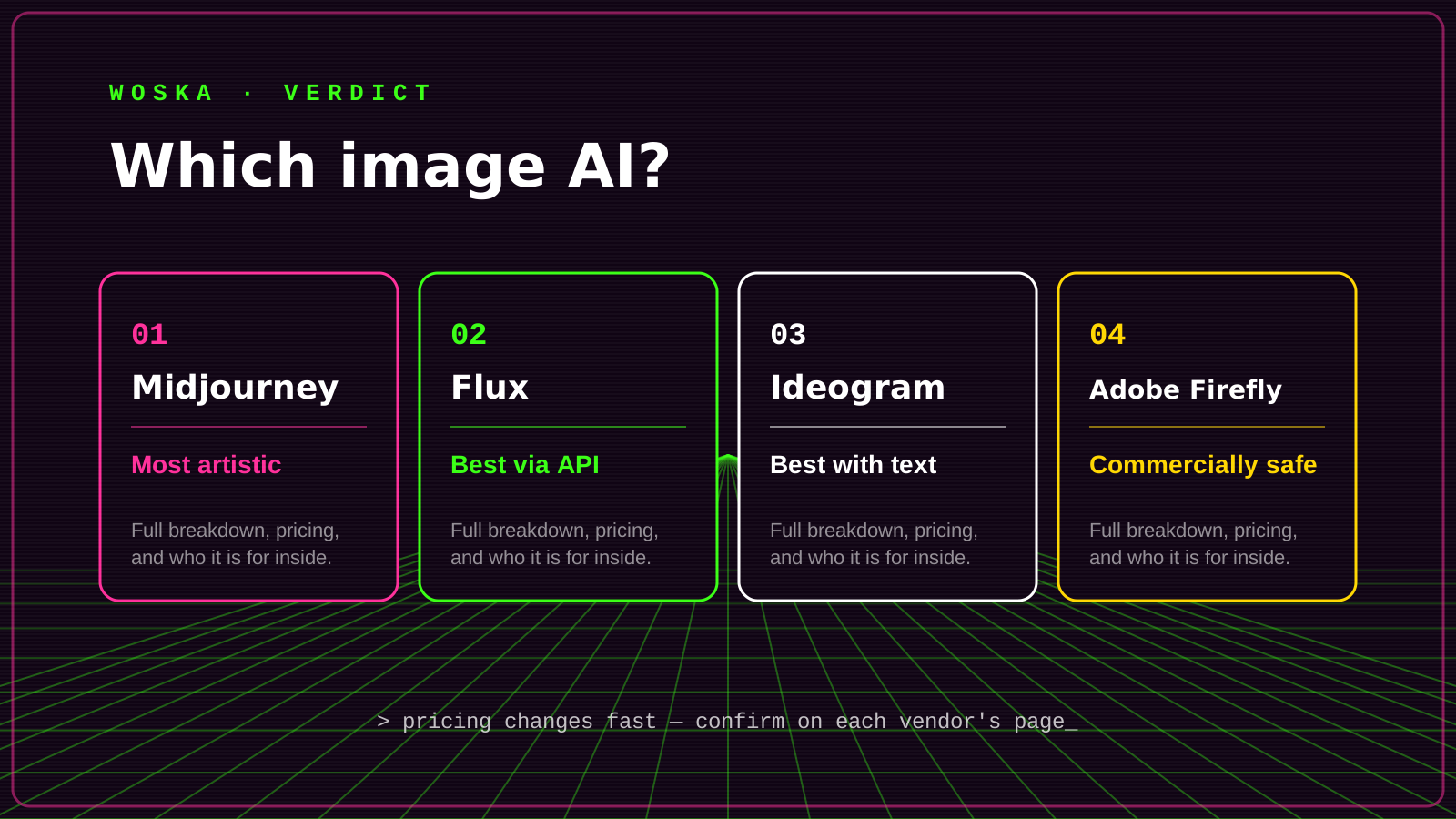
Midjourney is the best pick for artistic, expressive imagery with the strongest aesthetic sense out of the box, Flux is the best pick for raw model quality when you're building on top of it through an API, Ideogram is the best pick when the image needs to contain actual readable text, and Adobe Firefly is the best pick for commercial work that needs licensing indemnification. All four generate strong images from a prompt; the real differences show up in how you access them and what happens after generation.
The four, in one line each
Midjourney produces the most consistently painterly, art-directed images of the four, accessed through Discord or its own web app rather than a developer API.
Flux, from Black Forest Labs, is a model family rather than a single consumer app — most people use it through an API or a partner platform like fal.ai or Replicate, paying per generation instead of a flat subscription.
Ideogram solves a problem the other three still struggle with: putting clean, legible text — a logo, a poster headline, a sign — directly inside a generated image.
Adobe Firefly is trained on licensed and stock content specifically so the output comes with commercial-use indemnification, which matters more than raw quality for some teams.
Where each one actually wins
Midjourney wins when the output itself is the deliverable — concept art, moodboards, marketing visuals where aesthetic quality is the whole point. Flux wins when you're not a designer clicking a button but a developer building a product feature on top of image generation, where API access and per-image pricing matter more than a polished web interface. Ideogram wins the specific, recurring case of needing text inside the image itself, which used to mean generating the image, then adding text in a separate editor. Adobe Firefly wins for teams in regulated or brand-sensitive industries where "can we legally use this commercially" is a real question that needs a real answer, not just good-looking output.
Explore the full Image & Design tools category if none of these four fit — there's a wider bench of specialists for things like background removal, upscaling, and interior design.
Quick comparison
| Tool | Starting price | Core job | Best fit |
|---|---|---|---|
| Midjourney | From $10/mo | Artistic, expressive imagery | Concept art, moodboards, marketing visuals |
| Flux | Usage-based (per image) | Raw model quality via API | Developers building on top of image generation |
| Ideogram | Free / $8/mo Basic | Readable text inside images | Logos, posters, signage mockups |
| Adobe Firefly | Free / $9.99/mo | Commercially-safe generation | Regulated or brand-sensitive teams |
Which one should you use?
Use Midjourney if the image itself needs to look intentionally artistic. Use Flux if you're integrating generation into a product rather than clicking a button by hand. Use Ideogram the moment text inside the image becomes a requirement, not a nice-to-have. Use Adobe Firefly when commercial licensing clarity is worth more to your team than squeezing out the last bit of aesthetic quality.
FAQ
Can I use Midjourney images commercially? Paid Midjourney plans generally allow commercial use, but the legal footing is different from Adobe Firefly's explicit indemnification — read the current terms if a client or legal team needs certainty, not just permission.
Why would I use Flux instead of a finished app like Midjourney? Mainly if you're building something — a product feature, an internal tool, a batch pipeline — where you need programmatic access and predictable per-image cost rather than a monthly seat.
Does Ideogram replace Midjourney for general image generation? Not really — Ideogram is a strong general generator too, but its specific edge is text rendering. If your use case has no text requirement, the choice comes down to aesthetic preference between the two.
Related guides
- Best AI Book Cover Generator in 2026
- Best AI YouTube Thumbnail Generator in 2026
- Best AI Image Generator for Text-in-Image Marketing Graphics in 2026
- Best AI 3D Design and Creative Canvas Tool in 2026
- Best AI Image Upscaler in 2026
- Best AI Photo Editor in 2026
- Explore Image & Design tools
*Ratings and pricing reviewed monthly. Last updated August 2026.*
Bogdex · Founder & editor, woska
Bogdex builds and curates woska, testing AI tools against real workflows to judge which ones actually save time rather than which have the longest feature list.