Watershed is the best pick for enterprises that want more than measurement — its AI recommends specific action plans to actually reduce emissions, like switching to clean power in specific regions, and it was named a Leader in the 2026 Forrester Wave for Sustainability Management Software. Persefoni is the best pick for financial institutions specifically, since its carbon accounting was built around the PCAF methodology for calculating financed emissions. Both replace spreadsheet-based carbon accounting with an auditable platform built for regulatory disclosure.
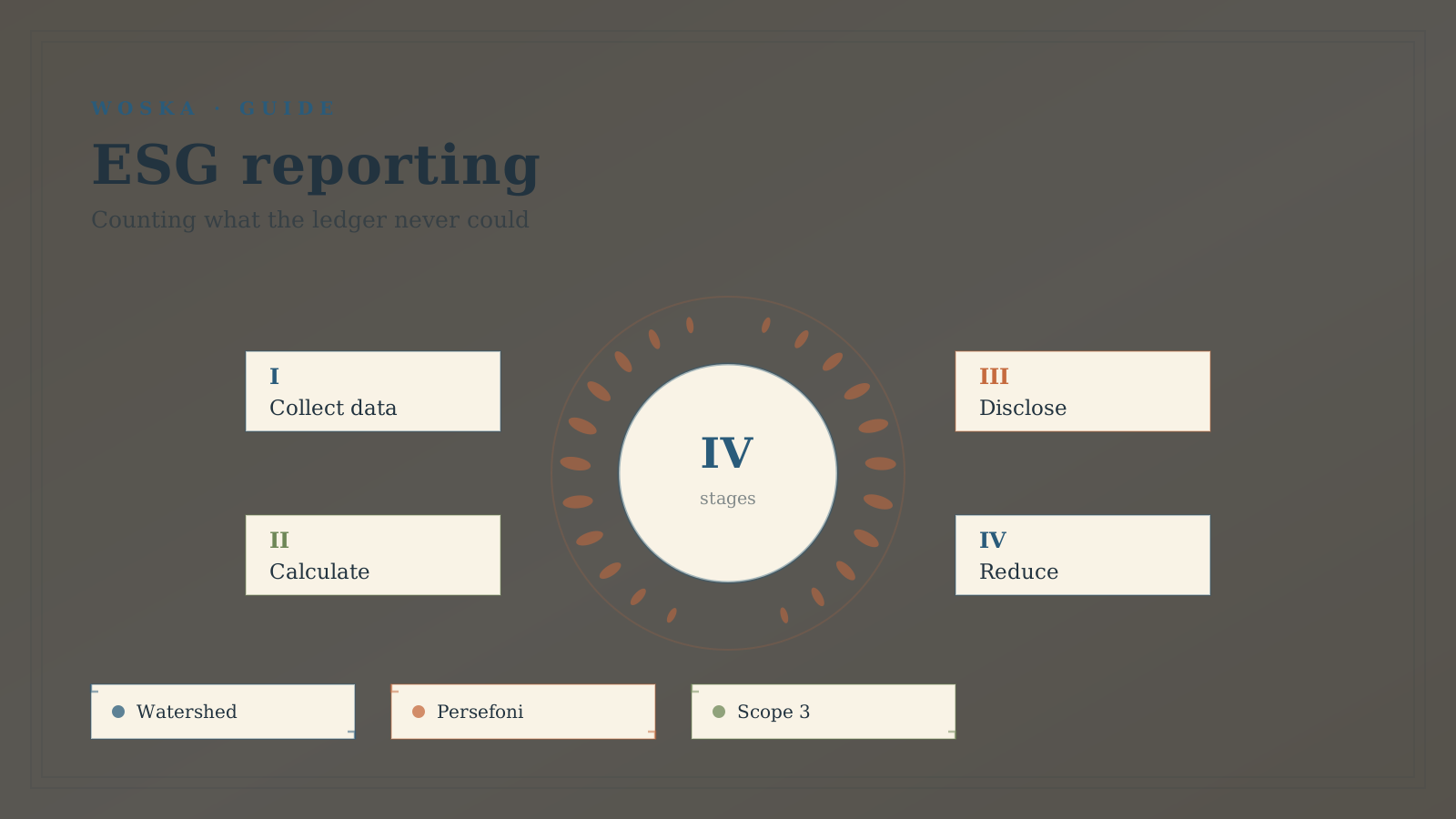
The two, in one line each
Watershed is an enterprise carbon accounting platform used by companies like Airbnb, BlackRock, Shopify, and Stripe, with a 500,000+ emissions factor library and AI that recommends concrete reduction actions rather than just reporting a number.
Persefoni is a carbon accounting and disclosure platform focused on calculating, analyzing, and disclosing emissions data, with particular depth in financed emissions calculation for banks and financial institutions using the PCAF methodology.
Where each one actually wins
Watershed wins for enterprises across most industries that want their carbon accounting platform to also drive actual reduction — its AI-recommended action plans are a genuine differentiator from pure measurement-and-reporting tools, and its scale (500,000+ emissions factors) supports complex, multi-region operations. Persefoni wins specifically for financial institutions and investors who need to calculate financed emissions — the carbon footprint of what they've invested in or lent to — a specialized calculation most general carbon accounting tools don't handle as rigorously.
If you're a general enterprise wanting both accurate measurement and AI-driven guidance on what to actually change, Watershed's action-plan layer is the more complete offering. If you're a bank, asset manager, or financial institution specifically needing PCAF-aligned financed emissions calculations, Persefoni's specialization in that exact methodology is the more directly relevant choice.
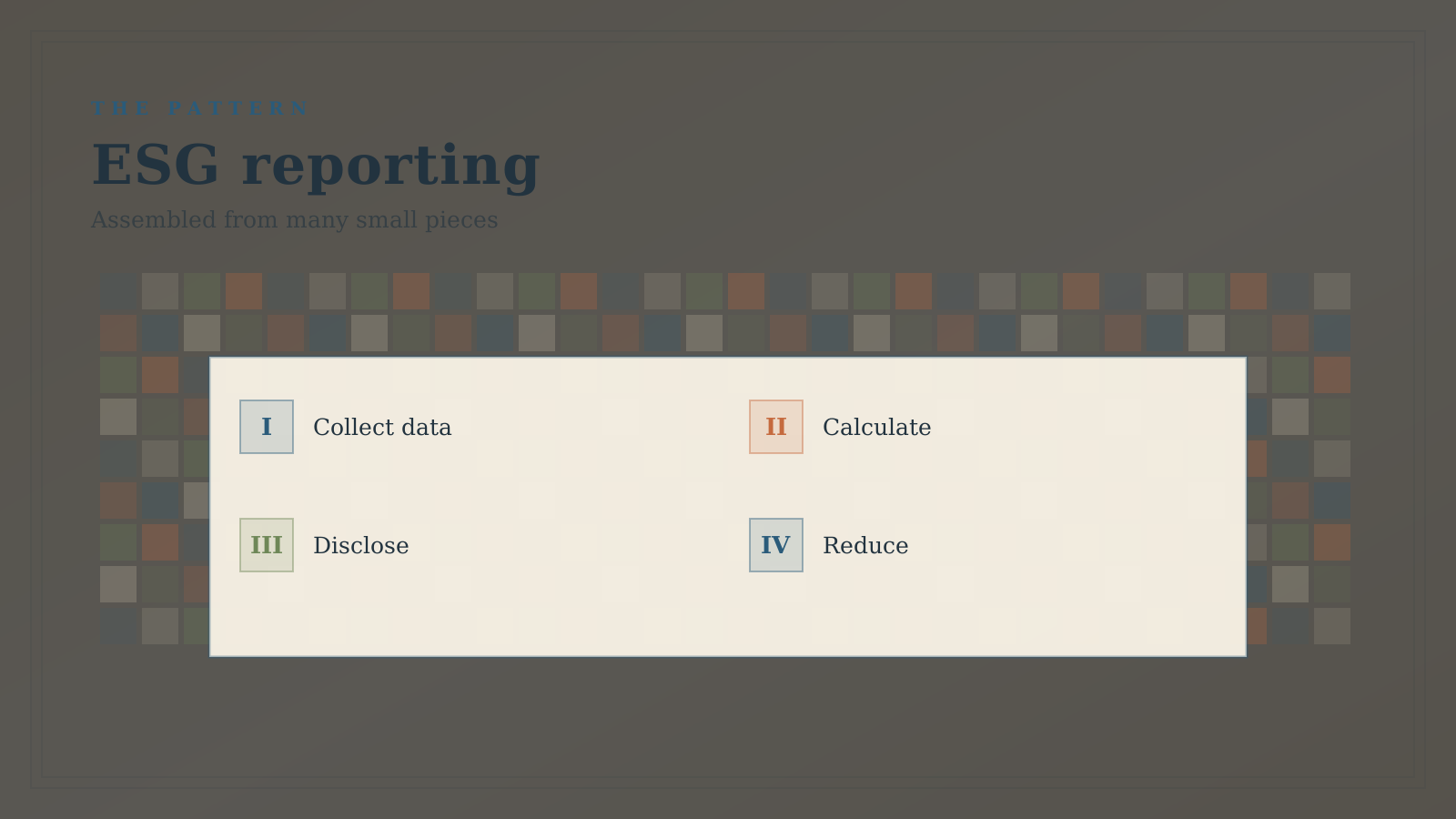
Quick comparison
| Tool | Starting price | Core job | Best fit |
|---|---|---|---|
| Watershed | Custom (roughly $55K-$250K/yr) | Carbon accounting + AI reduction action plans | General enterprises wanting action, not just reporting |
| Persefoni | Custom (roughly $55K-$250K/yr) | Carbon accounting + disclosure, PCAF specialization | Financial institutions calculating financed emissions |
Which one should you use?
Choose Watershed if you want a carbon accounting platform that also tells you what specific actions would actually reduce your footprint. Choose Persefoni if you're a financial institution that specifically needs to calculate financed emissions under the PCAF methodology for portfolio-level climate disclosure.
FAQ
Do smaller companies need enterprise ESG software like this, or is a spreadsheet enough? Very small companies without regulatory disclosure requirements can often manage with simpler tools initially, but once formal climate disclosure (like CSRD in the EU) or investor ESG requirements kick in, the audit trail and methodology rigor these platforms provide becomes genuinely necessary.
What does Scope 3 emissions calculation actually involve? Scope 3 covers indirect emissions across your value chain — supplier activities, product use, and more — and is typically the hardest and most data-intensive category to calculate accurately, which is why both platforms invest heavily in automated estimation methods for it.
How accurate is AI-estimated emissions data compared to direct measurement? AI-based estimation (using spend data or activity-based proxies) is a practical necessity for most Scope 3 categories where direct measurement isn't feasible, but it's inherently less precise than direct metering — both platforms are transparent about which of your numbers are measured versus estimated.
Is ESG reporting software required by law for most businesses? Requirements vary significantly by jurisdiction, company size, and industry — regulations like the EU's CSRD apply to specific company size thresholds, so confirm your actual regulatory obligation before assuming you need enterprise-grade software.
Can these platforms handle reporting across multiple regulatory frameworks at once? Yes, this is a core value proposition for both — mapping one underlying dataset to multiple disclosure frameworks (like CSRD, TCFD, or CDP) rather than manually reformatting data for each one separately.
Related guides
- How to Estimate Your AI API Costs Before You Build a Feature
- Best AI Supply Chain Visibility Tool in 2026
- Best Cap Table & Equity Management Tool in 2026
- Explore Business & Sales tools
*Ratings and pricing reviewed monthly. Last updated September 2026.*
Bogdex · Founder & editor, woska
Bogdex builds and curates woska, testing AI tools against real workflows to judge which ones actually save time rather than which have the longest feature list.