Tavus is the best pick when latency matters most — its Conversational Video Interface leads the category on real-time response, with founders reporting under 1 second utterance-to-utterance, making it the strongest fit for face-to-face intake and reception-style interactions. D-ID is the best pick for a branded concierge or product explainer agent — it combines a talking-head avatar with an LLM and RAG knowledge base, with a simpler "add knowledge" step for grounding answers in your own content. Both replace a static FAQ page or chatbot with something that looks and sounds like it's actually listening.
The two, in one line each
Tavus is a Conversational Video Interface for real-time AI video agents with sub-1-second latency, free for 25 minutes of conversation a month.
D-ID is a talking-head AI video agent platform combining an avatar with an LLM and RAG knowledge base, billed by the avatar's speaking time.
Where each one actually wins
Tavus wins specifically on conversational speed — for use cases like a kiosk check-in, a live sales qualification, or any scenario where a human-feeling back-and-forth matters, its latency advantage is the whole point. D-ID wins for grounded, knowledge-based interactions — its RAG and webhook-based action wiring make it more straightforward to connect an agent to your actual help center content and have it answer specific product questions accurately.
If your use case depends on a fast, natural-feeling real-time conversation — reception, intake, live qualification — Tavus's latency-first design is the more direct fit. If you want an agent that acts as a branded concierge or product explainer grounded in your own documentation, D-ID's knowledge-base integration is built for that.
Quick comparison
| Tool | Starting price | Core job | Best fit |
|---|---|---|---|
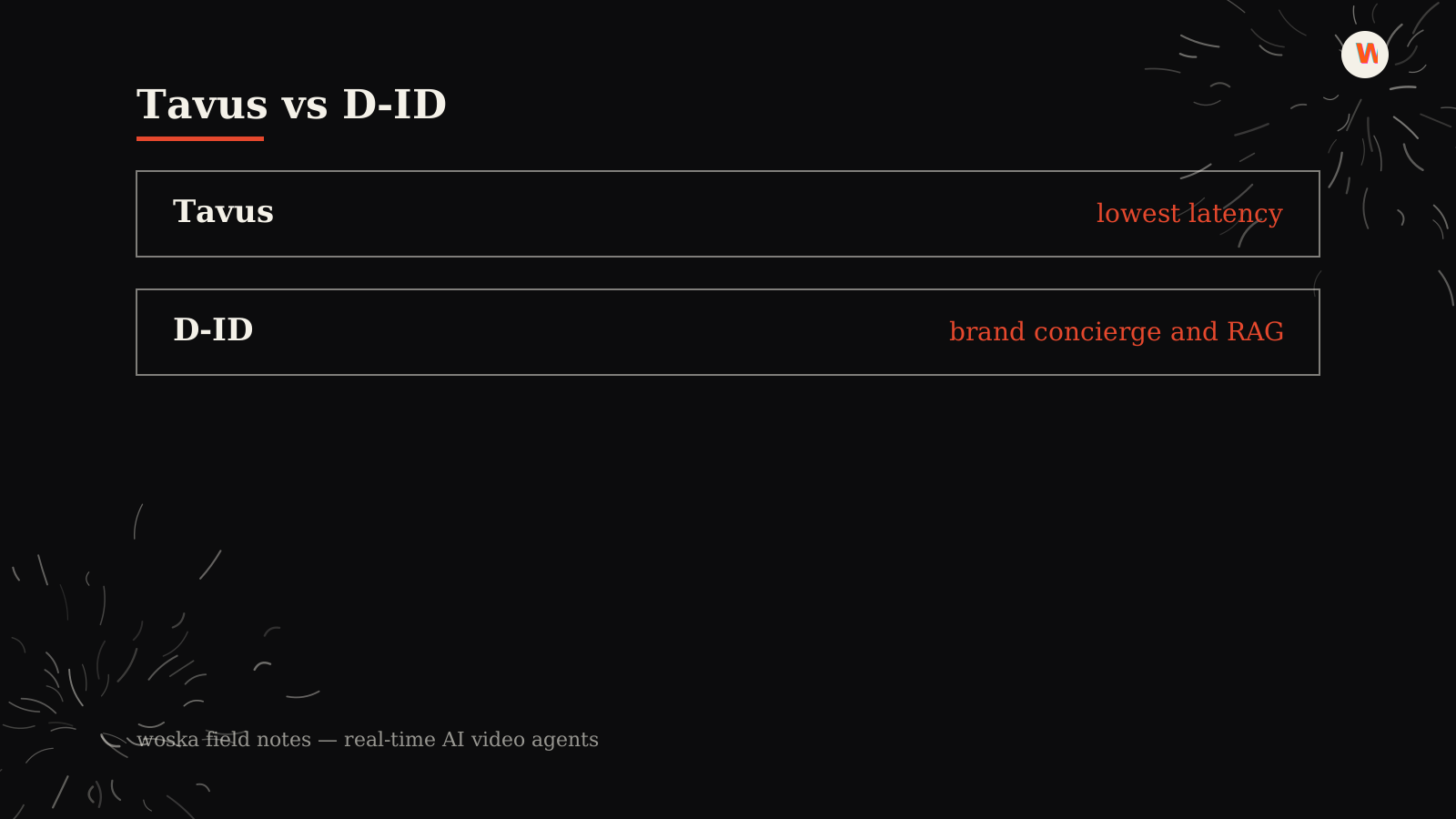
| Tavus | Free (25 min/mo), paid from $22/mo | Low-latency real-time video conversation | Live intake, reception, sales qualification |
| D-ID | Paid from $29/mo (commercial use) | Talking-head avatar + LLM + RAG knowledge base | Branded concierge, product explainer agents |
Which one should you use?
Choose Tavus if your use case depends on a fast, natural real-time conversation like live intake or reception. Choose D-ID if you want an agent grounded in your own help center content acting as a branded concierge.
FAQ
Do customers know they're talking to an AI video agent, or is it meant to be indistinguishable from a human? Best practice, and increasingly a legal requirement in some jurisdictions, is disclosing that customers are interacting with an AI agent — both platforms are built for this disclosed use case rather than deception.
How much developer work does it take to ground either agent in a company's help center content? D-ID includes an "add knowledge" step aimed at making this more of a setup task than a development project, while Tavus's knowledge base and function calling typically require more developer involvement to wire up properly.
Is conversational video actually more effective than a text chatbot for customer support? Early data suggests video agents can improve engagement and trust for certain use cases like onboarding or reception, but for straightforward FAQ-style support, a well-built text chatbot is often cheaper and just as effective.
How is billing structured, since both seem to charge by usage rather than a flat fee? Tavus bills per streamed conversation minute on top of its tier price, while D-ID bills in credits tied to the avatar's speaking time — both mean your actual monthly cost scales with how much the agent is used, not just the base plan.
Can either platform's avatar be customized to look like a specific brand spokesperson? Yes — both support creating a custom avatar or digital replica rather than only using stock avatars, though building a convincing custom replica typically requires providing your own source video and is subject to each platform's consent and usage policies.
Related guides
- Best AI Talking Avatar Video Generator in 2026
- Best AI Agents for Customer Support in 2026
- Best AI Customer Support Agent for SaaS in 2026
- Explore AI Agents tools
*Ratings and pricing reviewed monthly. Last updated October 2026.*
Bogdex · Founder & editor, woska
Bogdex builds and curates woska, testing AI tools against real workflows to judge which ones actually save time rather than which have the longest feature list.