HeyGen wins on avatar naturalness and multilingual dubbing, making it the stronger pick for marketing, sales, and social video where the avatar needs to feel real across 175+ languages. Synthesia wins for structured enterprise training and internal comms, with SCORM/LMS export and compliance certifications (SOC 2, ISO 27001) that HeyGen doesn't prioritize the same way. Hedra wins on pure lip-sync accuracy for character animation — its Character-3 model uses phoneme-level analysis that's the most convincing of the three for a single animated character talking. All three generate a video of someone or something speaking; the honest differentiator is which job that video is actually for.
Where each one actually wins
HeyGen produces avatar videos for explainers, sales messages, onboarding content, and personalized video workflows, with 100+ avatars and industry-leading realism plus 175+ language dubbing — the strongest pick when the video is customer- or prospect-facing and needs to feel current and natural rather than corporate-safe.
Synthesia is built for training, internal comms, and explainer videos at enterprise scale — over 1 million users including Fortune 500 companies, with 230+ avatars, 160+ languages, and the compliance and LMS-export features an enterprise training team specifically needs that a marketing-focused tool doesn't prioritize.
Hedra specializes in animating a single image into a talking character with the most convincing lip-sync accuracy of the three, generating most 10–30 second clips in under two minutes. It's less a corporate-presenter tool and more a character-animation tool — the right choice when the "avatar" is a custom character or persona, not a generic corporate presenter.
Quick comparison
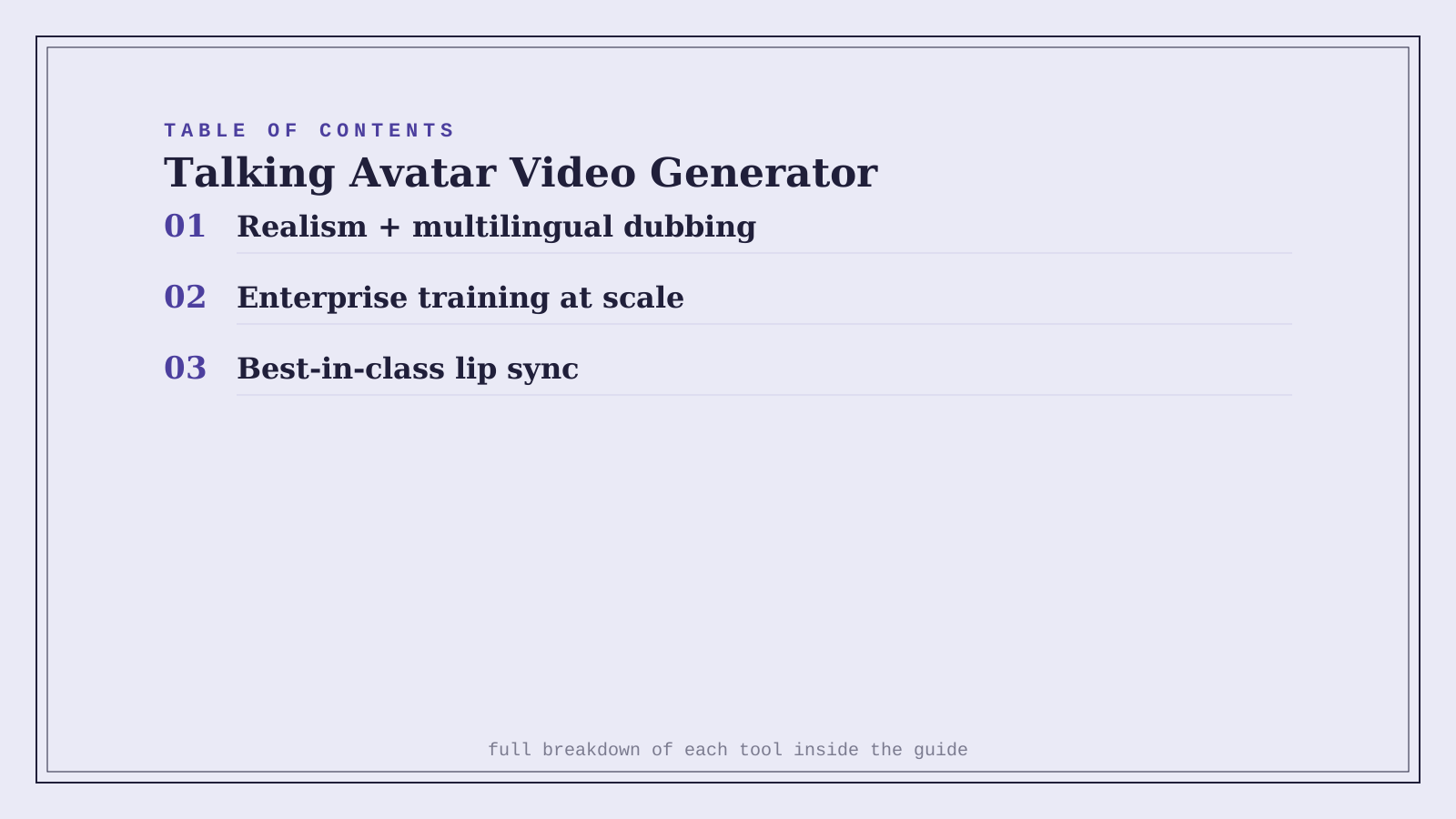
| Tool | Core strength | Starting price | Best fit |
|---|---|---|---|
| HeyGen | Realism + multilingual dubbing | $29/mo | Marketing, sales, social video |
| Synthesia | Enterprise training at scale | $18-64/mo | Corporate training & internal comms |
| Hedra | Best-in-class lip sync | Freemium | Custom character animation |
Which one should you actually use?
Choose HeyGen if the video is going to prospects, customers, or a public audience and needs to feel current and natural, especially across multiple languages. Choose Synthesia if the job is training, onboarding, or compliance content that needs to scale across a large org with LMS integration. Choose Hedra if what you actually need is a custom character talking, not a generic corporate presenter — a mascot, an original persona, or anything image-based brought to life.
FAQ
Is one of these objectively better than the others for lip-sync quality? Hedra is specifically strongest here — its Character-3 model's phoneme-level lip-sync analysis is a real, measurable differentiator versus HeyGen and Synthesia's more general-purpose avatar rendering.
Which is cheapest for a small team just testing avatar video? Synthesia's Starter plan ($18/mo annual) and Hedra's freemium tier are both lower-commitment entry points than HeyGen's $29/mo, though HeyGen also has a free tier for initial testing.
Do any of these let me clone my own voice or likeness? Synthesia offers AI voice cloning on paid plans for a consistent presenter voice across many training videos; HeyGen and Hedra both support custom avatar creation from your own footage or image, subject to each platform's consent and usage policies.
What does total cost of ownership actually look like for a team, not just the per-seat price? Real-world estimates for a 25-person team put total annual cost anywhere from $7,500 to over $25,000 depending on platform and usage volume — get an actual usage-based quote before committing at team scale, since per-seat pricing understates the real cost significantly.
Related guides
- Best AI Image-to-Video Generator in 2026
- Best AI Explainer Video Generator in 2026
- Best AI Tool for Turning a Blog Post into a Video in 2026
- Best AI Face Swap and Character Video Tool in 2026
- Top 3 AI Tools for Real Estate Agents in 2026
- Explore Video tools
*Ratings and pricing reviewed monthly. Last updated August 2026.*
Bogdex · Founder & editor, woska
Bogdex builds and curates woska, testing AI tools against real workflows to judge which ones actually save time rather than which have the longest feature list.