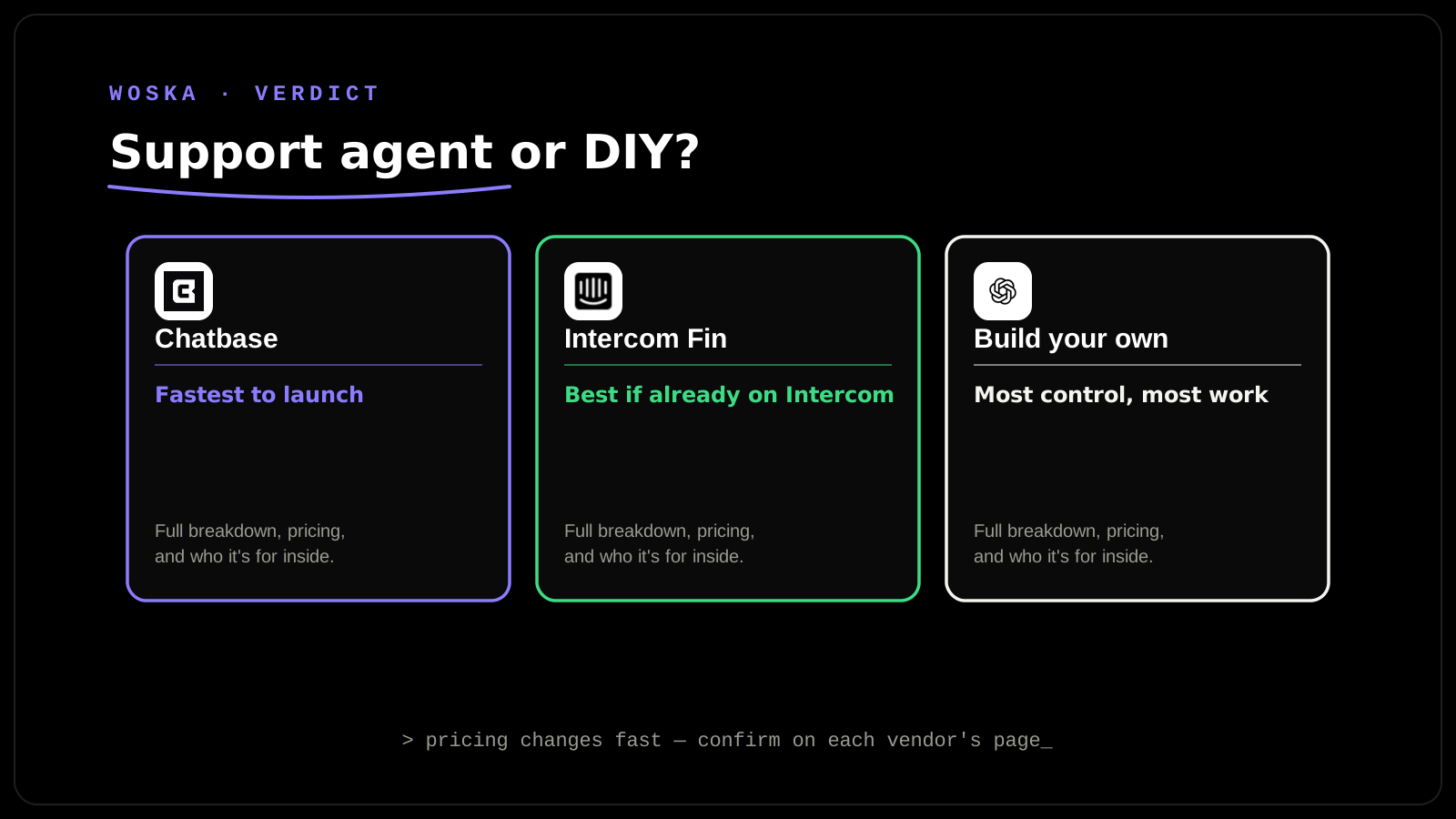
Chatbase is the best pick for launching a support agent fastest, trained on content you already have, Intercom Fin is the best pick if your support desk already runs on Intercom, and building your own is the best pick only when you have a genuinely unusual requirement neither off-the-shelf option covers. The real decision most SaaS teams face isn't which vendor has the best model — it's whether buying or building is worth the tradeoff at all.
The three, in one line each
Chatbase is a customer support agent builder that trains on your existing docs and content, then deploys as a chatbot on your site — built for speed to launch, not deep customization.
Intercom Fin is Intercom's AI support agent, resolving conversational tickets and taking real actions like refunds, billed per resolution on top of your existing seat fees.
Building your own — wiring a model API directly to your support content and ticketing system — gives you full control over behavior and data handling, at the cost of building and maintaining it yourself.
Where each one actually wins
Chatbase wins the "we need something live this week" case: point it at your docs, deploy, iterate. Intercom Fin wins on integration depth for teams already paying for Intercom's support desk — actions like issuing a refund or updating a ticket happen inside the same system your team already works in, not through a bolted-on chatbot. Building your own only wins when you have a real, specific reason off-the-shelf doesn't cover — strict data residency requirements, a support workflow that doesn't map to either product's model, or scale where per-resolution pricing genuinely costs more than an engineer's time to build and maintain a custom system.
Most SaaS teams underestimate how much building your own actually costs long-term — not the initial build, but the ongoing maintenance as your product, docs, and edge cases keep changing.
Quick comparison
| Option | Starting price | Core job | Best fit |
|---|---|---|---|
| Chatbase | Free / usage-based | Fast-to-launch support chatbot | Teams that want to go live this week |
| Intercom Fin | Per-resolution + seat fees | AI agent inside Intercom | Teams already running Intercom |
| Build your own | Engineering time + API costs | Fully custom behavior | Unusual requirements neither product covers |
Which one should you use?
Start with Chatbase if you want something live fast and don't already have a support desk platform dictating the decision. Choose Intercom Fin if Intercom is already where your support team lives — the integration alone usually outweighs a marginally cheaper standalone tool. Only build your own once you can name the specific requirement that rules out both, not as a default "we're an engineering team, we can build this" instinct.
FAQ
Will an AI support agent actually resolve tickets, or just answer questions? Both Chatbase and Intercom Fin can be configured to take real actions, not just answer FAQs, but the setup work to enable that (connecting to your order system, refund flow, etc.) is real and shouldn't be underestimated.
How much human oversight does a support agent need at launch? Plan on reviewing a meaningful sample of conversations in the first few weeks regardless of which option you pick — this is standard for any new automated support channel, not a sign the tool is broken.
Is building your own ever actually cheaper? Only at real scale, and only if you're honest about ongoing maintenance cost, not just the initial build. For most SaaS teams under a certain ticket volume, an off-the-shelf agent is cheaper once you account for engineering time.
Related guides
- Best AI Tools for Ecommerce Customer Support in 2026
- Best AI Agents for Customer Support & Sales 2026: Sierra vs Intercom Fin
- Part of our complete guide: AI Tools for Sales & Business Ops
- Best AI Agents for Customer Support
- Chatbase vs Watermelon vs Viktor: Support and Internal Ops Agents
- Explore AI Agents tools
*Ratings and pricing reviewed monthly. Last updated August 2026.*
Bogdex · Founder & editor, woska
Bogdex builds and curates woska, testing AI tools against real workflows to judge which ones actually save time rather than which have the longest feature list.