An AI agent is only as useful as the systems it can actually touch — an agent that can reason brilliantly but can't send a Slack message, update a CRM record, or query a database is a demo, not a working tool. Composio wins for the fastest path to giving an agent real capabilities: an integration layer that connects agents to SaaS apps, auth, and external APIs with minimal setup, free to start. Pipedream wins when the agent's actions need custom logic alongside pre-built integrations — a developer automation platform for connecting APIs, workflows, and agent actions with real code, also free to start. Both exist because writing OAuth and API-client boilerplate by hand for every tool an agent needs is the actual bottleneck in shipping agents.
The two, in one line each
Composio is an integration layer that connects AI agents to SaaS apps, auth, actions, and external APIs, free to start.
Pipedream is a developer automation platform for connecting APIs, workflows, and AI agent actions with code, free to start.
Where each one actually wins
Composio wins for getting an agent talking to real tools the fastest — its library of pre-built integrations and handled authentication means an agent framework can call Gmail, GitHub, or a CRM in minutes rather than a developer writing and maintaining OAuth flows for each service separately. Pipedream wins when the integration needs something a pre-built connector doesn't cover — a specific transformation, a conditional branch based on the API response, custom code alongside the workflow — since it's built as a full automation platform where you can drop in real code exactly where you need it, not just configure pre-set actions.
Quick comparison
| Tool | Core strength | Starting price | Best fit |
|---|---|---|---|
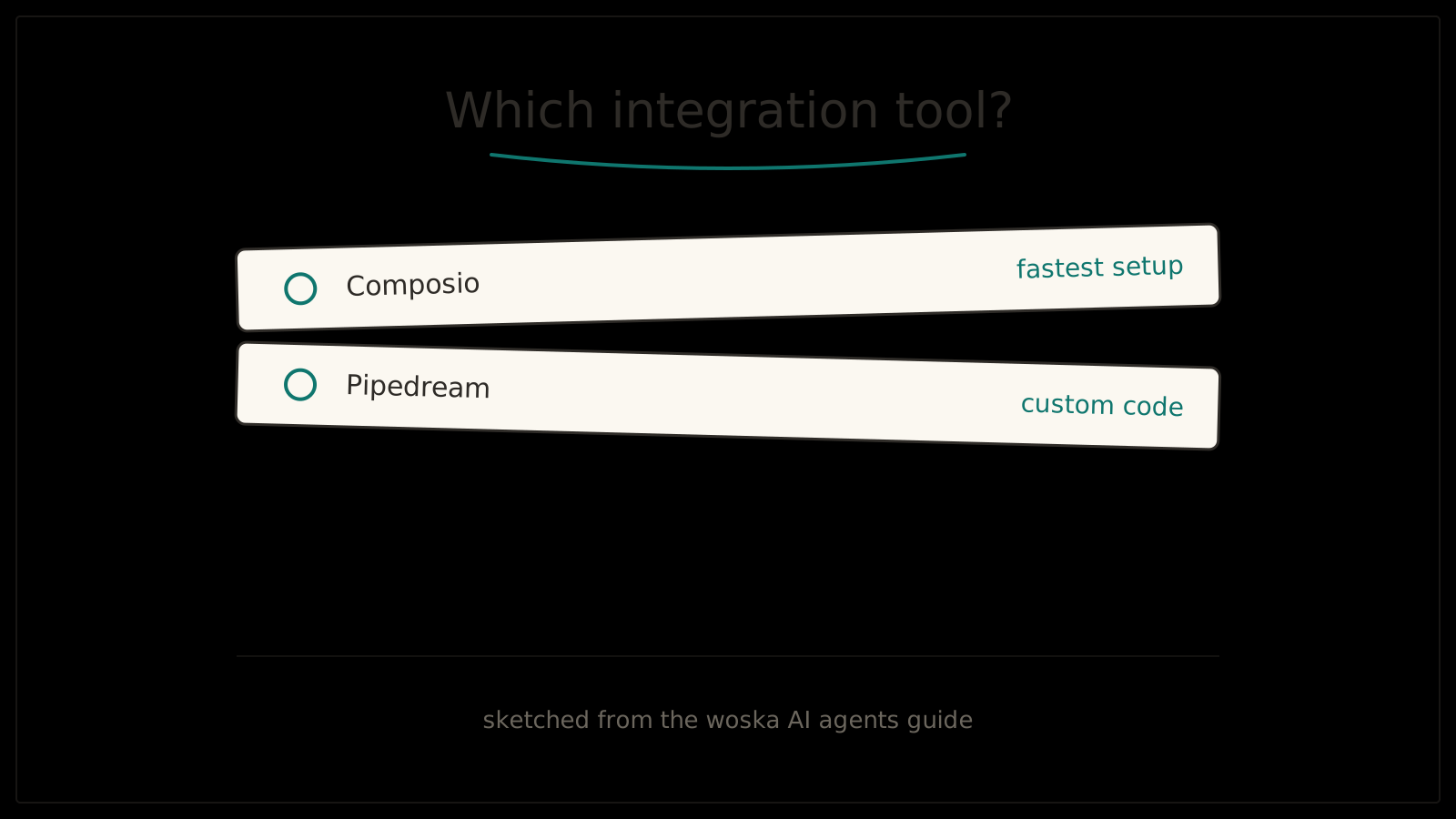
| Composio | Fastest pre-built agent integrations | Free | Getting an agent talking to tools quickly |
| Pipedream | Custom code alongside integrations | Free | Logic pre-built connectors don't cover |
Which one should you use?
Choose Composio if you want the fastest way to connect an AI agent to common SaaS tools without writing integration code. Choose Pipedream if the workflow needs custom logic that a pre-built connector can't handle.
FAQ
Which AI agent frameworks do these integrate with? Both are designed to be framework-agnostic, working with popular agent frameworks and providing tool definitions the agent's own reasoning loop can call — check each platform's current docs for the specific frameworks and SDKs supported.
Do I need to handle authentication myself for each connected app? No — handling OAuth and API credentials for each connected service is the core value of both platforms; you authorize the connection once rather than building and maintaining that flow yourself.
Can I use both together in the same project? Yes — some teams use Composio for the bulk of standard tool connections and drop into Pipedream for the specific workflow that needs custom code, rather than treating it as an either-or choice.
Is this only useful for developers, or can non-technical teams use it too? Both lean toward developers or technical builders setting up the integration layer, though the agent using these connections afterward can be operated by a non-technical team member once it's wired up.
Related guides
- Best AI Agent Framework for Developers in 2026
- Best AI Workflow Automation: Zapier vs Make vs n8n in 2026
- Top No-Code AI Agent Builders 2026
- Explore AI Agents
*Ratings and pricing reviewed monthly. Last updated September 2026.*
Bogdex · Founder & editor, woska
Bogdex builds and curates woska, testing AI tools against real workflows to judge which ones actually save time rather than which have the longest feature list.