A complete AI outbound system needs two separate layers, not one tool trying to do both: Apollo.io for prospecting data, contact enrichment, and sales engagement, and 11x.ai for the autonomous execution layer that actually runs outreach at volume. Teams that try to force one tool to do both jobs usually end up with either weak data or weak execution — the two problems need different tools because they're genuinely different problems.
Why two tools, not one
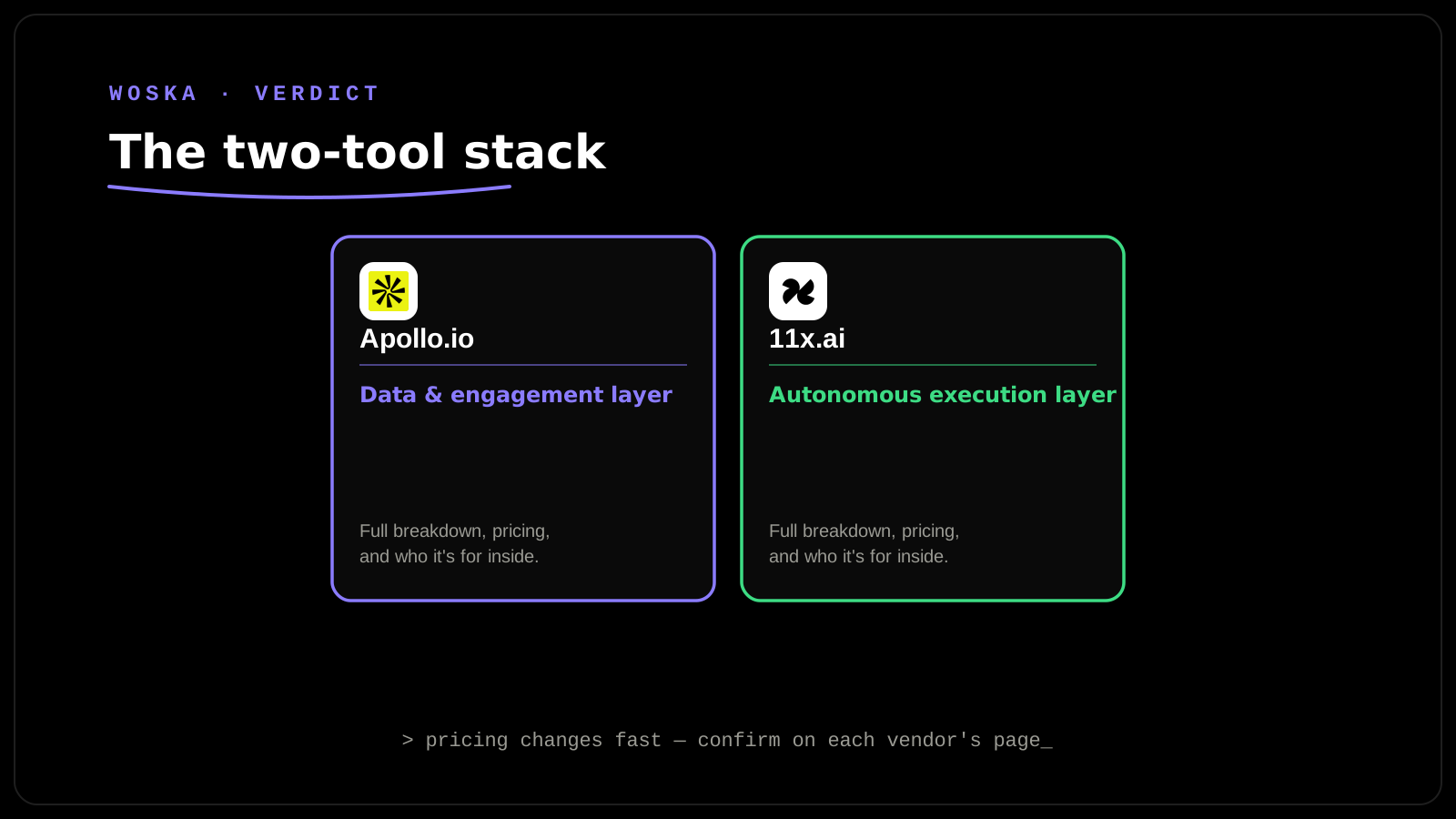
Apollo.io's strength is the data layer: prospecting, contact enrichment, and sales engagement infrastructure that's been built and refined for years. 11x.ai's strength is autonomous execution: running SDR-style prospecting and outreach with less manual configuration than a traditional sequence tool. Neither replaces the other well — Apollo.io wasn't built to run autonomous outbound end to end, and 11x.ai isn't a data provider. Treating them as two layers of one system, rather than competing options, is what actually works.
Apollo.io is where the stack starts: building and enriching the list of who to reach, with sales engagement tools if you want to run sequences directly from the same platform.
11x.ai is where execution happens once the list exists: autonomous, agent-led outreach that doesn't require building out a manual sequence for every segment.
How the two layers actually connect
The practical flow: Apollo.io builds and enriches your target list — company data, contact details, verified emails — using its prospecting database. That list feeds into 11x.ai, which handles the outreach execution: drafting and sending outbound, following up, and adjusting based on response patterns without a human writing every message by hand. Apollo.io stays the system of record for who you're targeting; 11x.ai is the layer doing the repetitive work of actually reaching them.
This mirrors a pattern common across AI tool stacks generally: a data/record layer paired with an execution/agent layer, rather than one tool asked to be both. See our AI opportunity score guide for the same logic applied to picking automation priorities generally.
Quick comparison
| Layer | Tool | Job | What it's not built for |
|---|---|---|---|
| Data | Apollo.io | Prospecting, enrichment, engagement infra | Fully autonomous outreach execution |
| Execution | 11x.ai | Agent-led outbound at volume | Being a prospecting database |
Getting started with the stack
Start with Apollo.io to build and verify your target list — this step matters more than it looks, since bad data undermines everything downstream regardless of how good the execution layer is. Once the list is solid, bring in 11x.ai to handle outreach execution, starting with one segment rather than your entire list, so you can check output quality before scaling volume.
FAQ
Do I need both tools, or can I start with just one? Start with whichever problem is more acute. If your data/list quality is the bottleneck, start with Apollo.io alone. If you already have a solid list and manual outreach execution is the bottleneck, 11x.ai can layer on top of an existing data source.
Is this stack only for large sales teams? No — the same two-layer logic works at small-team scale, it's just a smaller list and lower volume. The principle (separate data from execution) doesn't depend on team size.
How long does it take to see results from this stack? Expect a few weeks minimum before drawing conclusions — enough time for a real response-rate pattern to emerge, not just the first day's activity.
Related guides
- Part of our complete guide: AI Tools for Sales & Business Ops
- 11x.ai vs Artisan vs Regie.ai vs HubSpot Breeze
- From Apollo.io to 11x.ai: The 2026 Lead Generation Playbook
- Explore Business & Sales tools
*Ratings and pricing reviewed monthly. Last updated August 2026.*
Bogdex · Founder & editor, woska
Bogdex builds and curates woska, testing AI tools against real workflows to judge which ones actually save time rather than which have the longest feature list.