A realistic AI-powered lead generation playbook has four steps, not one tool doing everything: define a narrow target segment, build and enrich the list in Apollo.io, hand outreach execution to 11x.ai for that one segment, then review results before scaling to the next segment. Most lead-gen automation attempts fail not because the tools don't work, but because a team tries to automate an entire market at once instead of proving the approach on one segment first.
Step 1: Define one narrow segment
Before opening either tool, name the specific segment you're targeting first — company size, industry, role, whatever criteria actually predict fit for what you sell. "Everyone who might be a customer" isn't a segment; "Series A-B SaaS companies with a VP of Sales hired in the last six months" is. The narrower the first segment, the easier it is to judge whether the playbook is actually working.
Step 2: Build and enrich the list in Apollo.io
Use Apollo.io's prospecting database to build the list against your segment criteria, then enrich it — verified emails, company data, relevant contact details. This step determines the ceiling on everything downstream: no amount of good outreach execution fixes a list of the wrong people or bad contact data.
Step 3: Hand outreach execution to 11x.ai
Once the list is solid, 11x.ai runs the outreach execution — drafting and sending outbound, following up, adjusting based on response patterns — with less manual sequence-building than a traditional outbound tool. Start with just the one segment from Step 1, not your entire Apollo.io list at once.
Step 4: Review before scaling
Give the segment enough time to produce a real response pattern — a few weeks minimum — before drawing conclusions or moving to the next segment. Look specifically at response rate and meeting-booked rate, not just volume sent. A pattern that works on one segment doesn't automatically transfer to the next one; treat each new segment as a fresh test, using the same four steps.
Quick comparison
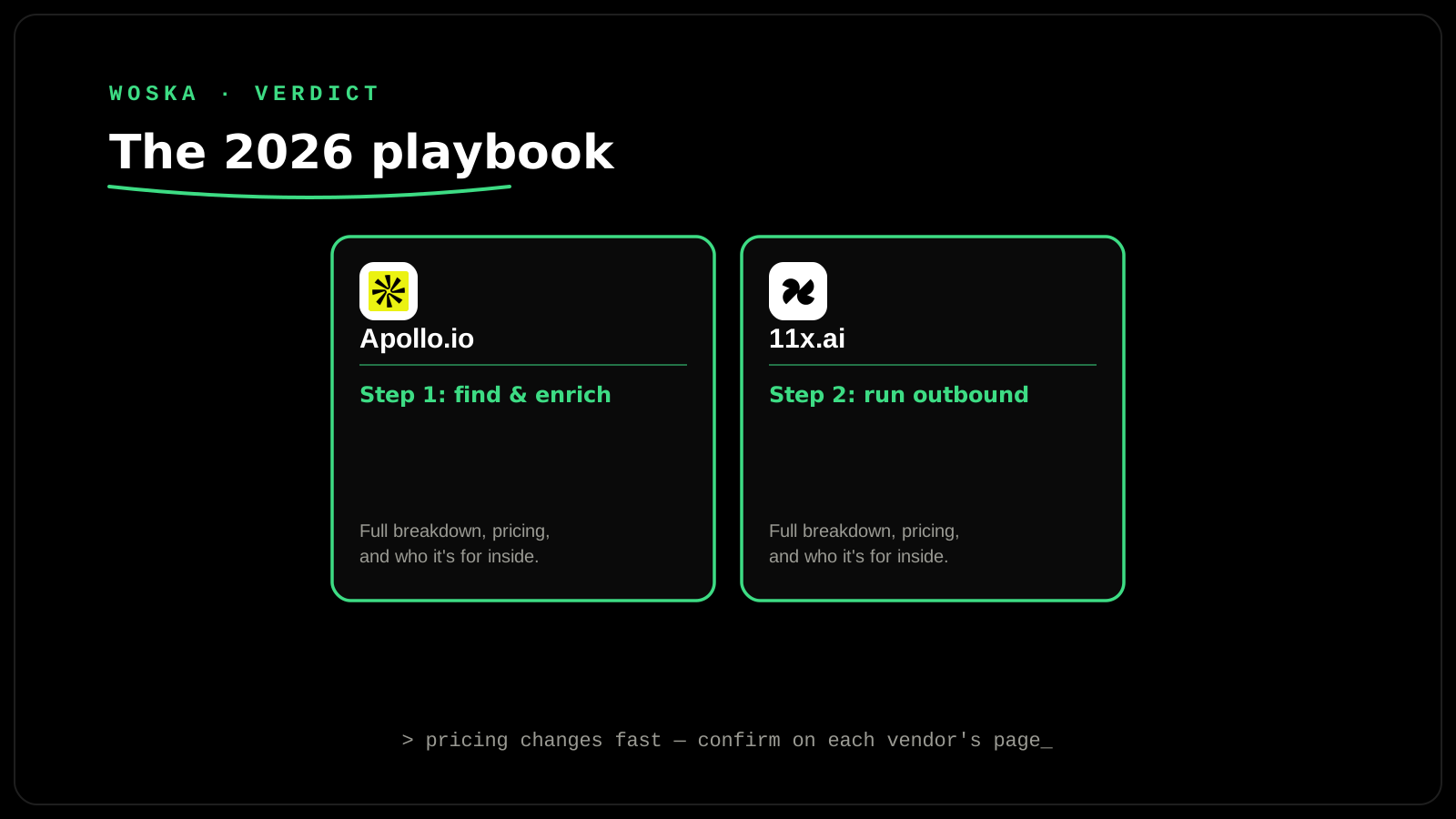
| Step | Tool | Job | Why it matters |
|---|---|---|---|
| 1. Define segment | — | Narrow targeting criteria | Determines whether results are even measurable |
| 2. Build & enrich list | Apollo.io | Prospecting + data quality | Sets the ceiling on everything downstream |
| 3. Run outreach | 11x.ai | Autonomous execution | Replaces manual sequence-building at volume |
| 4. Review & scale | — | Response rate analysis | Prevents scaling a pattern that isn't actually working |
Common mistakes to avoid
The most common failure is skipping Step 1 and Step 4 — treating this as "point 11x.ai at an Apollo.io export and let it run" rather than a segment-by-segment test-and-scale process. The second most common: judging results after a few days instead of a few weeks, which mistakes normal response-rate variance for a verdict on whether the approach works.
FAQ
How big should the first segment be? Small enough to review manually and draw real conclusions from — often a few hundred contacts rather than several thousand. You can always scale a working segment; recovering from a botched large-scale run is harder.
Do I need both tools, or can I run this playbook with just one? The two-layer logic (data quality separate from execution) is the actual point — you could substitute other tools for either layer, but skipping the separation entirely (one tool for both) tends to produce weaker results in either the data or the execution.
What does "success" look like at the review step? A meeting-booked rate you can compare against your current baseline, not an absolute number — what counts as good varies heavily by industry, segment, and offer.
Related guides
- Part of our complete guide: AI Tools for Sales & Business Ops
- Apollo.io + 11x.ai Stack: Building a Complete AI Outbound System
- 11x.ai vs Artisan vs Regie.ai vs HubSpot Breeze
- Explore Business & Sales tools
*Ratings and pricing reviewed monthly. Last updated August 2026.*
Bogdex · Founder & editor, woska
Bogdex builds and curates woska, testing AI tools against real workflows to judge which ones actually save time rather than which have the longest feature list.