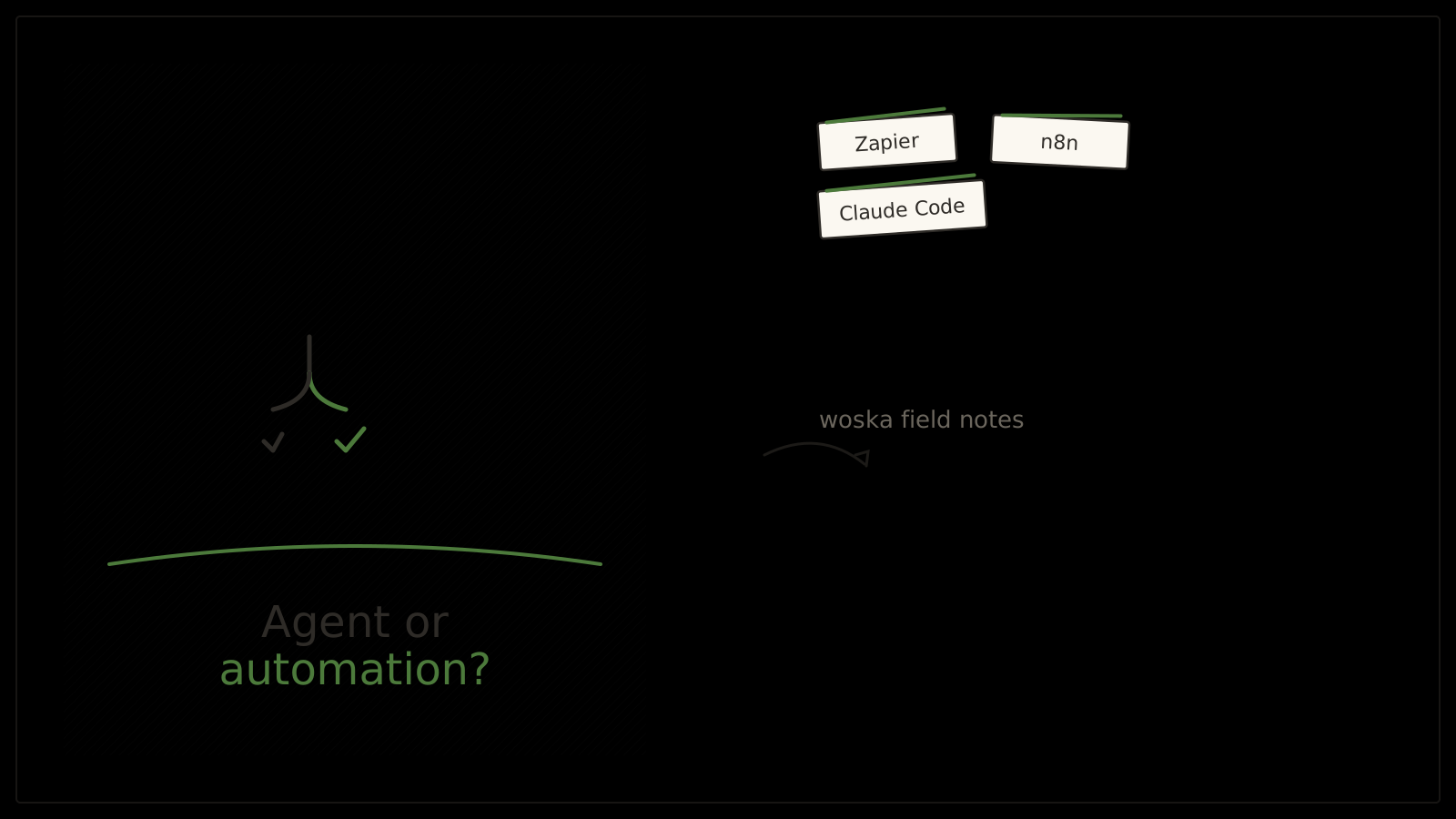
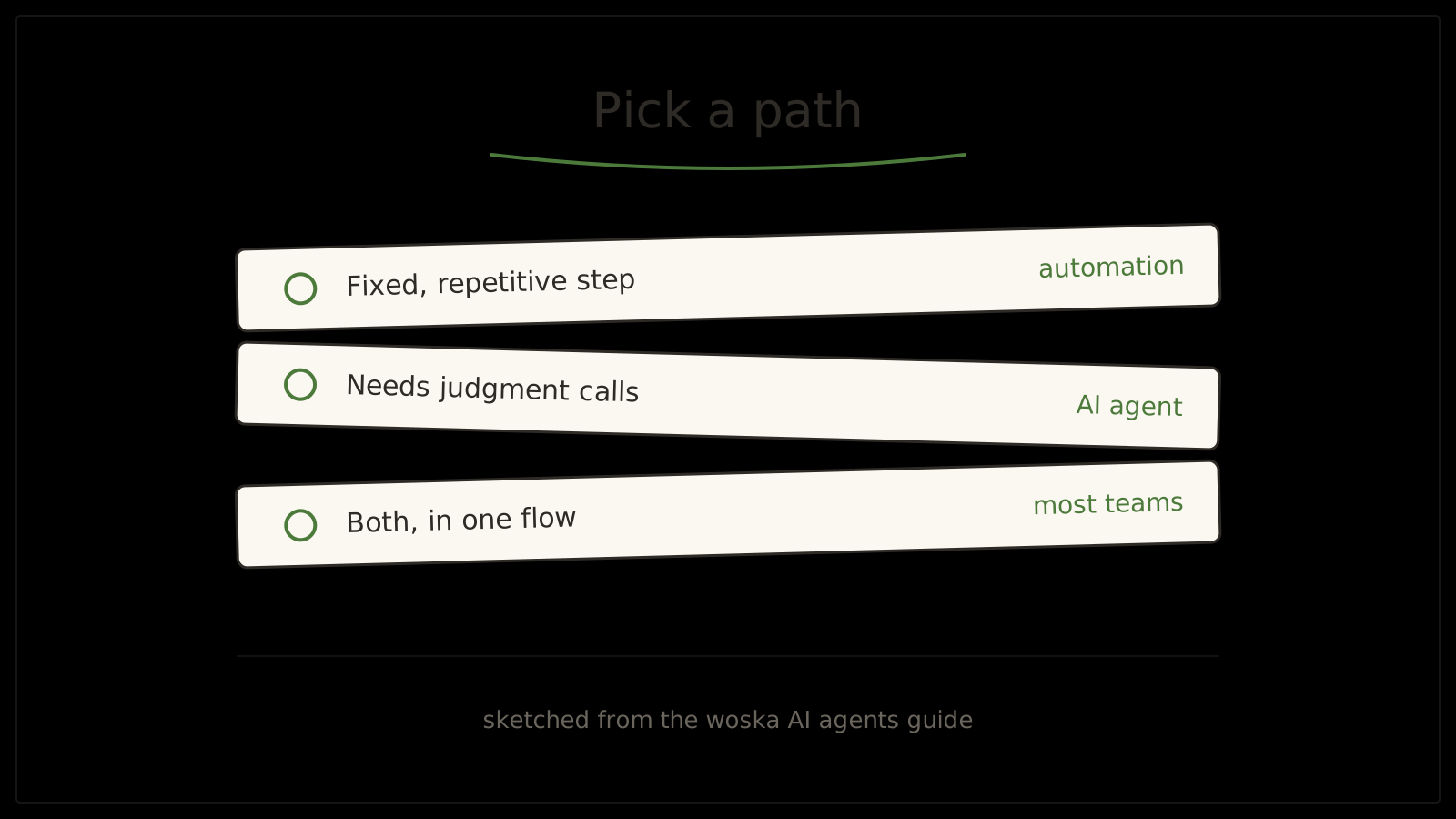
Automation runs a fixed rule you wrote in advance — when X happens, do Y, the same way every time. An AI agent reasons about the situation, decides what to do, and can handle a case you didn't explicitly plan for. Both matter for a small business, but they solve different problems, and most people asking "should I use AI agents" actually need plain automation first.
The confusion is understandable: every automation platform now markets itself with "AI agent" somewhere on the homepage. The practical test is simpler than the marketing — does the tool follow your rule, or does it decide?
What automation actually does
Tools like Zapier and Make connect apps with a trigger and an action: a new form submission adds a row to a spreadsheet, a new email adds a contact to your CRM. It's fast to set up, cheap to run, and completely predictable — it does exactly what you told it, every single time, which is exactly what you want for anything routine.
Use plain automation for syncing data between tools, sending a fixed notification, or any step where the "right" outcome never changes based on context.
What an AI agent adds on top
An agent can read an incoming email, check an order status, calculate a refund against your policy, draft a reply, and escalate to a human only if the refund exceeds a limit you set. That's several judgment calls chained together — the kind of task a fixed rule can't cover because the right response depends on details that change every time.
Use an agent when the task involves multiple steps, requires checking context before acting, or would need dozens of separate rules to cover the realistic range of cases.
Not sure which one your workflow actually needs? Take the free AI Readiness Audit → and get a 30-day roadmap that separates what to automate from what needs an agent, no signup required.
Best for / not for / pricing from
Best for automation: predictable tasks with one clear trigger and one reliable next action, like routing leads, syncing rows, sending alerts, and updating CRM fields.
Best for AI agents: tasks where the right answer depends on context: reading a support message, checking policy, deciding whether to refund, drafting a reply, and escalating edge cases.
Not for agents: anything where a fixed rule already works, because adding reasoning increases cost and introduces variance.
Pricing from: automation can start free with Zapier, Make, or n8n. Agent tools usually become paid once you add volume, seats, or production workflows.
Quick comparison
| Automation (Zapier, Make) | AI agent | |
|---|---|---|
| Logic | Fixed trigger → action | Plans and adapts to context |
| Setup | Minutes, drag-and-drop | More upfront scoping |
| Best for | Repetitive, predictable steps | Multi-step work needing judgment |
| Risk if wrong | Low — same result every time | Needs review until trusted |
Which one should you use?
Most businesses end up needing both, not one instead of the other. Start with Zapier for the parts of your workflow that never change. Layer in Claude Code or an agent platform once you hit a step that needs judgment, and use n8n if you want an automation platform flexible enough to add AI steps into the same workflow as your rules mature.
FAQ
Should I replace my Zapier automations with AI agents? Usually no. If a Zapier rule works reliably, an agent adds cost and unpredictability without benefit. Reserve agents for the steps a fixed rule genuinely can't handle.
Can automation and agents work together? Yes, and this is the common setup: automation handles the plumbing (triggers, data sync, routing), while an agent handles the one or two steps that need judgment inside that same workflow.
How do I know if my task needs an agent instead of a rule? If you can write the rule in one sentence with no "except when," it's automation. If you need several exceptions to cover realistic cases, that's a sign the task needs judgment, not a fixed rule.
Related guides
- Take the free AI Readiness Audit
- Common AI Agent Mistakes Small Businesses Make in 2026
- Best AI Workflow Automation Tool: Zapier vs Make vs n8n
- What are AI agents? A small business guide
- Compare Make vs Zapier vs n8n
*Ratings and pricing reviewed monthly. Last updated August 2026.*
Bogdex · Founder & editor, woska
Bogdex builds and curates woska, testing AI tools against real workflows to judge which ones actually save time rather than which have the longest feature list.