Bolt.new's browser-based, zero-setup approach to building full-stack app prototypes removed the single biggest friction point in testing an idea — the local environment setup — which is why it's showing up so heavily in indie hacker and startup circles right now. The tool itself isn't new, but the specific pattern of use it enables (idea to working prototype in one sitting, no project scaffolding) is what's driving the current wave of visibility.
What's actually driving the attention
The core appeal isn't that Bolt.new writes better code than other AI coding tools — it's that it removes the setup tax entirely. No local environment, no dependency installation, no "let me set up the project first" delay between having an idea and seeing it run. For indie hackers testing many ideas quickly, that delay is often the real reason an idea never gets tested at all.
Three real use cases
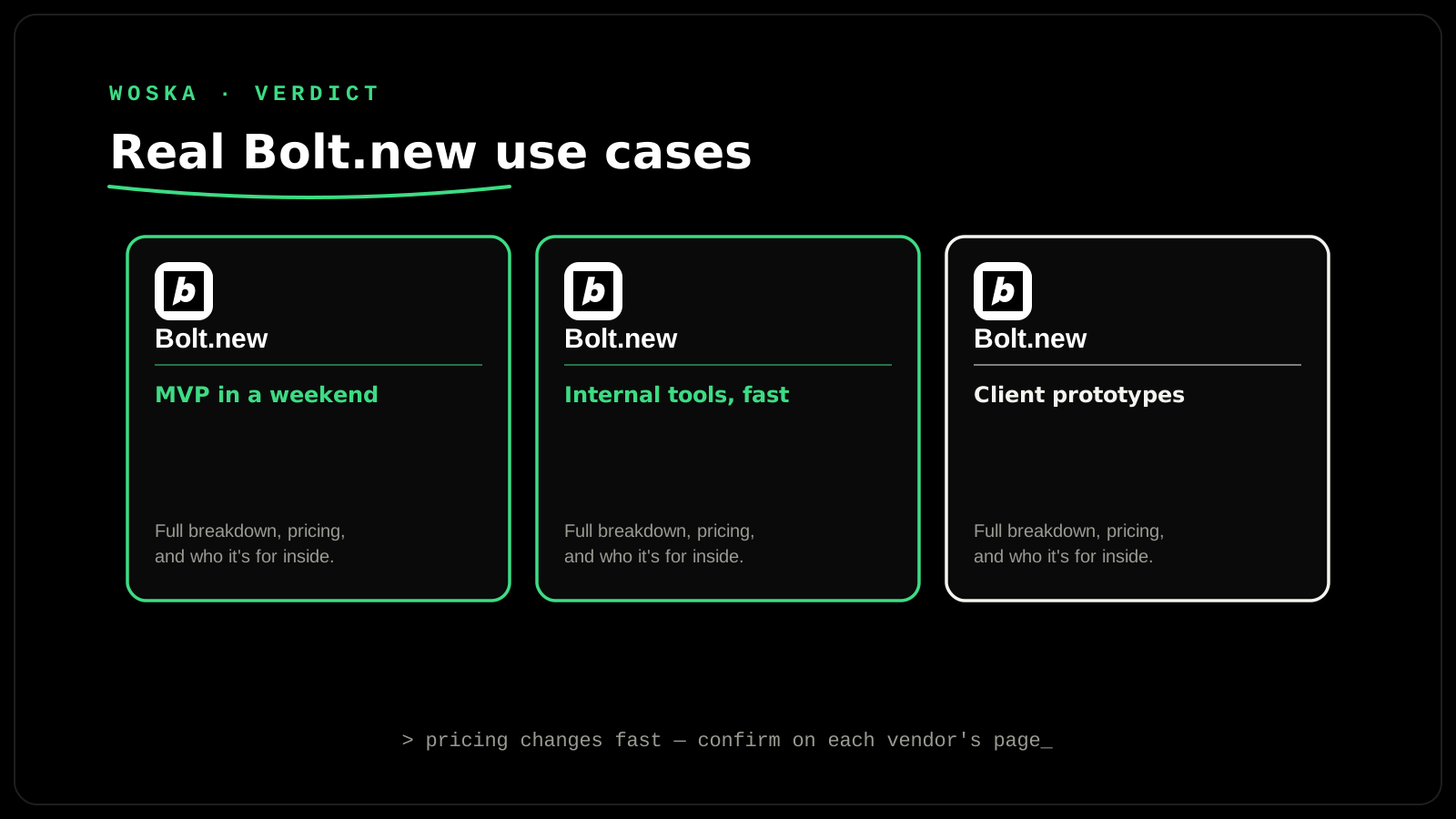
MVP in a weekend. The most common pattern: someone has an idea Friday night, has a clickable, working prototype by Sunday, and can show it to potential users or a co-founder before investing in a "real" build. The prototype doesn't need to be production-ready — it needs to prove the idea is worth building further.
Internal tools, fast. Teams use Bolt.new to build small internal tools — an admin dashboard, a data-entry form, a quick reporting view — that would otherwise sit in a backlog behind customer-facing work. Since the bar for an internal tool is "does it work," not "is it polished," Bolt.new's output is often good enough as-is.
Client prototypes. Freelancers and small agencies use it to show a client a working prototype in a discovery call instead of a static mockup, which changes the conversation from "imagine if it worked like this" to "here, try it."
Where it's the wrong tool
Bolt.new is a prototyping tool, not a production platform — the same speed that makes it great for testing an idea makes it a poor fit for a codebase that needs to scale, pass a security review, or be maintained by a growing engineering team long-term. Projects that outgrow Bolt.new's sweet spot typically move to a fuller workspace like Replit Agent for continuous deployment, or get handed to a development team to rebuild properly once the idea is validated.
Quick comparison
| Use case | Fits Bolt.new | Better elsewhere |
|---|---|---|
| Testing an idea before committing | Yes | — |
| Internal, low-stakes tools | Yes | — |
| Client discovery-call prototypes | Yes | — |
| Production app needing to scale | No | Replit Agent, or a full dev build |
FAQ
Is Bolt.new just hype, or is the code actually usable? The generated code is real and functional — the hype is about the speed and zero-setup workflow, not an exaggeration of code quality. It's genuinely good at what it's built for: fast prototypes.
Can I turn a Bolt.new prototype into my actual production app? Sometimes, but treat it as a strong starting point that likely needs a developer's review before scaling — code optimized for "working right now" isn't always structured for long-term maintenance.
What's the real cost of using Bolt.new for something it's not built for? Technical debt shows up fast if you try to scale a Bolt.new prototype without revisiting its structure — the same speed advantage in week one becomes a maintenance cost by month three if the project keeps growing on the original prototype.
Related guides
- Part of our complete guide: AI Coding & Developer Tools
- Bolt.new vs Replit Agent vs v0.dev vs Lovable
- Best AI Coding Assistant in 2026
- Explore Coding & Dev tools
*Ratings and pricing reviewed monthly. Last updated August 2026.*
Bogdex · Founder & editor, woska
Bogdex builds and curates woska, testing AI tools against real workflows to judge which ones actually save time rather than which have the longest feature list.