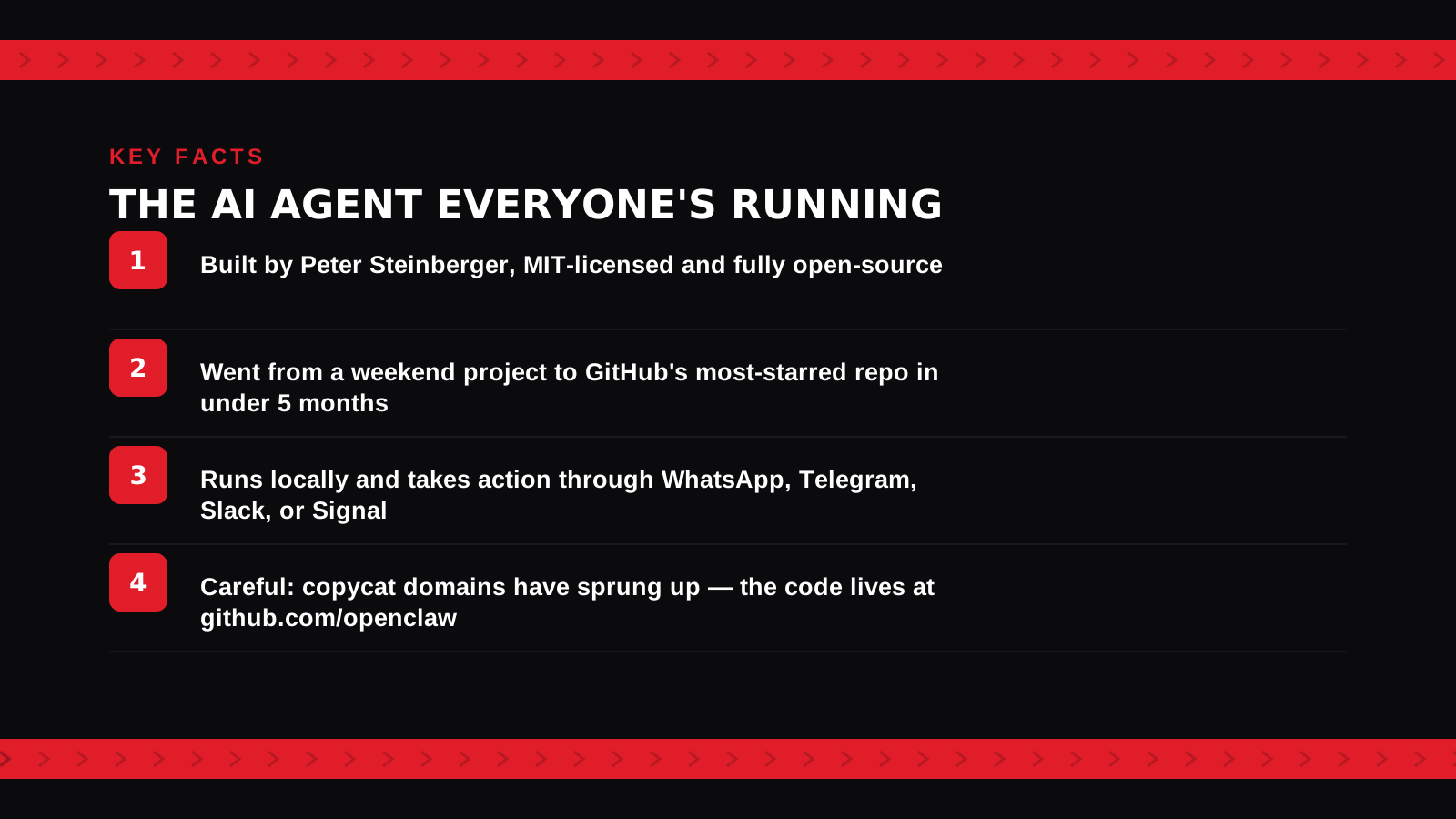
OpenClaw is a free, open-source AI agent built by developer Peter Steinberger that runs locally on your own machine and takes action through messaging apps you already use — WhatsApp, Telegram, Slack, Signal — rather than a chat window in a browser tab. It went from a weekend project to the most-starred repository on GitHub in under five months. If you're seeing it mentioned everywhere and want to know what it actually does before installing anything, here's the honest rundown.
What OpenClaw actually is
OpenClaw is MIT-licensed and fully open-source — the complete codebase lives on GitHub, not behind a paywall or a hosted-only product. It runs as a local-first agent: your memory and data are stored as plain Markdown files on your own disk, not synced to a vendor's cloud by default. Instead of a dedicated app interface, it connects through messaging platforms you're probably already using daily, and from there it can read and write files, run shell commands, automate a browser, and handle email or calendar tasks on your behalf.
That "takes action" part is the actual difference from a typical chatbot. Ask a normal AI assistant to reorganize a folder or check a website and report back, and it'll usually just explain how you'd do it. OpenClaw is built to actually go do it — which is also exactly why it needs to be set up carefully, since an agent with shell and browser access is a meaningfully bigger trust decision than a chat window.
Why it went viral
Three things lined up: it's genuinely free rather than freemium, it works through interfaces people already have open all day instead of requiring a new habit, and open-source distribution meant the developer community could inspect, extend, and share it immediately rather than waiting on a company's roadmap. The result was a five-month climb to the top of GitHub's star charts — a pace that's rare even for well-funded, professionally marketed developer tools.
The part worth being careful about
A side effect of going viral fast: copycat domains. Searching for OpenClaw turns up several similar-looking sites beyond the real project, some clearly built to capture search traffic from people looking for the genuine tool. The actual, unambiguous source of truth is the GitHub organization — github.com/openclaw — where the real codebase, issue tracker, and release history live. If a site is asking you to download an installer rather than pointing you at that repository, slow down and verify before running anything.
Is it safe to run?
That depends entirely on what you connect it to and what permissions you grant. An agent with shell access and browser automation can do real damage if misconfigured or pointed at credentials it shouldn't have — this isn't a reason to avoid it, but it is a reason to read the permission model before connecting it to anything sensitive, and to start with a sandboxed or limited setup rather than full access to your primary machine on day one.
FAQ
Do I need to know how to code to use OpenClaw? Some comfort with the command line helps for initial setup, since it's a self-hosted developer tool rather than a polished consumer app. It's more approachable than a typical open-source project, but it's not zero-setup.
Does OpenClaw cost anything? The software itself is free. Running it has real costs — LLM API tokens (Claude, GPT, or whichever model you connect) and, if you're not running it on a machine you already have, hosting. Some third parties also offer managed hosting for a monthly fee if you'd rather not self-host.
Is this the same as Clawdbot or Moltbot? Those names have circulated as earlier or alternate names for the same project lineage in some coverage. If you're evaluating it, go to the GitHub organization directly rather than piecing together the history from secondhand blog posts.
Related guides
*News and project details reviewed as they change. Last updated August 2026.*
Bogdex · Founder & editor, woska
Bogdex builds and curates woska, testing AI tools against real workflows to judge which ones actually save time rather than which have the longest feature list.