Getting cited by AI answer engines comes down to three things: answer the question directly and early, structure the page so a machine can extract that answer cleanly, and build enough off-site signal that the AI trusts the citation. That's the whole playbook. Generative Engine Optimization (GEO) is not a new discipline that replaces SEO — it's SEO's answer-extraction layer, and most of the work below is an extension of good content practice, not a separate skillset.
This is a practical guide, not a tool roundup — but where a tool genuinely helps you execute or measure a step, we say so.
Step 1: Answer the question in the first two sentences
AI answer engines extract passages, they don't read your whole page looking for the point. Every section should open with a direct answer to the question implied by its heading, in plain language, before any caveats or context. If a human would have to scroll to find your actual answer, a language model has to work just as hard — and it usually won't.
Step 2: Structure for extraction, not just readability
Comparison tables, numbered steps, and clear definitions get lifted into AI answers far more often than prose paragraphs, because they're already shaped like an answer. Add FAQPage, Article, and DefinedTerm schema markup wherever it's genuinely accurate — this doesn't trick anything, it just tells the crawler explicitly what your content already says.
Step 3: Match each platform's actual behavior
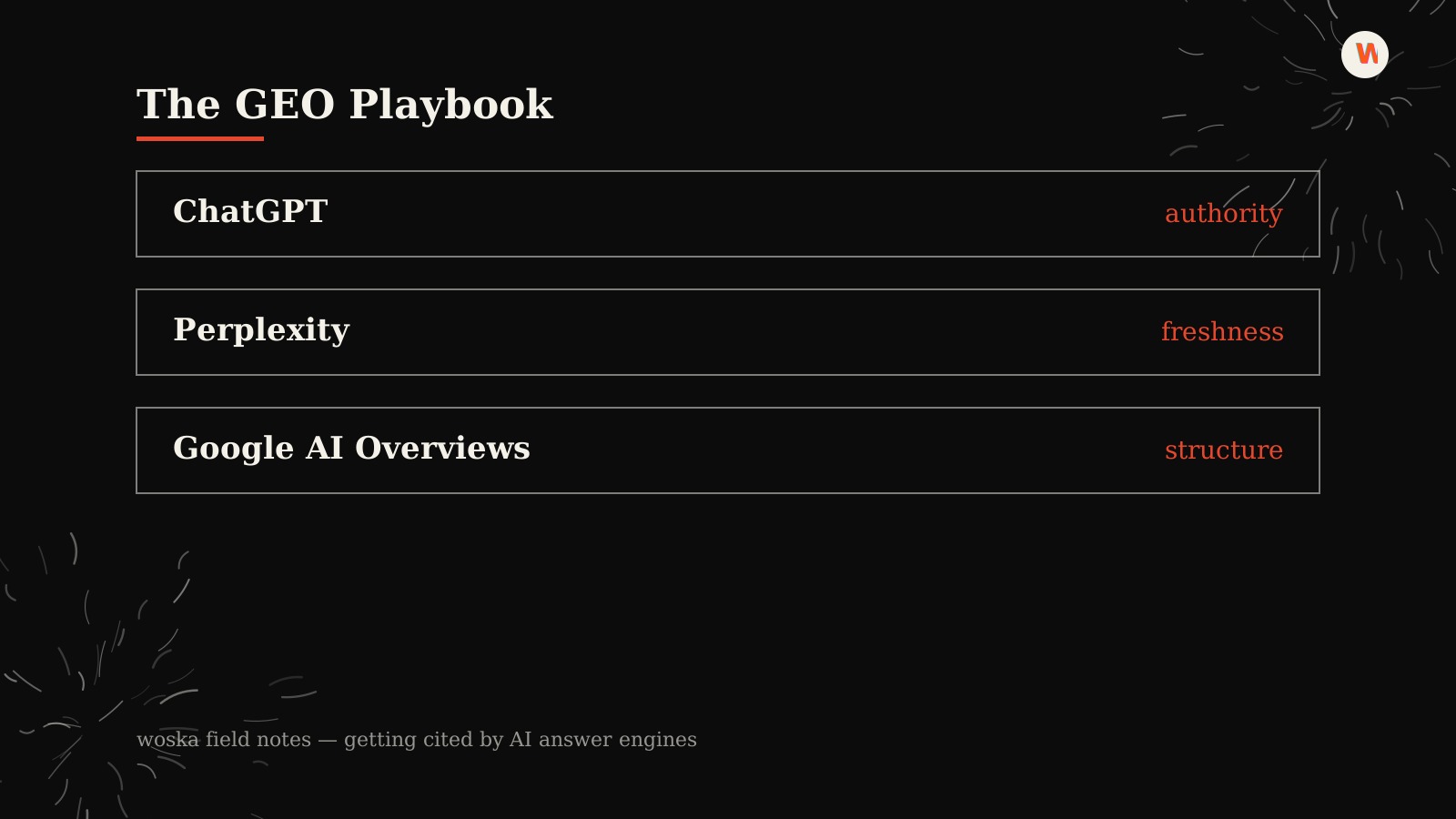
The three big answer engines don't work identically. ChatGPT has historically leaned on encyclopedic and editorial sources with authoritative framing. Perplexity runs its own crawler at query time, so freshness matters more here than almost anywhere else — a large share of what it cites was published or updated recently. Google AI Overviews pulls and scores individual passages rather than just trusting top-ranking pages, so a single well-structured section can get cited even from a page that doesn't rank #1 overall.
If you want to see specifically which of the three is citing you (or your competitors) today, Profound tracks brand visibility across ChatGPT, Perplexity, and Gemini directly — the fastest way to stop guessing and start measuring.
Step 4: Build consensus, not just backlinks
AI systems gain confidence in a claim when it shows up consistently across independent sources: your own site, Reddit threads, YouTube videos, review sites, and industry publications, all saying roughly the same thing. This "consensus signal" matters more for GEO than a single high-authority backlink does for classic SEO — a page other people and platforms independently agree with is safer for an AI engine to cite than a lone authoritative claim.
Step 5: Link your own content together, densely
Sites where related articles cross-reference and cite each other get treated as a more trustworthy knowledge hub than isolated posts, even when the total content volume is similar. A practical rule: every new piece should link to two to four existing, relevant pieces on your own site. This is also just good SEO practice — GEO simply raises the stakes on doing it consistently.
Step 6: Measure it on a schedule, not once
GEO visibility shifts week to week as models re-crawl and re-index. A practical cadence: check your top 10-15 target queries directly in Perplexity weekly, since it shows source URLs plainly; run broader checks across ChatGPT, Google AI Overviews, and Claude monthly; and do a deeper pattern review quarterly to decide what content to refresh.
Quick comparison: what each engine rewards
| Engine | Rewards | How to check |
|---|---|---|
| ChatGPT | Authoritative, editorial framing | Ask it your target queries directly |
| Perplexity | Freshness, recently updated content | It shows source URLs — check weekly |
| Google AI Overviews | Well-structured, extractable passages | Search Console + manual spot checks |
Which one should you optimize for first?
If you only have time for one platform, start with Perplexity: it shows you exactly which URLs it's citing, which turns GEO from guesswork into a feedback loop. Then layer in the structural changes (direct answers, schema, internal linking) that help across all three at once, since none of this work is platform-exclusive.
FAQ
Does GEO replace SEO? No. Ranking well in traditional search and being cited by an AI answer engine both reward clear, well-structured, authoritative content — GEO just adds a layer of "can a machine extract this cleanly," on top of the same foundation.
How long does it take to see results? Faster than classic SEO in some cases, since AI engines re-crawl frequently — Perplexity in particular can pick up a well-structured update within days. Broader visibility across all three engines typically takes a few months of consistent structural work.
Do I need a dedicated GEO tool? Not to start. The structural changes above (direct answers, schema, internal linking) need no tooling at all. A tracking tool like Profound becomes worth it once you want to measure citation share instead of guessing.
Related guides
- Part of our complete guide: AI Tools for Marketing Teams
- Best AI Tool to Track Your Brand in AI Search (GEO)
- Best AI SEO Tool in 2026
- Explore Marketing tools
*Ratings and pricing reviewed monthly. Last updated July 2026.*
Bogdex · Founder & editor, woska
Bogdex builds and curates woska, testing AI tools against real workflows to judge which ones actually save time rather than which have the longest feature list.