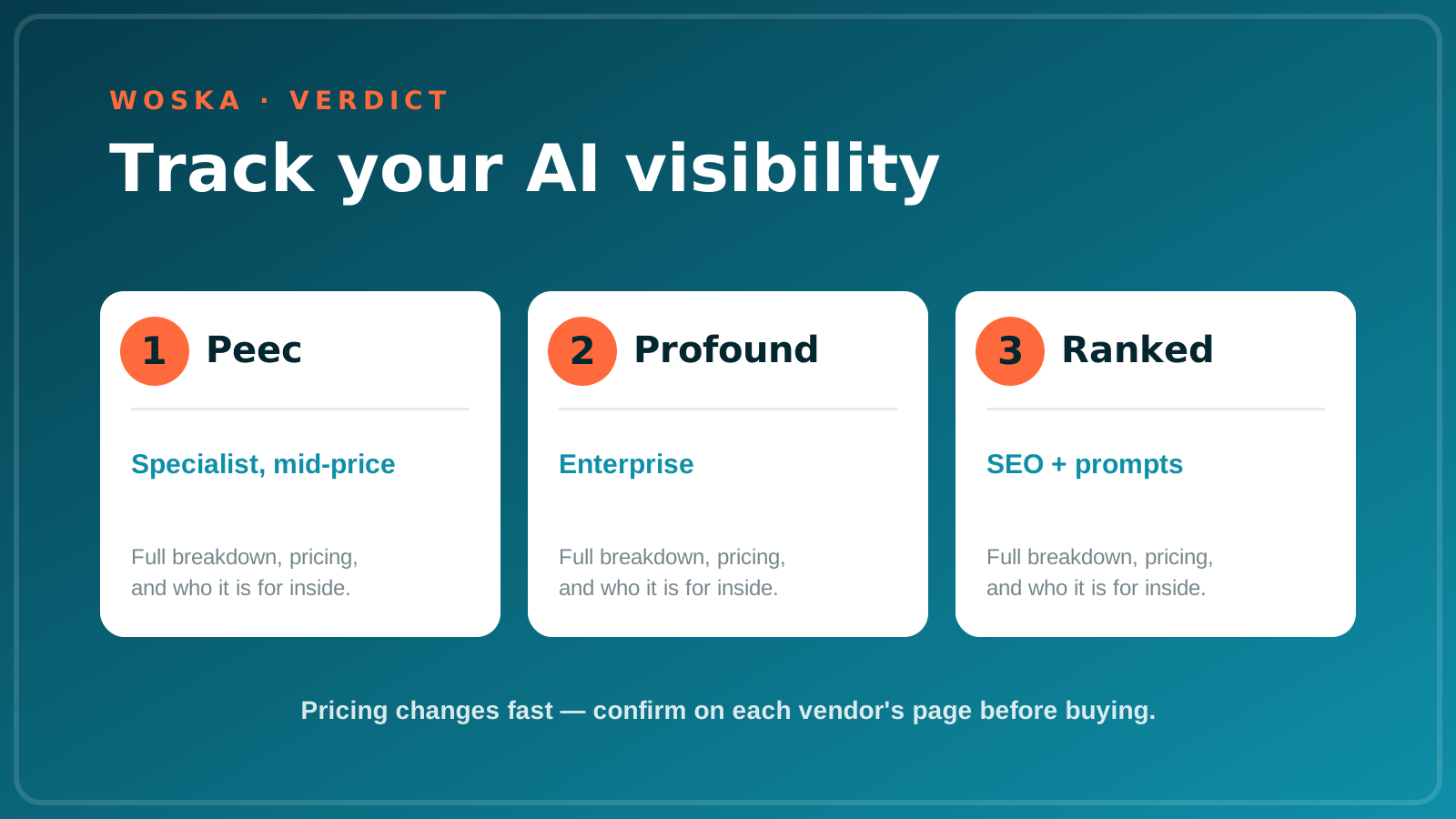
Peec is the best AI search visibility tool for most teams in 2026 because it tracks how your brand appears across ChatGPT, Perplexity, Gemini, and other answer engines at a mid-market price. Profound is the enterprise standard for big brands that need share-of-voice across every model, and Ranked is the pick for teams that want AI-answer tracking bolted onto their SEO workflow.
A growing share of buyers now ask ChatGPT or Perplexity instead of Google, and those answers cite some brands and ignore others. GEO — generative engine optimization — is the practice of measuring and improving whether you get cited. You cannot improve what you cannot see, which is what these tools are for.
Why Peec is the strongest starting point
Peec is built specifically for tracking how brands show up across AI answer engines. You give it the prompts your buyers actually ask, and it reports how often you are mentioned, how you rank against competitors, and which sources the models cite when they answer.
It sits in the mid-market: far cheaper than the enterprise platforms, far more focused than a general SEO suite with an AI add-on. For most teams trying to find out whether they exist inside AI answers at all, that is the right place to start.
Pricing: Paid, from around €75/mo (roughly $87). Always confirm the live vendor page before buying because these tools price by prompt volume and plans change fast.
When Profound is the better choice
Profound is the highest-profile GEO platform, used by large brands that need share-of-voice tracking across ten-plus AI surfaces — ChatGPT, Claude, Perplexity, Gemini, Copilot, Grok, and more — with the depth and history to support a serious analytics function.
That capability comes at enterprise pricing that starts in the hundreds per month and climbs from there. Choose Profound when AI visibility is a tracked business metric with a budget behind it, not an experiment.
When Ranked belongs on the shortlist
Ranked approaches the problem from the SEO side: keyword tracking and content workflows with AI-answer and prompt visibility added on. For teams that already run SEO and want to fold AI-answer tracking into the same tool rather than buy a separate platform, that consolidation is the appeal.
It is the pragmatic middle option — not a pure GEO specialist, but useful when you would rather extend an existing SEO practice than stand up a new one.
What GEO tracking can and cannot do
- It measures, it does not rank you. These tools show whether AI models mention and cite you. Actually getting cited comes from the content, structure, and authority the models draw on — the tracking just tells you if it is working.
- Answers are non-deterministic. The same prompt can return different brands on different runs, so single checks mislead. Trust trends over time, not one snapshot.
- Coverage of models varies. Some tools track ChatGPT and Perplexity; others add Gemini, Claude, Copilot, Grok, and more. Match the tool to where your buyers actually ask.
- It is early. GEO tooling in 2026 is young and pricing is unsettled. Start small, prove the signal matters for your buyers, then scale spend.
Quick comparison
| Tool | Starting price | Core job | Use it when |
|---|---|---|---|
| Peec | From ~$87/mo | AI-answer visibility tracking | You want a focused mid-market tool |
| Profound | From ~$499/mo | enterprise share-of-voice across models | AI visibility is a budgeted metric |
| Ranked | From ~$99/mo | SEO plus AI-answer tracking | You want it inside your SEO workflow |
How to choose
Start with Peec if you mainly need to know whether and how you appear in AI answers, without enterprise overhead. Move to Profound when AI visibility is a tracked metric with executive attention and budget. Pick Ranked when you already run SEO and would rather extend that workflow than adopt a separate platform.
Before paying for any of them, do the free version of the test yourself: ask ChatGPT and Perplexity the questions your buyers ask and see whether you show up. If you are already cited everywhere, you may not need tracking yet. If you are invisible, that is the signal to act.
FAQ
What is GEO and how is it different from SEO? SEO optimizes for ranking in traditional search results; GEO — generative engine optimization — optimizes for being mentioned and cited in AI answers from tools like ChatGPT and Perplexity. They overlap, because AI models draw on web content, but the metric being measured is different.
Can I track my brand in ChatGPT for free? Partly. You can manually ask ChatGPT and Perplexity the questions your buyers ask and note whether you appear, which is a useful free baseline. Paid tools automate that across many prompts and models and track it over time, which manual checks cannot.
Why do AI answers mention different brands each time? AI models are non-deterministic, so the same prompt can surface different brands on different runs. That is why single spot-checks mislead and why tracking tools report trends across many runs rather than one answer.
Is GEO tracking worth paying for in 2026? It is worth it once AI answers are a real channel for your buyers and you need to measure and improve visibility systematically. If AI search sends you little traffic yet, start with manual checks and revisit paid tools as the channel grows.
Related guides
- How to Get Cited by ChatGPT, Perplexity, and Google AI Overviews: A GEO Playbook for 2026
- Part of our complete guide: AI Tools for Marketing Teams
- Best AI SEO tool
- ChatGPT vs Perplexity for research
- Explore Marketing tools
- All woska guides
*Ratings and pricing reviewed monthly. Last updated July 2026.*
Bogdex · Founder & editor, woska
Bogdex builds and curates woska, testing AI tools against real workflows to judge which ones actually save time rather than which have the longest feature list.