Apollo.io wins on best all-in-one value with the largest self-serve contact database, Clay wins for orchestrating multiple data providers into custom enrichment workflows, and ZoomInfo wins on data depth and intent signals for enterprise buyers who can absorb its price. These three sit at different layers of the same problem: Apollo is a starting point with its own database, Clay is a workflow layer that pulls from several databases at once, and ZoomInfo is the deepest single dataset if you can afford it.
For the outreach and sequencing side of this once your leads are enriched, see Best AI Tool for Cold Email Outreach.
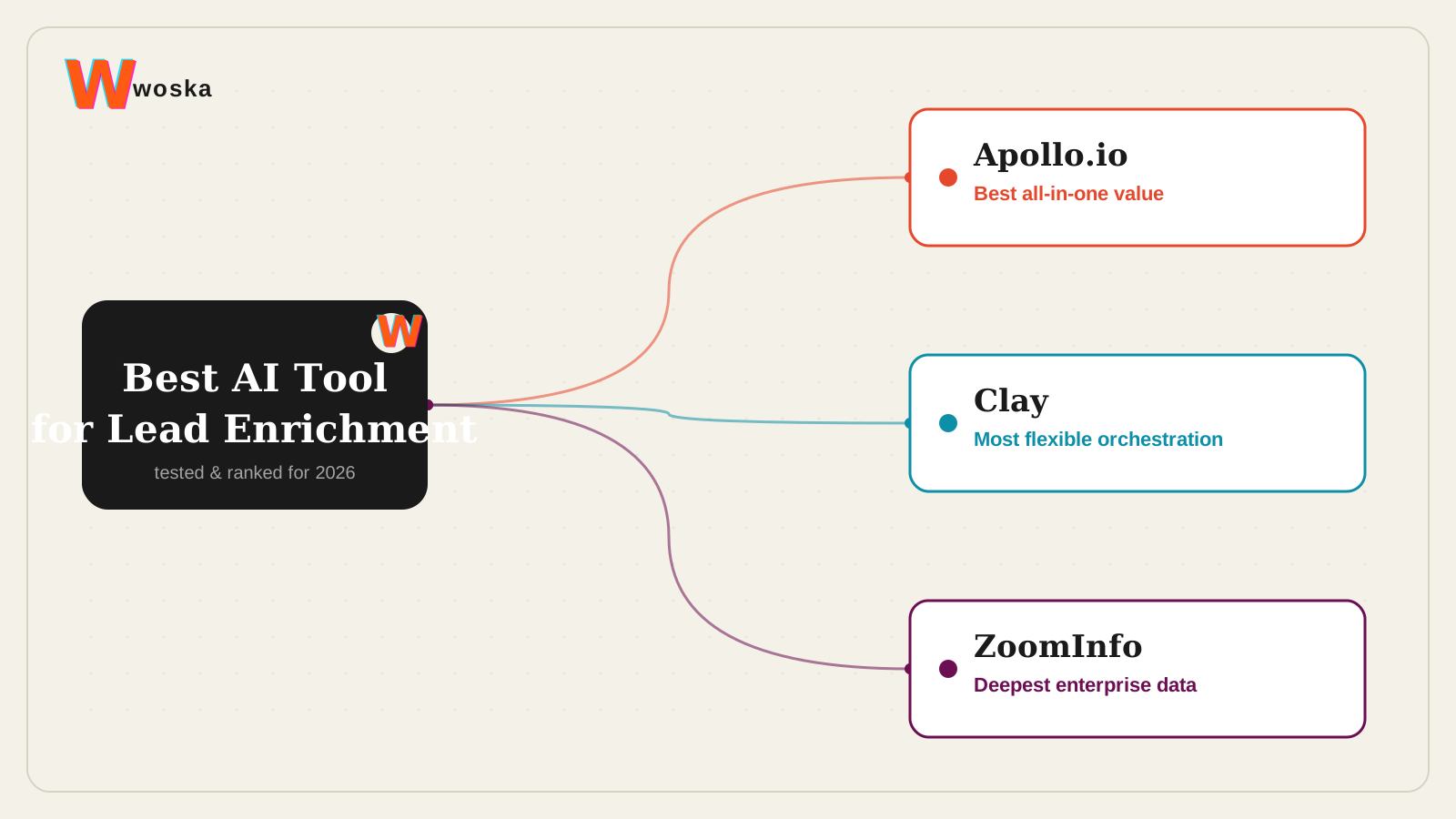
The three, in one line each
Apollo.io pairs a 275M+ contact, 73M+ company database with a sequencer and light CRM, replacing three tools at a price most SMB and mid-market teams can self-serve into without a sales call.
Clay doesn't own a database — it orchestrates enrichment across Apollo, ZoomInfo, and dozens of niche providers into custom, code-optional workflows, which wins when the problem is flexibility, not raw access.
ZoomInfo offers 95M+ verified contacts with real-time updates, org charts, and intent signals most self-serve tools don't match, sold as an enterprise contract with a five-figure annual minimum.
Where each one actually wins
Apollo.io rewards SMB and mid-market teams who want the fastest path to real outbound volume without stitching together several vendors or booking a sales call first. Clay rewards teams that already have — or want to combine — multiple data sources and need the workflow layer to make that combination useful, rather than picking one database and living with its gaps. ZoomInfo rewards larger organizations where data depth, org charts, and intent signals justify a real annual contract, and where a three-seat minimum and 12-month commitment aren't a dealbreaker.
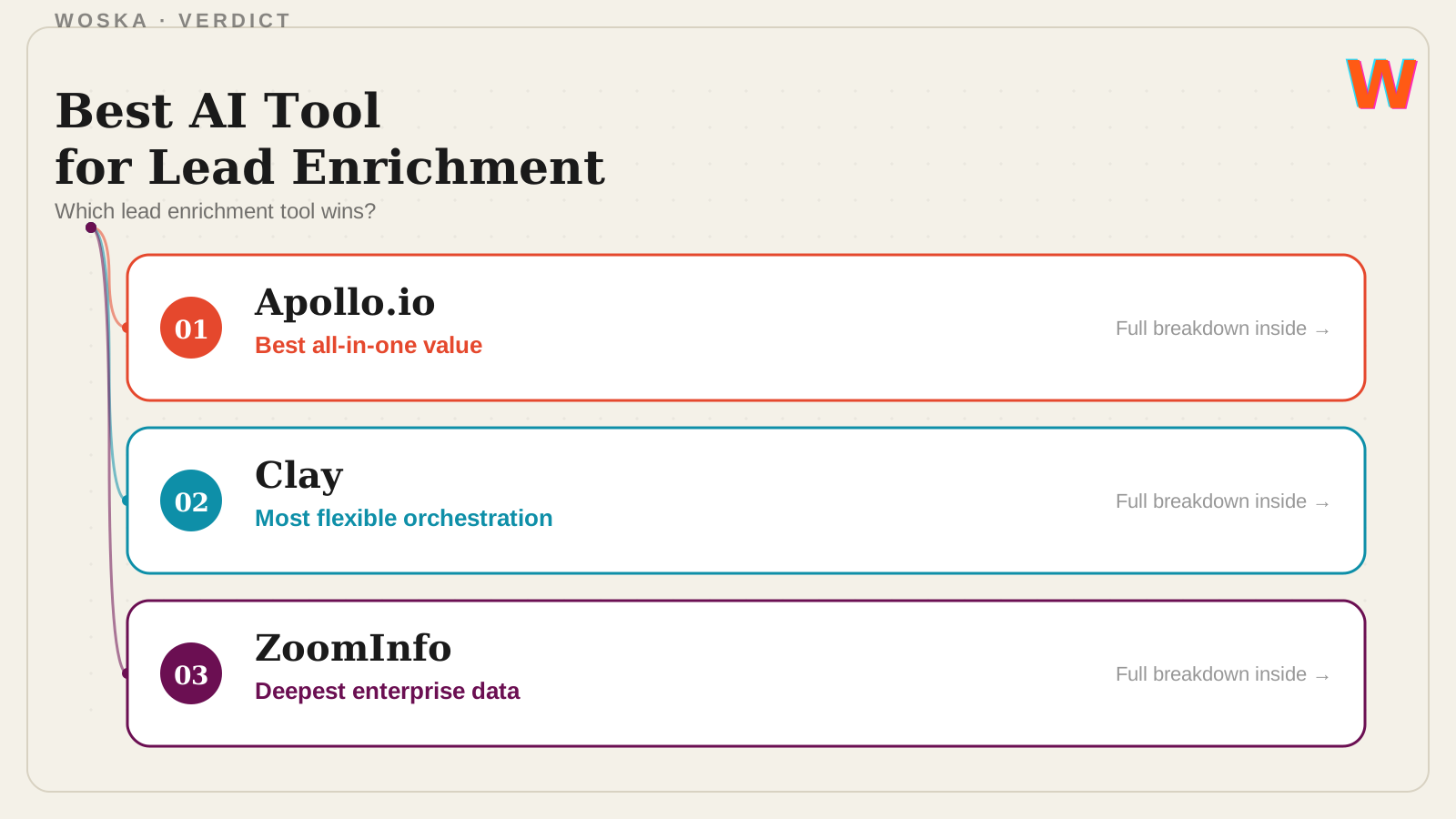
Quick comparison
| Tool | Starting price | Core job | Best fit |
|---|---|---|---|
| Apollo.io | From $59/user/mo | all-in-one database + sequencing | SMB and mid-market, fastest self-serve start |
| Clay | From $149/mo | multi-provider enrichment orchestration | Combining several data sources into one workflow |
| ZoomInfo | Custom, $15K+/year | enterprise database + intent signals | Large orgs needing the deepest single dataset |
Which one should you use?
Start with Apollo.io unless you have a specific reason not to — it's the fastest, cheapest way to real outbound volume for most teams. Move to Clay once one database isn't covering enough of your total addressable market and you need to blend sources. Consider ZoomInfo only once your team and budget are large enough that its enterprise pricing and contract terms make sense relative to the data depth it adds.
FAQ
Can I use more than one of these together? Yes — a common pattern is running Apollo or ZoomInfo as a primary data source and using Clay to enrich and route records with additional providers for the specific accounts that matter most, rather than paying for full enterprise access to every source.
Which is cheapest for a solo founder or very small team? Apollo.io's entry pricing and free tier make it the most accessible starting point by a wide margin; Clay and ZoomInfo are both priced for teams already running real volume.
How accurate is B2B contact data in general? No provider is fully accurate — email and mobile verification rates vary by source and by how recently a contact changed roles. Treat any enrichment tool's data as a strong starting point to verify, not ground truth, especially for outbound at scale.
Do I need a data enrichment tool if I already have a CRM? Yes, typically — a CRM stores and manages the contacts you already have; enrichment tools are what find new contacts and fill in missing details (email, phone, company data) before they ever enter your CRM.
Related guides
- Best AI Tool for Personalizing Outbound at Scale in 2026
- How to Build an Account-Based Marketing (ABM) Stack with AI in 2026
- Part of our complete guide: AI Tools for Sales & Business Ops
- Apollo.io Review 2026
- Best AI Tool for Cold Email Outreach
- Best AI Sales Agent (AI SDR) in 2026
- Explore Business & Sales tools
*Ratings and pricing reviewed monthly. Last updated August 2026.*
Bogdex · Founder & editor, woska
Bogdex builds and curates woska, testing AI tools against real workflows to judge which ones actually save time rather than which have the longest feature list.