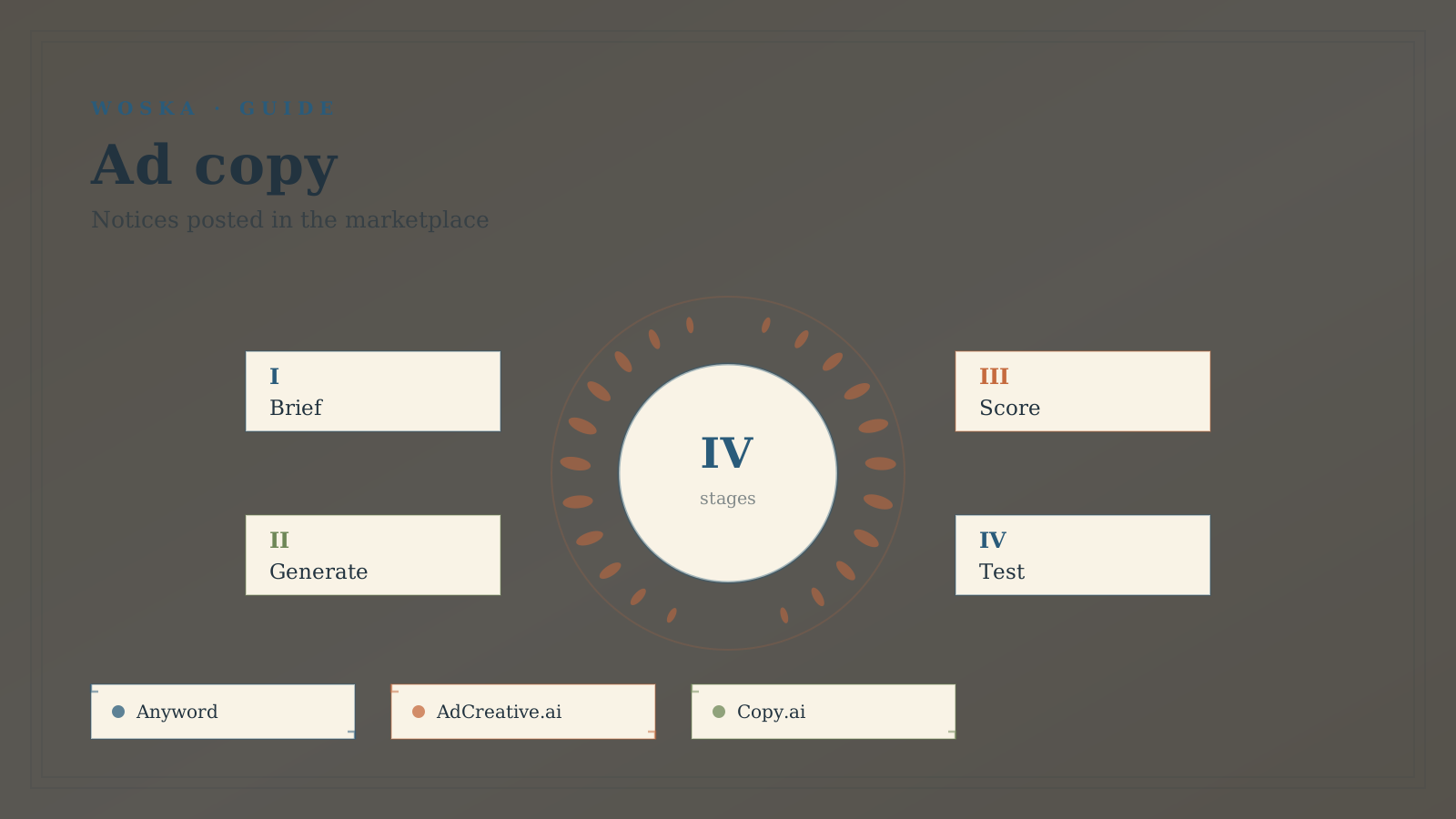
Anyword is the best AI ad copy tool in 2026 because it does the thing generic writers cannot: rank variations by predicted performance before you spend money on them. AdCreative.ai is the better pick when you need matched copy and visuals at volume, and Copy.ai covers ad copy as part of a wider marketing writing workload.
Generating ad copy stopped being the hard part years ago — any general model produces twenty headlines in seconds. The hard part is knowing which of the twenty to run, and that is the only axis worth choosing a tool on.
Why Anyword is the strongest starting point
Anyword scores each generated variation against predicted conversion performance, trained on advertising outcome data. Instead of twenty undifferentiated headlines, you get twenty ranked ones.
The prediction is not a guarantee, and it should not replace testing. What it does is narrow the field before you spend budget — cutting the obviously weak variants so your test slots go to plausible candidates. On a small ad account with limited budget for statistically meaningful tests, that filtering is worth more than raw generation volume.
It also holds a brand voice profile across outputs, which matters when several people are producing copy for the same account.
Pricing: From around $19/mo for entry plans, rising steeply for team tiers. Always confirm the live vendor page before buying because AI products often change credits, limits, and plan names.
When AdCreative.ai is the better choice
Most tools write copy and leave you to source the visual separately. AdCreative.ai generates the headline and the creative together, sized for each placement.
That is the right tool when your constraint is production throughput — an ecommerce account running dozens of creative variants a week, or an agency servicing multiple clients. The output needs a human pass and it will not win awards, but it removes the designer bottleneck for volume testing.
When Copy.ai belongs on the shortlist
If ad copy is one of six writing jobs your team has, a dedicated ad tool is an extra subscription for a fraction of the work.
Copy.ai covers ads alongside emails, product descriptions, and sales copy. It has no performance prediction, so you are back to judgment plus testing. But for teams where ads are occasional rather than the core motion, the consolidation is worth more than the scoring.
What AI ad copy still gets wrong
- It writes claims you cannot make. Generated copy routinely includes superlatives and guarantees that will get an ad rejected or, worse, create a compliance problem. Every draft needs a legal-eye pass in regulated categories.
- It has no idea what your customer actually says. The best-performing ad copy usually comes from review mining and support tickets — the customer's own phrasing. AI produces marketing language instead, unless you feed it the raw material.
- It optimizes the headline, not the offer. No amount of copy rewriting fixes a weak offer. If the ad is not working, the copy is usually the third thing to check, after the offer and the targeting.
- Predicted scores are not results. Anyword's scoring is a prior, not an outcome. It narrows the field; the ad account decides.
Quick comparison
| Tool | Starting price | Core job | Use it when |
|---|---|---|---|
| Anyword | From ~$19/mo | performance-scored variations | You want to rank copy before spending |
| AdCreative.ai | From ~$29/mo | matched copy and visuals | You need high creative volume |
| Copy.ai | Freemium | broad marketing copywriting | Ads are part of a wider workload |
| Jasper | From ~$49/mo | brand-consistent campaign copy | You need polished on-brand output |
How to choose
If you have a live ad account with real spend, Anyword's scoring earns its price by reducing wasted tests. If your bottleneck is producing enough creative to test at all, AdCreative.ai solves the throughput problem. If ads are occasional, do not buy a specialist tool — use whatever general writer your team already pays for.
Before any of that: pull twenty customer reviews and paste the recurring phrases into your prompt. That input change usually improves output more than switching tools.
FAQ
Does AI-generated ad copy actually convert? It converts about as well as competent human copy when it is edited and tested, and worse when it is run unedited. The consistent finding across the category is that AI wins on production speed, not on quality of the winning variant.
Can these tools predict which ad will win? They predict likely performance from patterns in past data, which is useful for filtering. Treat scores as a way to eliminate weak options rather than a substitute for running the test.
Will Meta or Google penalize AI-generated ads? Neither platform penalizes copy for being AI-generated. Both enforce policy on claims, and AI drafts break those rules more often than human ones because they overstate by default.
Do I need a separate tool if I already use ChatGPT? For low ad volume, no. The case for a specialist tool is performance scoring or bulk creative production, neither of which a general assistant provides.
Related guides
- Part of our complete guide: AI Tools for Marketing Teams
- Top 3 AI tools for marketing teams
- Best AI tool for email marketing
- Explore Marketing tools
- All woska guides
*Ratings and pricing reviewed monthly. Last updated July 2026.*
Bogdex · Founder & editor, woska
Bogdex builds and curates woska, testing AI tools against real workflows to judge which ones actually save time rather than which have the longest feature list.