Rize wins for fully automatic capture — it categorizes every work session by client and project using machine learning, with no timer to remember to start or stop, and reportedly recovers 15-40% more billable hours than manual tools. Timely wins when the deliverable needs to be a clean, AI-drafted timesheet ready for client billing, reconstructing your day from background activity into readable entries. Toggl Track wins as the free, simple option if you're comfortable pressing start and stop yourself and don't need full automation. The real tradeoff across all three is the same one that decides most time-tracking purchases: how much you're willing to pay to never have to think about the timer at all.
Where each one actually wins
Rize runs in the background and automatically categorizes every session by client and project with no manual timers at all, which is the whole pitch — it exists specifically to eliminate the habit of forgetting to start a timer and losing billable time as a result. It's the most expensive of the three, but that's the direct tradeoff for full automation.
Timely also tracks automatically, then uses its "memory" feature to reconstruct your day into AI-drafted timesheets that read cleanly for a client invoice or internal report. If the actual output you need is a polished timesheet rather than just raw tracked hours, Timely's framing around that end product is the more direct fit.
Toggl Track keeps things simple: one-click manual timers, a generous free tier for up to 5 users, and none of the background-tracking complexity of the other two. It's the right choice if automatic capture isn't worth the extra cost to you, or if manual timers actually fit how you already work.
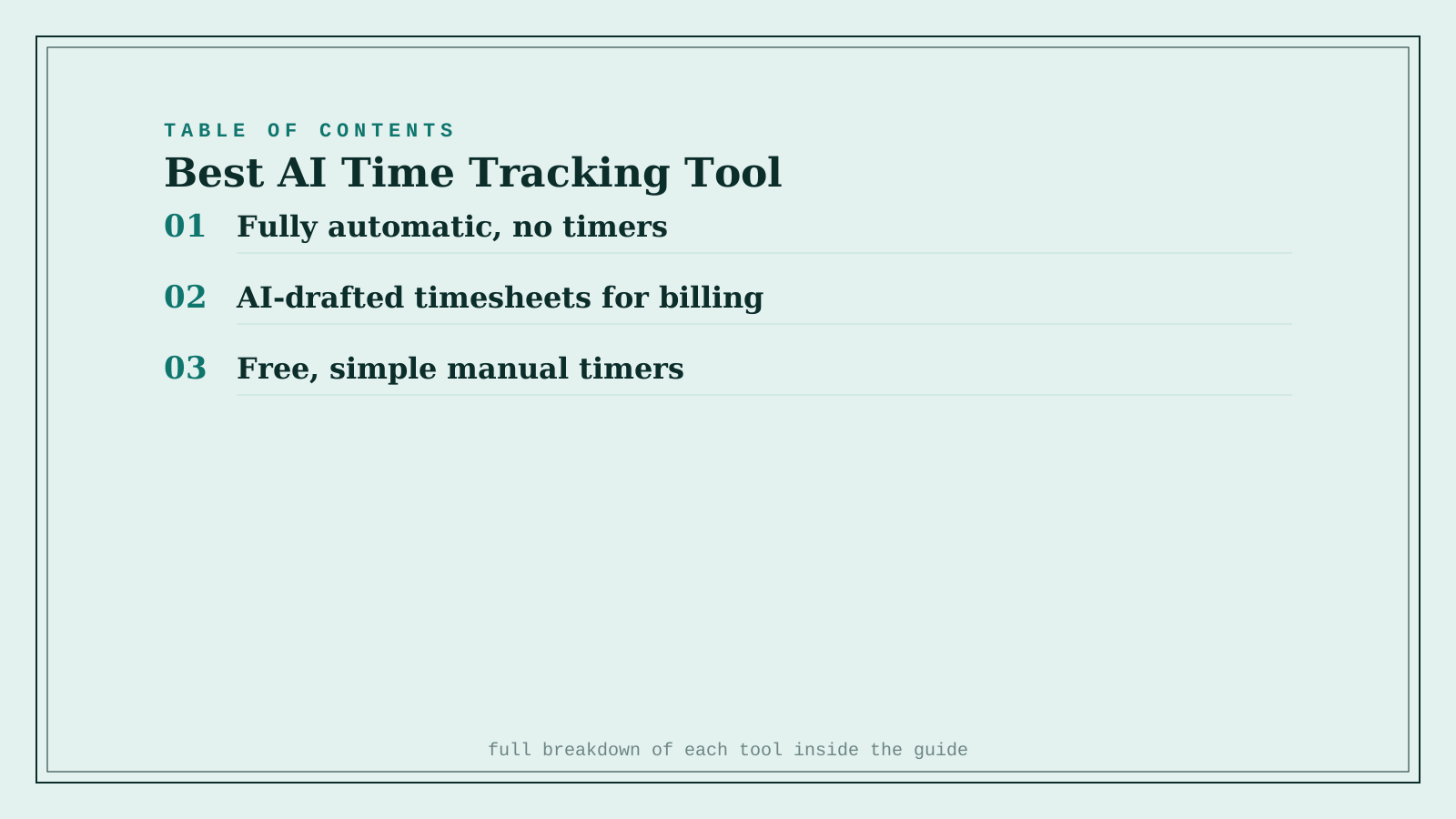
Quick comparison
| Tool | Core job | Starting price | Best fit |
|---|---|---|---|
| Rize | Fully automatic capture, no timers | $18/mo | Never wanting to touch a timer again |
| Timely | AI-drafted timesheets for billing | $9/mo | Client billing needs a clean, ready timesheet |
| Toggl Track | Free, simple manual timers | Free; $7.99/mo Pro | Comfortable starting a timer yourself |
Which one should you actually use?
Start with Toggl Track if you're fine with manual timers and want to try time tracking without paying anything. Move to Rize once forgetting to start a timer is costing you real billable hours and full automation is worth the premium. Use Timely specifically when the end deliverable is a client-ready timesheet, not just raw tracked time.
FAQ
Does automatic time tracking raise privacy concerns for employees? Yes, reasonably — background activity capture on a work computer should be disclosed clearly to anyone using it, and companies rolling this out for a team (not just a freelancer tracking their own time) should have a clear policy on what's captured and who can see it.
How accurate is AI-categorized time compared to manual entry? Generally quite accurate for clearly separated work (different apps, windows, or projects), but it can struggle with genuinely mixed-context work — research spanning multiple client projects in the same browser session, for instance — where a manual correction pass still helps.
Can I use these tools for personal productivity tracking, not just client billing? Yes, all three work equally well for tracking your own time against personal goals rather than billing a client — Rize in particular is often used purely for personal focus and productivity insight, independent of any billing use case.
Is a free time tracker like Toggl Track missing anything important compared to the paid AI options? Mainly automation — Toggl Track's free tier covers solid manual tracking and reporting for small teams, but you'll be starting and stopping timers yourself rather than getting the background AI categorization Rize and Timely are built around.
Related guides
- Best AI Scheduling Assistant in 2026
- Best AI Project Management Tool in 2026
- Explore Productivity tools
*Ratings and pricing reviewed monthly. Last updated September 2026.*
Bogdex · Founder & editor, woska
Bogdex builds and curates woska, testing AI tools against real workflows to judge which ones actually save time rather than which have the longest feature list.