AI2SQL wins for a tool built around exactly this one workflow — type a plain-English question, get back a SQL query, with no database connection or setup required. Vanna.ai wins when accuracy against your actual live schema matters more than convenience, since it's self-hostable and grounds every generated query in your real tables and columns rather than a general guess. ChatGPT wins as the free, general-purpose option if you're comfortable pasting in your schema yourself and don't need a dedicated tool's governance or connection layer. LLMs got genuinely reliable at SQL in 2026, handling complex joins, window functions, and CTEs accurately once grounded in a real schema — the differentiator between these three is how much setup you're willing to do for how much accuracy and integration you get back.
Where each one actually wins
AI2SQL is purpose-built for text-to-SQL and nothing else — paste in a table structure or describe it, ask your question in plain English, and it returns a ready-to-run query. It's affordable and simple, though it lacks the governance and live-warehouse connection that a data team managing many analysts would eventually need.
Vanna.ai connects directly to your actual database and grounds every generated query in your real schema, reducing the hallucinated-column-name problem that plagues schema-blind tools. It's open-source and self-hostable for free, with a hosted team plan for organizations that want the convenience without running their own infrastructure.
ChatGPT handles text-to-SQL well in 2026 if you paste in your schema (or a representative sample) directly in the conversation — no setup, no connection, no cost beyond a free account. The tradeoff is that it has no memory of your actual live database between conversations and no built-in governance, so every session starts from scratch.
Quick comparison
| Tool | Core job | Starting price | Best fit |
|---|---|---|---|
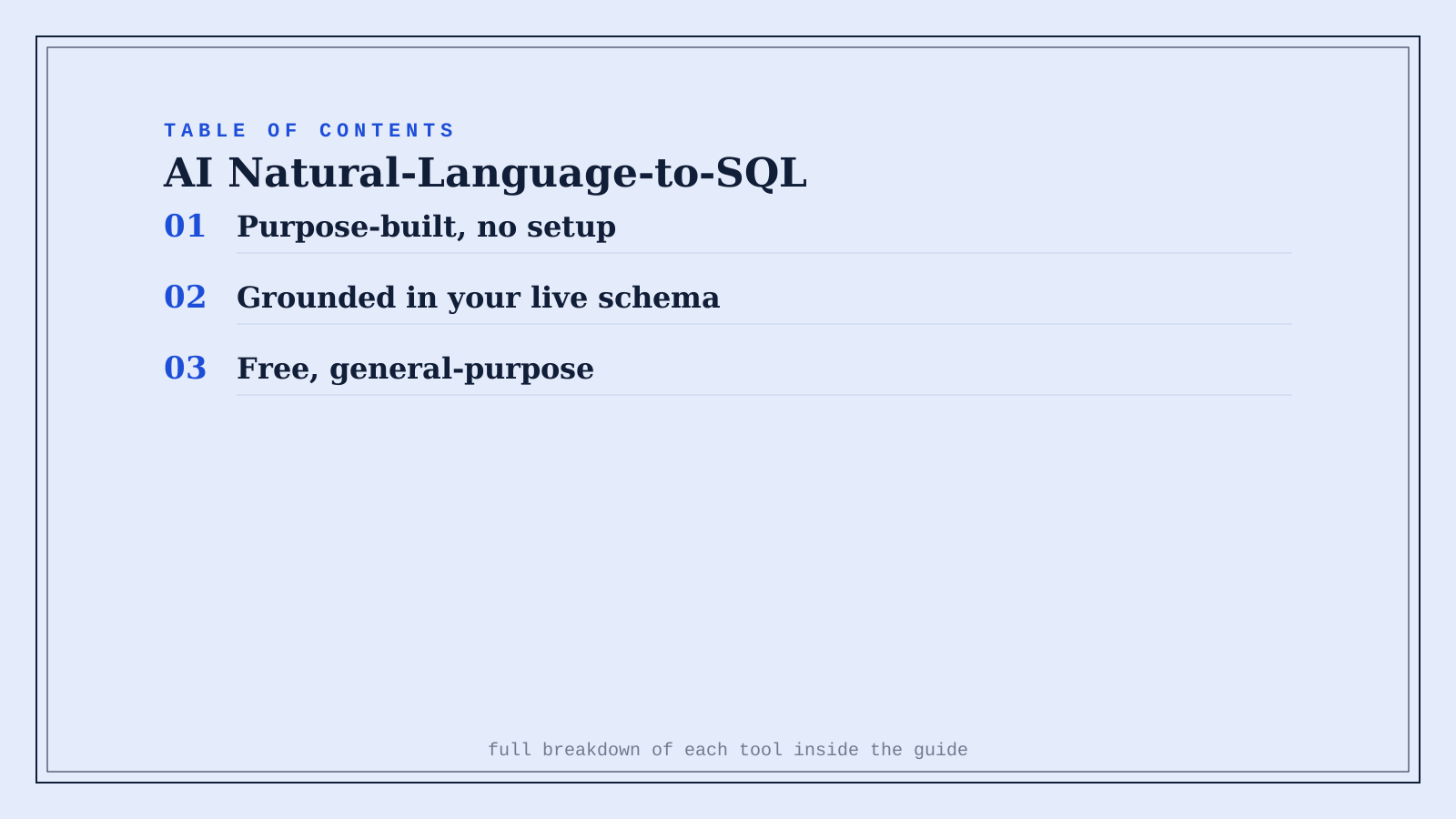
| AI2SQL | Purpose-built text-to-SQL, no setup | From ~$19/mo | Fast, simple SQL generation |
| Vanna.ai | Grounded in your live schema | Free (self-hosted) or $50/mo hosted | Accuracy against a real, connected database |
| ChatGPT | General-purpose, paste-your-schema | Freemium | Occasional use, no dedicated tool needed |
Which one should you actually use?
Start with ChatGPT if your SQL needs are occasional and you don't mind pasting in schema context each time. Move to AI2SQL once you're doing this often enough that a dedicated, no-setup tool saves real time. Use Vanna.ai when you need queries grounded in your actual live database schema — especially for a team where hallucinated column or table names are a real, recurring problem.
FAQ
Is AI-generated SQL safe to run directly against a production database? Never run AI-generated SQL directly against production without review — always check the query logic first, and run it against a read replica or staging environment when possible, especially for anything that writes or deletes data rather than just reading it.
How accurate is text-to-SQL in 2026 for complex queries? Significantly better than a couple of years ago — current models handle joins, window functions, and CTEs reliably when grounded in a real schema, but accuracy drops noticeably on ambiguous business logic (what exactly counts as an "active" customer, for instance) that isn't explicit in the schema itself.
Do I need to know SQL myself to use these tools effectively? Not to generate a first draft, but you should be able to read and sanity-check the output — these tools remove the syntax-writing burden, not the responsibility of verifying the query actually answers your question correctly.
Which tool is best for a non-technical business user who just wants an answer, not a query? Vanna.ai and similar schema-grounded tools are built with that use case in mind — a business user asks a question in plain English and gets a table of results, with the underlying SQL visible but secondary to the answer itself.
Related guides
*Ratings and pricing reviewed monthly. Last updated September 2026.*
Bogdex · Founder & editor, woska
Bogdex builds and curates woska, testing AI tools against real workflows to judge which ones actually save time rather than which have the longest feature list.