Five Sigma is the best pick for carriers, TPAs, and MGAs that want a full claims workflow platform with AI built natively into every step — its Clive AI claims adjuster handles first notice of loss, triage, fraud detection, and documentation processing as part of the core system, not a bolt-on. Snapsheet is the best pick if you want AI-powered intake and virtual damage assessment layered on top of the claims infrastructure you already run, without replacing it. Both replace a purely manual, spreadsheet-adjacent claims process with an AI agent doing the first pass on routine decisions.
The two, in one line each
Five Sigma is a cloud-native claims management platform built around Clive, a multi-agent AI claims expert that handles data work and decision support across the entire claims lifecycle — intake, assignment, workflow automation, and payment.
Snapsheet combines AI-powered document processing, virtual damage assessment, and automated claimant communications into a configurable layer that sits on top of a carrier's existing claims management infrastructure.
Where each one actually wins
Five Sigma wins for organizations ready to run their full claims workflow on an AI-native platform — since Clive is built into the core system rather than added afterward, it can act across the entire claims lifecycle rather than just a specific intake or triage step. Snapsheet wins for carriers and TPAs that want to keep their existing core claims system in place and add AI-powered intake, damage assessment, and communication automation on top of it, without a full platform migration.
If you're building or replacing a claims platform and want AI woven into every step from day one, Five Sigma's native approach is the more complete solution. If you need to add AI capability quickly on top of infrastructure you're not ready to replace, Snapsheet's configurable, per-claim-priced layer is the lower-disruption path.
Quick comparison
| Tool | Starting price | Core job | Best fit |
|---|---|---|---|
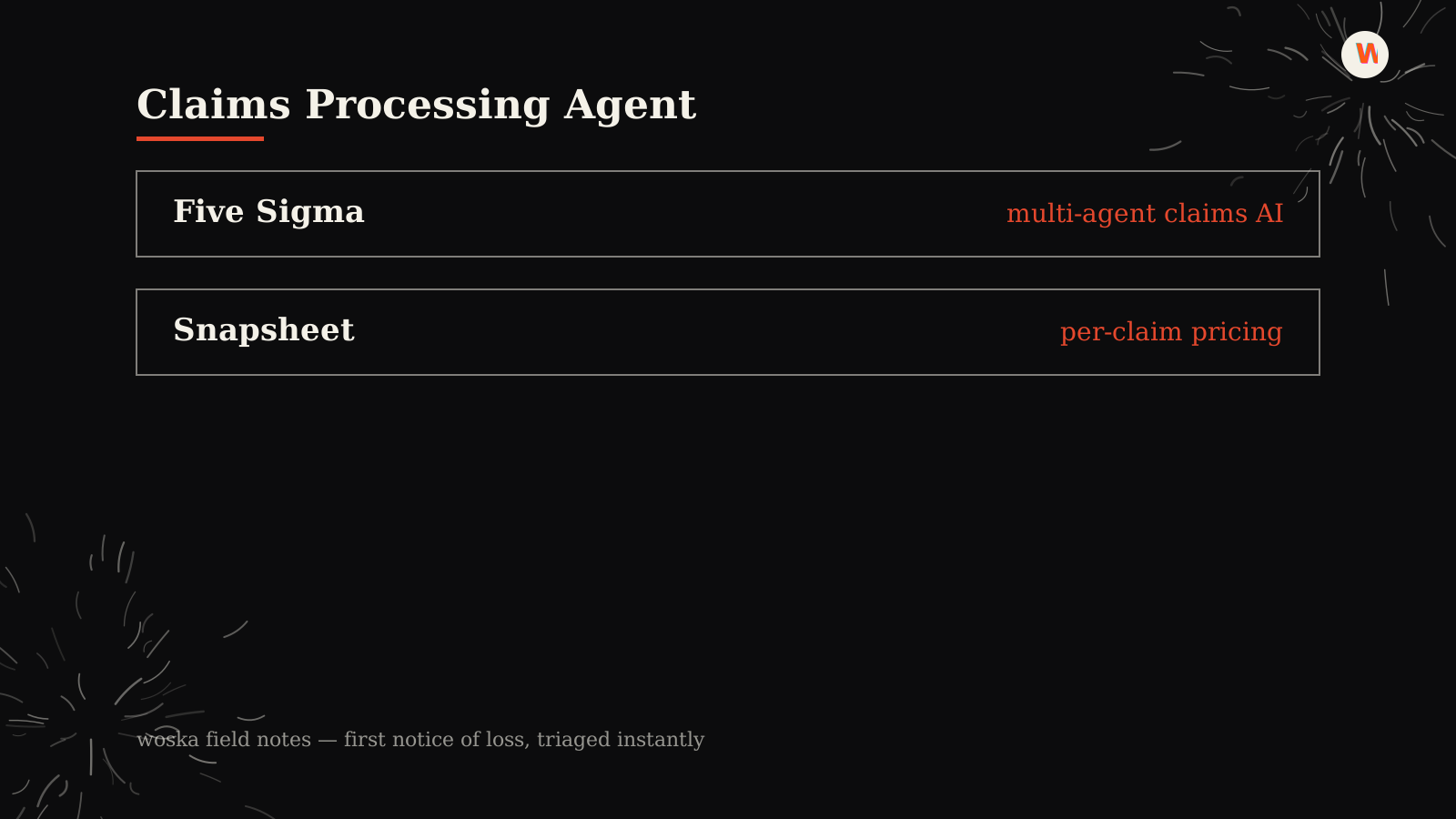
| Five Sigma | Subscription scaled to claim volume | Full claims platform with native multi-agent AI | Replacing or building a core claims system |
| Snapsheet | $30-80 per claim | AI intake + damage assessment on existing systems | Adding AI without a platform migration |
Which one should you use?
Choose Five Sigma if you're building or replacing your core claims platform and want AI decision support built into every step from the start. Choose Snapsheet if you want to add AI-powered intake and damage assessment on top of infrastructure you're keeping, priced per claim rather than a full platform subscription.
FAQ
Do these AI claims agents make final payout decisions on their own? No — both are built to automate routine triage, documentation, and fraud-flagging work, with a human adjuster still making or approving final decisions on payouts, especially for complex or high-value claims.
Which is cheaper for a low claim-volume operation? Snapsheet's per-claim pricing ($30-80/claim) can work out cheaper at low volume compared to a full platform subscription, while Five Sigma's subscription model tends to make more sense once claim volume is high enough to justify it.
Can Five Sigma integrate with a carrier's existing systems, or does it require full replacement? Five Sigma is positioned as filling the gap between spreadsheet-based handling and a full enterprise suite implementation, but it is a complete claims platform rather than a lightweight add-on layer — expect a more involved implementation than Snapsheet's approach.
How does AI-driven virtual damage assessment actually work? It typically analyzes photos or video of damage (like a vehicle collision) submitted by a claimant, estimating repair scope and cost without requiring an in-person adjuster visit for straightforward cases.
Does using an AI claims agent slow down the claim for the customer, or speed it up? The goal of both platforms is faster resolution for routine claims through automated triage and documentation — customers with straightforward claims typically see faster processing, while complex claims still route to a human adjuster.
Related guides
- How to Calculate Your Break-Even Point
- Best AI Business Insurance Quote Tool in 2026
- Best AI eDiscovery Agent in 2026
- Explore AI Agents tools
*Ratings and pricing reviewed monthly. Last updated September 2026.*
Bogdex · Founder & editor, woska
Bogdex builds and curates woska, testing AI tools against real workflows to judge which ones actually save time rather than which have the longest feature list.