Rootly AI is the best pick for teams that want clearer investigations, better on-call communication, and faster onboarding during a live incident — its AI SRE teammate observes, advises, and can take action alongside a human responder. Resolve AI is the best pick for the most aggressive automation, targeting 80% auto-resolution by correlating alerts and running multiple root-cause hypotheses in parallel against code, config, and telemetry. Both replace a human paging through dashboards at 3am with an agent that's already investigated the problem by the time someone opens their laptop.
The two, in one line each
Rootly AI acts as an AI SRE teammate that joins your on-call rotation, observing incidents as they unfold and advising responders in real time, with a strong focus on clear investigation summaries and communication.
Resolve AI takes the most automation-forward approach in the category, correlating alerts, filtering noise, and running parallel root-cause hypotheses by reading directly from source control, deployment history, configuration, and telemetry.
Where each one actually wins
Rootly AI wins for teams that want a responder-in-the-loop experience — the AI does real investigative work and clear write-ups, but the emphasis stays on making human responders faster and better informed rather than replacing their judgment entirely. Resolve AI wins for teams chasing the highest possible auto-resolution rate, with a founding team's pedigree in large-scale observability specifically aimed at closing the loop from alert to root-cause hypothesis with minimal human intervention.
If your priority is faster, clearer incident communication with a human still firmly in the loop, Rootly AI's teammate framing fits that culture better. If you want to push auto-resolution as far as the technology currently allows and are comfortable with more autonomous remediation, Resolve AI's more aggressive automation target is the more ambitious choice.
Quick comparison
| Tool | Starting price | Core job | Best fit |
|---|---|---|---|
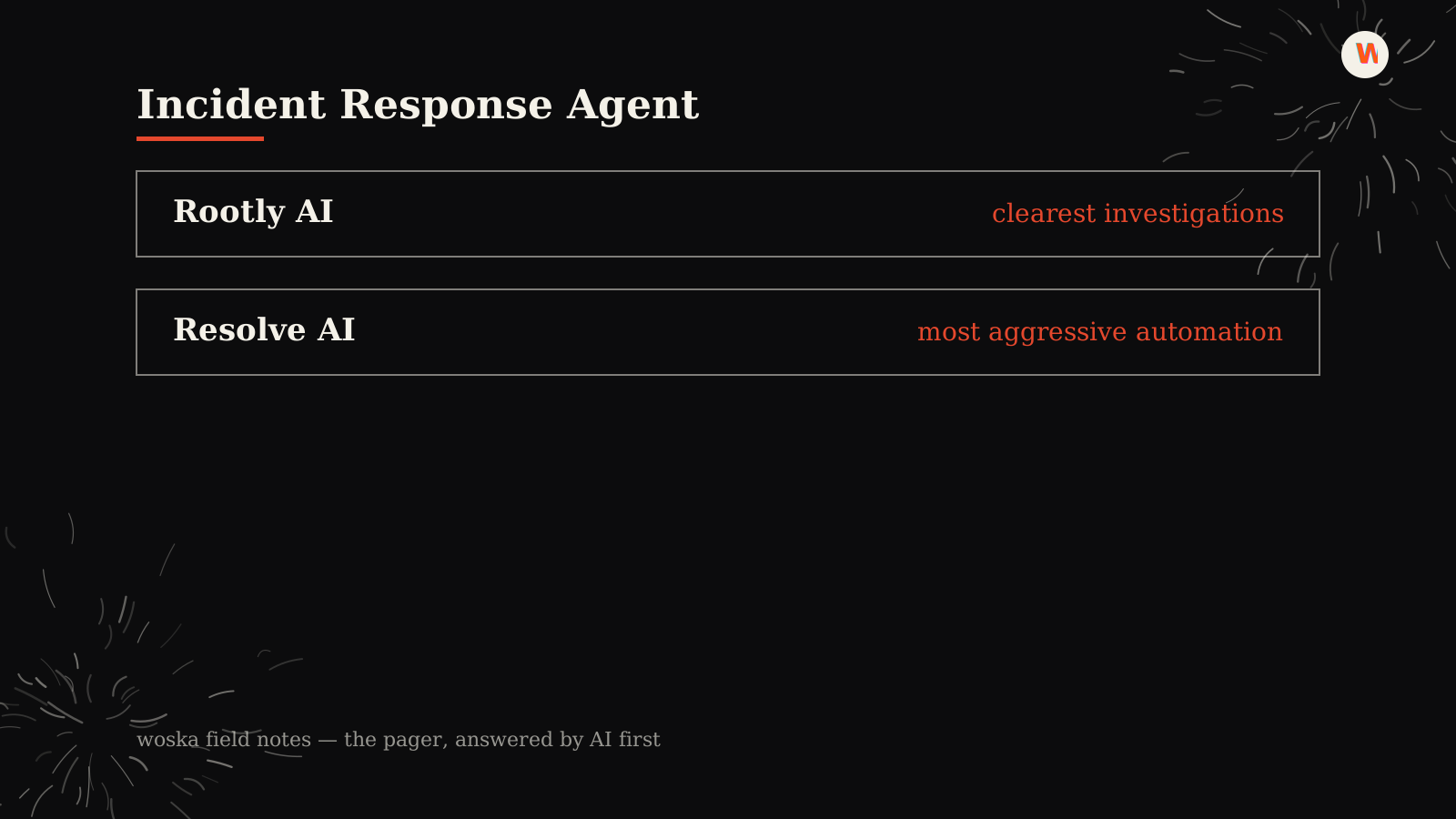
| Rootly AI | Custom pricing | AI SRE teammate for investigation + communication | Human-in-the-loop, clearer on-call communication |
| Resolve AI | Custom pricing | Aggressive root-cause automation | Maximum auto-resolution, less manual triage |
Which one should you use?
Choose Rootly AI if you want an AI teammate that makes your existing on-call rotation faster and better communicated, without removing human judgment from the loop. Choose Resolve AI if you want to push toward the highest achievable auto-resolution rate and are ready to trust more autonomous investigation and remediation.
FAQ
Do these agents actually fix incidents on their own, or just investigate? Both do real investigative work (correlating signals, forming root-cause hypotheses); how far each goes into automated remediation versus handing off to a human varies by incident type and how much autonomy your team configures.
Will an AI incident agent replace the need for an on-call rotation? Not yet — both are built to make on-call responders faster and better informed, not eliminate the need for a human who can exercise judgment on ambiguous or high-stakes incidents.
How long does it take to get useful results from either platform? Expect a ramp-up period where the agent learns your specific systems, deployment patterns, and telemetry — results typically improve meaningfully after the first few real incidents it observes.
Can either tool integrate with our existing alerting and communication stack? Yes — both are built to plug into common tools like Slack, PagerDuty, and standard observability platforms rather than requiring a new alerting stack.
Is this only useful for large engineering teams, or does it help smaller teams too? Smaller teams often see proportionally larger benefit, since a smaller on-call rotation has fewer people to absorb the investigative burden that these agents can offload.
Related guides
- How to Estimate Your AI API Costs Before You Build a Feature
- Best AI QA Testing Agent in 2026
- Best AI IT Helpdesk Agent in 2026
- Explore AI Agents tools
*Ratings and pricing reviewed monthly. Last updated September 2026.*
Bogdex · Founder & editor, woska
Bogdex builds and curates woska, testing AI tools against real workflows to judge which ones actually save time rather than which have the longest feature list.