Dropping into a codebase you didn't write — a new job, an inherited project, an open-source repo you want to contribute to — used to mean days of reading files and guessing at intent before you could make a safe change. Sourcegraph Amp wins for actively exploring that unfamiliar code: a fast loop between codebase context, edits, and terminal commands that lets you ask questions and immediately test the answer. OpenAI Codex wins for handing off a specific onboarding task — "explain how authentication works here," "trace where this value gets set" — to an agent running in a cloud workspace or CLI, from $20/month. Both cut the first-week ramp-up time that used to depend entirely on a patient teammate.
The two, in one line each
Sourcegraph Amp is an agentic coding tool focused on a fast loop between codebase context, edits, and terminal commands.
OpenAI Codex lets teams assign coding work in a cloud workspace or CLI, from patches and tests to code reviews, from $20/month.
Where each one actually wins
Sourcegraph Amp wins for the exploratory phase of onboarding — poking around, asking "what calls this function," running a command to see what actually happens, and iterating fast enough that curiosity doesn't die waiting on a slow feedback loop, which matters most in the first few days when you don't yet know the right questions to ask. OpenAI Codex wins once you have a specific, bounded task to hand off — assign it a real ticket ("fix this failing test and explain why it was failing") in its cloud workspace or CLI, and it returns a patch along with the reasoning, which doubles as a guided tour of that specific part of the codebase.
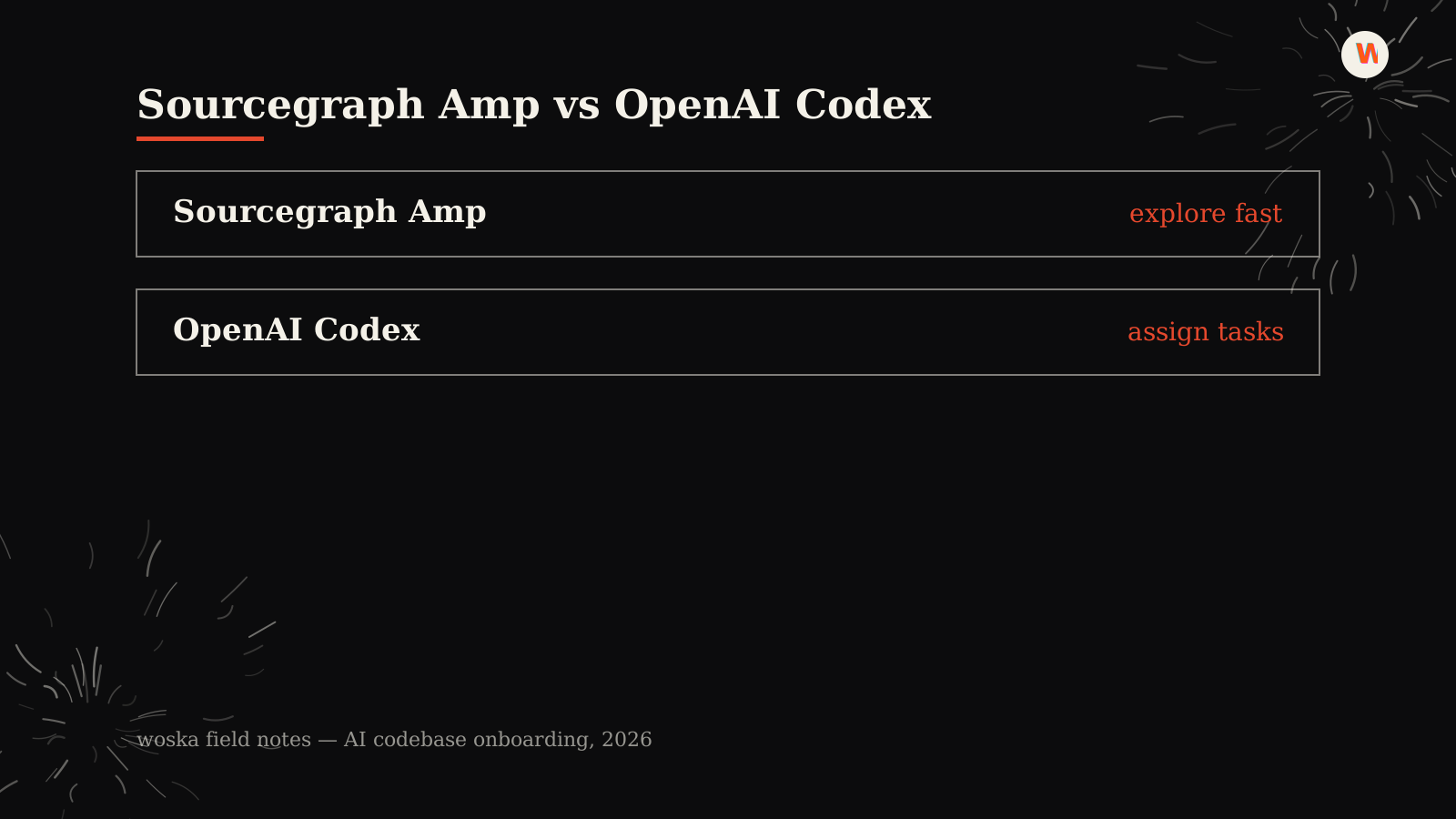
Quick comparison
| Tool | Core strength | Starting price | Best fit |
|---|---|---|---|
| Sourcegraph Amp | Fast interactive exploration | Paid (contact for pricing) | Poking around an unfamiliar repo |
| OpenAI Codex | Assigning bounded onboarding tasks | $20/mo | Learning by delegating real tickets |
Which one should you use?
Choose Sourcegraph Amp if you want to interactively explore and question a new codebase at your own pace. Choose OpenAI Codex if you'd rather assign specific onboarding tasks to an agent and learn from what it returns.
FAQ
Can these tools replace a proper onboarding process or documentation? No — they shorten the time to a first useful contribution, but they don't replace context only a teammate can give (why a decision was made, what's actively being deprecated) or documentation of team-specific conventions.
Do I need admin access to the whole codebase for these to work well? Both work best with full repository access so they can trace dependencies and context accurately; partial access (a single service in a monorepo, for example) still works but gives less complete answers about cross-service behavior.
Is this only useful for new hires, or also for open-source contributors? Both audiences benefit — an open-source contributor exploring a repo for the first time faces the exact same "where do I even start" problem a new hire does, and neither tool cares whether you're paid to be there.
How is this different from just asking a general chatbot to explain the code? A general chatbot without direct access to your repository can only reason about code you paste in; both these tools operate with actual access to the codebase and can run commands or trace real dependencies rather than guessing from a snippet.
Related guides
- Best AI Code Review Tool in 2026
- Claude Code vs Cursor vs Codex vs GitHub Copilot in 2026
- AI Coding & Developer Tools Guide 2026
- Explore AI Agents
*Ratings and pricing reviewed monthly. Last updated September 2026.*
Bogdex · Founder & editor, woska
Bogdex builds and curates woska, testing AI tools against real workflows to judge which ones actually save time rather than which have the longest feature list.