Perplexity researches your market size, competitors, and category framing with citations so an investor doesn't catch a number you can't back up, Tome turns a rough narrative into a visual pitch deck fast enough to iterate on the story across many investor conversations, and Upmetrics builds the financial model and projections an investor will ask to see once they're seriously interested. A seed pitch lives or dies on the story and the numbers holding up under real scrutiny — these three compress the work around building both without pretending AI can replace the actual traction or team an investor is really evaluating.
Where each one actually wins
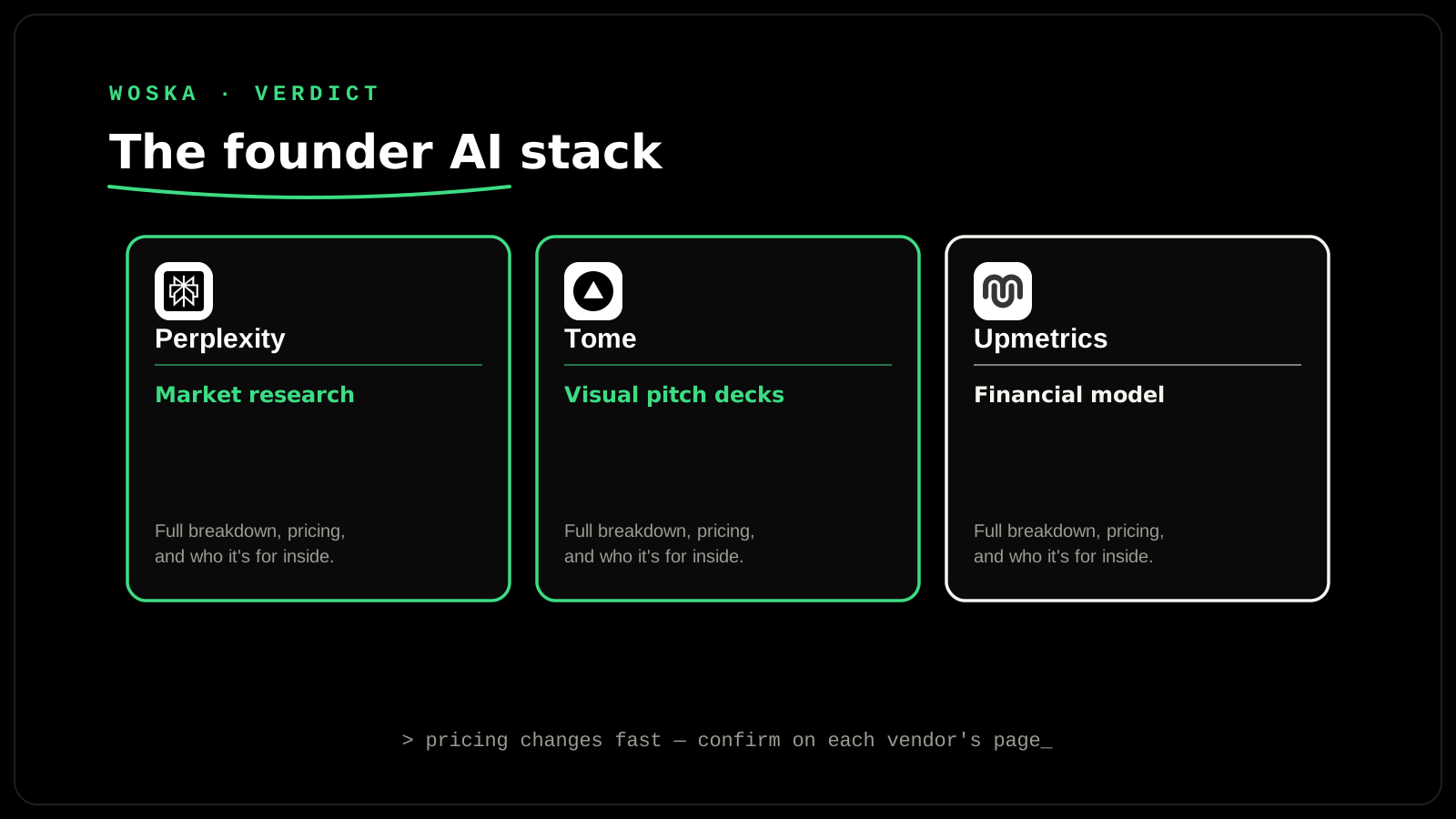
Perplexity researches market sizing, competitor positioning, and category trends with cited sources, which matters because an experienced investor will independently check a TAM number or competitive claim, and getting caught with an unsourced or inflated figure damages credibility on the whole pitch, not just that one slide.
Tome turns a rough outline and narrative into a visual, presentable deck fast, which is genuinely useful across a seed raise specifically because the story keeps evolving investor-conversation to investor-conversation as you learn what resonates and what doesn't — rebuilding slides by hand every time you refine the pitch is a real drag on momentum.
Upmetrics builds financial projections and a business-plan structure that's presentable without requiring a finance background, useful for getting a defensible first model in front of an investor quickly — though any founder who gets a serious term sheet conversation should expect deeper diligence on the model than a template alone produces.
What none of these should be used for
An AI-polished deck and a plausible-looking financial model do not substitute for real traction, a coherent go-to-market motion, or founder-market fit — the things investors are actually evaluating underneath the slides. Use these tools to remove friction from communicating what's real, not to make a weak underlying story look stronger than it is; experienced investors see through polish quickly once questions start.
Quick comparison
| Tool | Core job | Starting price | Best fit |
|---|---|---|---|
| Perplexity | Cited market and competitor research | Free, Pro from $20/mo | Numbers that hold up to investor scrutiny |
| Tome | Visual pitch deck generation | Freemium | Iterating the story across many investor meetings |
| Upmetrics | Financial model & business plan | From $7/mo | A first, presentable financial model fast |
Which one should you set up first?
Start with Perplexity before writing a single slide — get the market and competitive numbers right first, since the rest of the deck is built around them. Move to Tome to turn your narrative into something visual you can actually send and present. Bring in Upmetrics once investor conversations are advancing enough that someone's going to ask for real financial projections, not just the pitch.
FAQ
Do investors mind if a deck is visibly AI-assisted? Most care about the clarity of the story and the strength of the underlying business far more than the production tool — a clear, well-organized AI-assisted deck beats a messy hand-built one, but no deck substitutes for a compelling business underneath it.
Can Perplexity's market sizing numbers be cited directly in a pitch deck? Cite the original source it points to, not Perplexity itself — check the underlying report or data source it surfaces, since that's what an investor doing diligence will actually want to verify.
Is Upmetrics' financial model detailed enough for a real due-diligence process? It's a strong starting point for early conversations, but a serious term sheet process typically involves deeper financial diligence than a template model provides — treat it as the first draft, not the final model a lead investor's team will rely on.
What's a realistic monthly cost for this fundraising stack? Around $27–30/mo total across Perplexity Pro, Tome's free or low tier, and Upmetrics' Starter plan — genuinely inexpensive relative to what's riding on the raise going well.
Related guides
- Best AI Business Plan Generator in 2026
- Best AI Tool for Investor Updates and Board Decks in 2026
- Best AI Presentation Maker in 2026
- Explore Business & Sales tools
*Ratings and pricing reviewed monthly. Last updated September 2026.*
Bogdex · Founder & editor, woska
Bogdex builds and curates woska, testing AI tools against real workflows to judge which ones actually save time rather than which have the longest feature list.