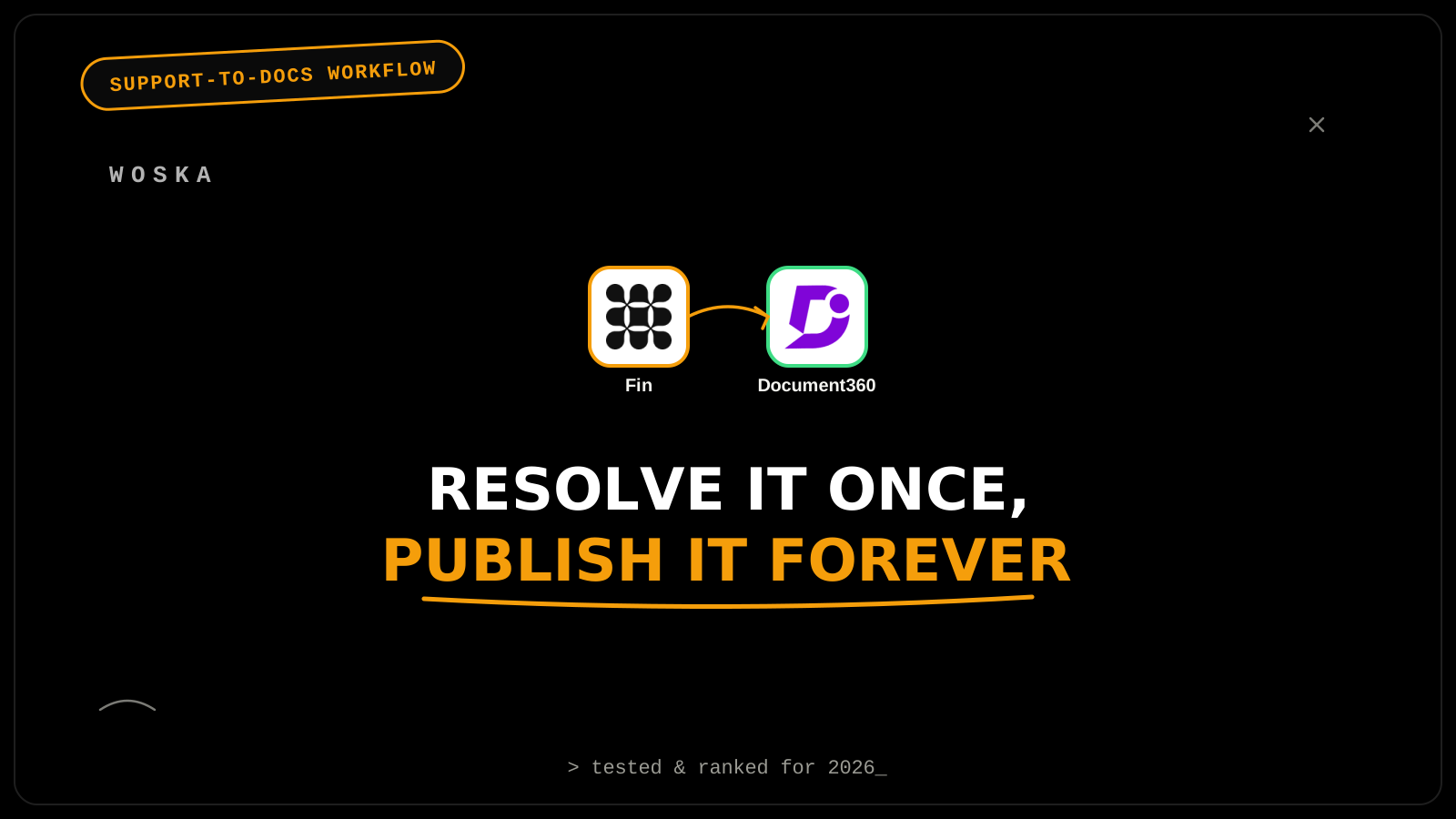
Every support team accumulates the same evidence without using it: hundreds of resolved conversations answering nearly identical questions. [Fin](/go/intercom-fin) (formerly Intercom) resolves those conversations end-to-end, and the transcript of each one is effectively a tested, real-world answer to a real customer question — raw material for a help center article, not just a closed ticket. Document360 turns that raw material into structured, searchable, properly-tagged articles, closing the loop so the next customer with the same question finds the answer before ever opening a ticket.
The workflow, step by step
Step 1 — let Fin resolve tickets and surface the patterns. Fin resolves the large majority of routine customer questions on its own (its AI Agent averages around 76% autonomous resolution across its customer base), and its conversation history is a searchable log of exactly which questions come up most, in the customers' own words rather than however your team assumes they'd phrase it.
Step 2 — identify the genuinely recurring questions. Pull the most frequent resolved-conversation topics from a given period (weekly or monthly, depending on volume) rather than trying to convert every single ticket — the goal is covering the 20% of questions driving 80% of ticket volume, not documenting every one-off edge case.
Step 3 — turn the pattern into a structured article. Feed the representative resolved transcripts into Document360, whose AI writer drafts a structured help-center article from that input, with auto-tagging to file it under the right category automatically. This is meaningfully different from writing documentation from a blank page — you're formalizing an answer that's already been tested against real customers, not guessing what they'll ask.
Step 4 — close the loop. Once the article is published, configure Fin to surface it directly in future conversations touching that topic — so the next occurrence of the same question gets partially or fully self-served before a human (or even a full AI conversation) is needed at all.
Why this beats writing documentation from scratch
Documentation written proactively, before real questions come in, tends to guess at what customers will actually ask — and often misses the specific phrasing, edge cases, and follow-up confusion that real conversations reveal. Documentation built from actually-resolved tickets starts from evidence: you already know the question gets asked, you already know what answer worked, and the only remaining job is structuring it for self-serve discovery. It's a fundamentally lower-risk way to prioritize what to document first.
Quick comparison
| Tool | Role in the workflow | Starting price | Job |
|---|---|---|---|
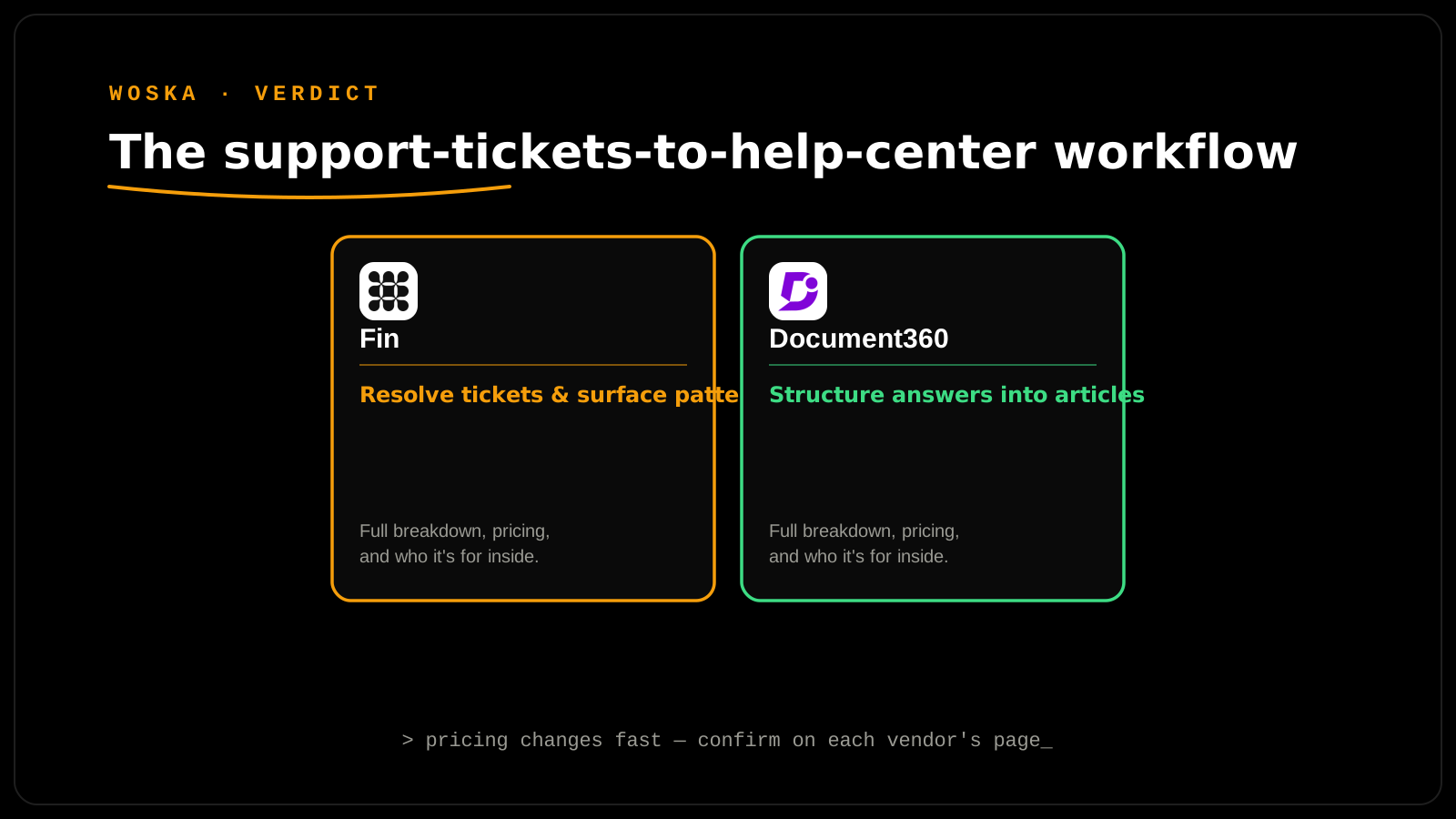
| Fin | Resolve tickets, surface recurring patterns | $0.99/resolution | Finding out what customers actually ask |
| Document360 | Structure resolved answers into articles | Custom pricing | Turning proven answers into a self-serve help center |
FAQ
How often should this review-and-publish cycle actually run? Weekly for a high-volume support team, monthly for a smaller one — the goal is catching new recurring patterns before they generate hundreds of avoidable duplicate tickets, without turning this into a full-time job.
Does this replace the need for a dedicated technical writer? No — it removes the guesswork of deciding what to write about first and gives a writer real source material to work from, but human review before publishing still matters, especially for anything involving pricing, legal, or safety-relevant information.
What if the same question gets resolved differently by different agents or AI runs? That's actually a useful signal — genuine inconsistency in resolved-conversation answers usually means the underlying process or product behavior itself is unclear, which is worth fixing before or alongside documenting it.
Can this workflow work with a different support tool instead of Fin? Yes — the underlying principle (mine resolved-conversation patterns for documentation gaps) applies to any AI support agent with searchable conversation history; Fin and Document360 are one concrete, verified pairing, not the only possible one.
Related guides
- Best AI Helpdesk Tool in 2026
- Best AI Tool for Technical Documentation in 2026
- Intercom Is Now Fin — And Salesforce Is Buying It for $3.6B
- Explore Business & Sales tools
*Ratings and pricing reviewed monthly. Last updated September 2026.*
Bogdex · Founder & editor, woska
Bogdex builds and curates woska, testing AI tools against real workflows to judge which ones actually save time rather than which have the longest feature list.